
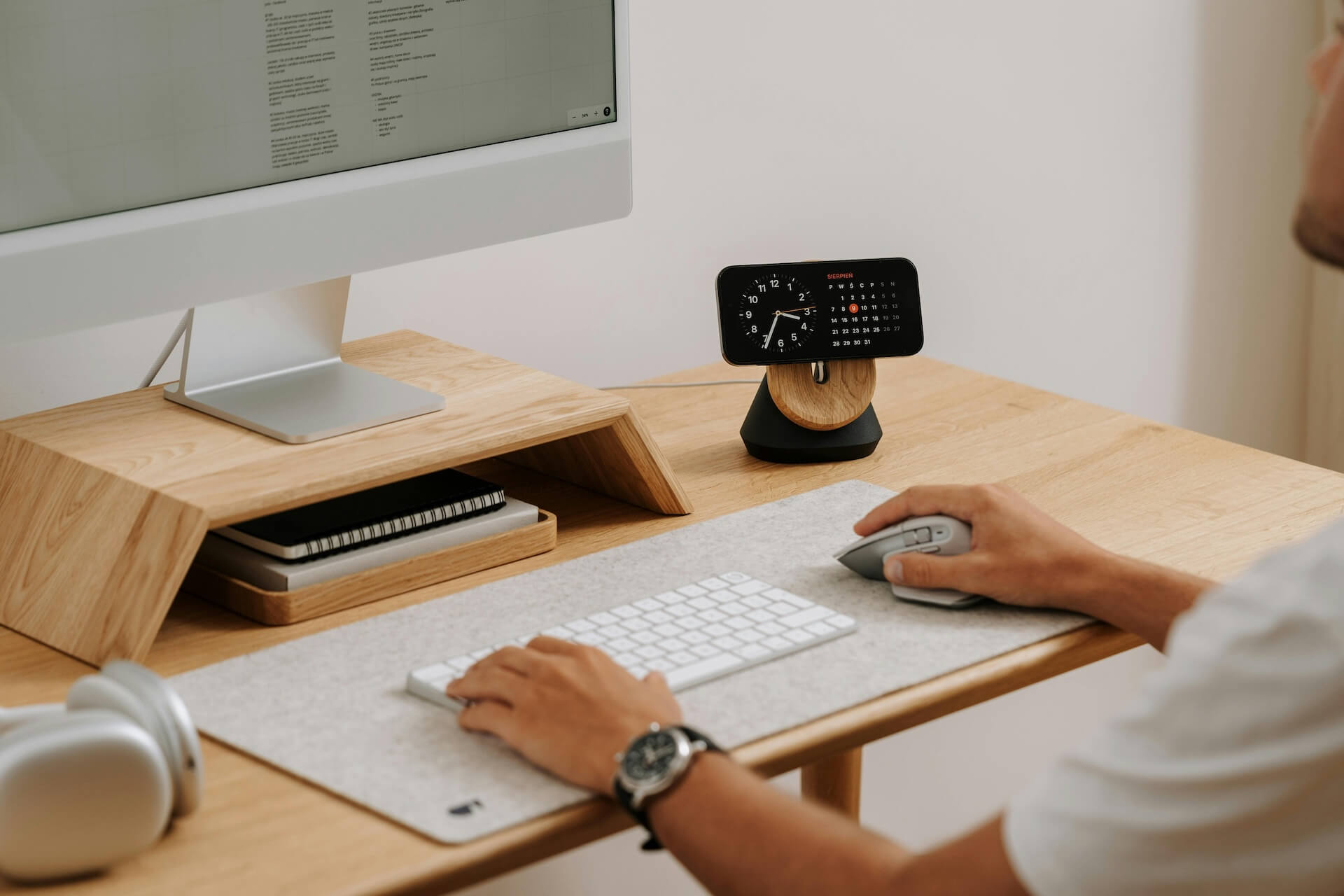
6 Best Large Print Keyboards for Seniors
Large print wired keyboards boost visibility and reduce eye strain for seniors. Our guide reviews 6 top models focused on readability and ease of use.
Watching a parent or loved one struggle with technology can be tough. They lean in close, squinting at the keyboard, and what should be a simple email to a grandchild becomes a frustrating exercise in finding the right letters. This daily challenge isn’t just about inconvenience; it’s a major cause of digital eye strain, headaches, and fatigue. Choosing the right keyboard can transform a computer from a source of frustration into a joyful connection tool.
Choosing a Keyboard to Reduce Digital Eye Strain
When you’re helping someone pick a keyboard, the goal is to solve a specific problem: making the letters easy to see and the keys easy to press. Standard keyboards often fail on this front with their small, gray letters on dark keys. The key is to look for models designed specifically for visual accessibility, which usually means focusing on a few core features.
The most important factor is high contrast. This typically comes in three varieties: bold black letters on a white or yellow background, or bright white letters on a black background. The best choice often comes down to personal preference and the specific nature of a person’s vision impairment. Another critical feature is large print, where the characters themselves are physically printed much larger than standard, filling more of the keycap surface. Finally, for those who use their computer in the evening or in rooms with less-than-ideal lighting, backlighting can be a game-changer, illuminating the letters from behind for perfect clarity.
It’s also worth noting that all the options we’ll explore are wired. While wireless technology is convenient, a simple USB cord eliminates the hassle of changing batteries, dealing with pairing issues, or losing a tiny wireless dongle. For a straightforward, always-ready experience, a wired keyboard is the most practical and reliable choice in this category.
Keys-U-See: High-Contrast for Visual Clarity
For many households, the primary challenge is simply reading the letters on the keys in a well-lit room. If your family member doesn’t need backlighting and has decent dexterity, the Keys-U-See keyboard is an excellent, no-nonsense starting point. Its entire design is centered on one thing: maximum contrast. The letters are enormous, and the common yellow-on-black version is favored by many with low vision for its exceptional legibility.
This keyboard is a perfect example of function over form. It won’t win any design awards, but it does its job incredibly well. It’s a standard full-size layout, so there’s no need to relearn where the keys are. Think of it as the large-print book of the keyboard world—simple, effective, and focused on readability above all else.
The main tradeoff here is the lack of features. There is no backlighting, so its usefulness diminishes in dimly lit spaces like a den or living room at night. However, for a dedicated desk in a bright room, its simplicity is a strength. It’s a durable, affordable tool that directly solves the problem of hard-to-read keys without adding confusing bells and whistles.
Azio Vision: Backlit Keys for Low-Light Typing
Imagine a loved one who enjoys sending emails in the evening from their favorite armchair, where the lighting is cozy but not ideal for task work. This is the exact scenario where the Azio Vision keyboard shines. Its main advantage over more basic models is the inclusion of backlighting, which makes each large-print character glow for easy identification in any lighting condition.
The Azio Vision often provides multiple color options for the backlight (like red, blue, or purple), which is more than just a cosmetic feature. Some individuals find that a particular color, like red, is less harsh on the eyes in a dark room. The ability to cycle through colors and adjust brightness allows the user to find the perfect setting for their comfort, whether they’re in a sunlit home office or a dimly lit living room.
Of course, this added feature comes at a slightly higher price point. You’re paying for the versatility of the backlighting technology. While the build is solid, it introduces more electronic components than a basic non-lit board. For the user who needs to type in varied lighting, however, the added cost is a worthwhile investment in usability and reduced eye strain.
Chester Creek VisionBoard2: Color-Coded Simplicity
Sometimes, the challenge isn’t just seeing the keys, but also finding them quickly. For a senior who is new to typing or someone who finds a standard monochrome keyboard overwhelming, the Chester Creek VisionBoard2 offers a clever solution. In addition to large print, this keyboard uses a color-coded system to group keys by function—vowels are one color, consonants another, numbers a third, and so on.
This approach can significantly reduce the "search time" for non-touch-typists, making the entire process less of a cognitive load. It’s a fantastic tool for encouraging computer use for those who might otherwise be intimidated. The keys are also oversized, providing a larger target that can help with minor dexterity issues.
The most significant consideration is the keyboard’s footprint. The oversized keys mean the VisionBoard2 is larger than a standard keyboard, so you’ll need to ensure there’s adequate desk space in the apartment or home office where it will be used. The bold color scheme is its greatest strength, but it may be distracting for someone who is already a proficient typist, making it a specialized tool for a specific type of user.
AbleNet BigKeys LX: Oversized Keys for Dexterity
For individuals facing more significant physical challenges like arthritis, tremors, or limited motor control, even a standard-sized key can be difficult to press accurately. The AbleNet BigKeys LX is a specialized keyboard designed to address this head-on. Its most prominent feature is its massive, one-inch square keys, which are dramatically larger than those on any standard keyboard.
This design isn’t just about visibility; it’s about providing a large, stable target that is easy to hit, reducing typos and the frustration that comes with them. This makes it an invaluable tool for users whose primary barrier is physical dexterity rather than just vision. The layout is simplified and can be ordered in an ABC format instead of the standard QWERTY, which can be easier for non-typists to learn.
The BigKeys LX is a true accessibility device, and its price reflects its specialized nature. It’s the most expensive option on this list, and its large size demands a significant amount of desk real estate. The simplified layout also means some keys (like function keys) may be absent, which could be a drawback for more advanced users. It’s the right choice when the physical act of typing is the biggest hurdle to overcome.
ACP Ezsee: Bold Yellow Keys for Maximum Visibility
The ACP Ezsee keyboard is another strong contender in the high-contrast category, often drawing comparisons to the Keys-U-See. Its calling card is its incredibly vibrant and bold yellow keycaps paired with large, black lettering. For many people with vision conditions like macular degeneration or glaucoma, this specific color combination offers the highest possible level of visibility.
This keyboard is built for a singular purpose: to make keys as legible as possible under normal lighting conditions. It uses a standard layout, so it feels familiar right out of the box. It’s a plug-and-play solution that immediately enhances the usability of a desktop computer for someone with low vision. It’s a practical, straightforward choice for a family computer that needs to be accessible to everyone.
Like other non-backlit models, the Ezsee is best suited for use in well-lit environments. It lacks any extra media controls or ergonomic features, focusing entirely on its core function of visibility. It represents a fantastic balance of cost and effectiveness for users who prioritize the yellow-on-black color scheme above all else.
Nuklz Large Print: A Sturdy, No-Frills Option
Not every solution needs to be feature-rich or expensive. Sometimes, a household just needs a simple, affordable upgrade that gets the job done. The Nuklz Large Print keyboard is the perfect fit for this scenario. It offers clear, large-print white letters on black keys in a standard keyboard layout, but at a very budget-friendly price point.
This is an excellent choice for a secondary computer, for a household on a tight budget, or for someone who is unsure if a large-print keyboard will be helpful and wants to try the concept without a large investment. It’s built to be a durable workhorse, often including spill-resistant features that add a layer of practical protection against everyday mishaps.
The tradeoff for the low cost is a lack of advanced features. There’s no backlighting, no color-coding, and the key-press feel may not be as refined as more premium models. However, it absolutely delivers on its promise of making keys easier to read. It proves that a meaningful improvement in accessibility doesn’t have to come with a hefty price tag.
Key Features for Comfortable, Strain-Free Typing
Choosing the right keyboard is about matching the features to the person and their environment. There is no single "best" option, only the best fit for a specific situation. As you decide, keep these key points in mind:
- Primary Need: Is the main issue vision or dexterity? For purely visual challenges, a standard-size keyboard with large print and high contrast is perfect. If motor skills or arthritis are a factor, an oversized keyboard like the AbleNet BigKeys LX is the better path.
- Typing Environment: Where will the computer be used most often? For a dedicated desk in a bright room, a non-backlit model like the Keys-U-See or Nuklz is a cost-effective choice. For a living room or bedroom with variable, often dim lighting, a backlit model like the Azio Vision is essential.
- User’s Experience Level: Is the user a seasoned typist or new to computers? A standard QWERTY layout is best for experienced users. For a beginner, the color-coded Chester Creek VisionBoard2 can make the learning process much less intimidating.
- Budget and Space: Be realistic about the budget and the physical space available. A specialized, oversized keyboard requires more desk real estate and a larger financial investment. A simple, budget-friendly model can often provide 90% of the benefit for a fraction of the cost and space.
Ultimately, the goal is to find a tool that empowers the user. Focus on solving the biggest point of frustration first. A simple, high-contrast keyboard can make a world of difference, turning computer time back into a productive and enjoyable experience.
The best household solution is rarely the one with the most features, but the one that gets used comfortably and consistently. By focusing on the specific needs of your loved one—whether it’s contrast, key size, or lighting—you can find a keyboard that reduces strain and makes technology accessible again. It’s a small change that can have a huge impact on their daily connection to the world.

