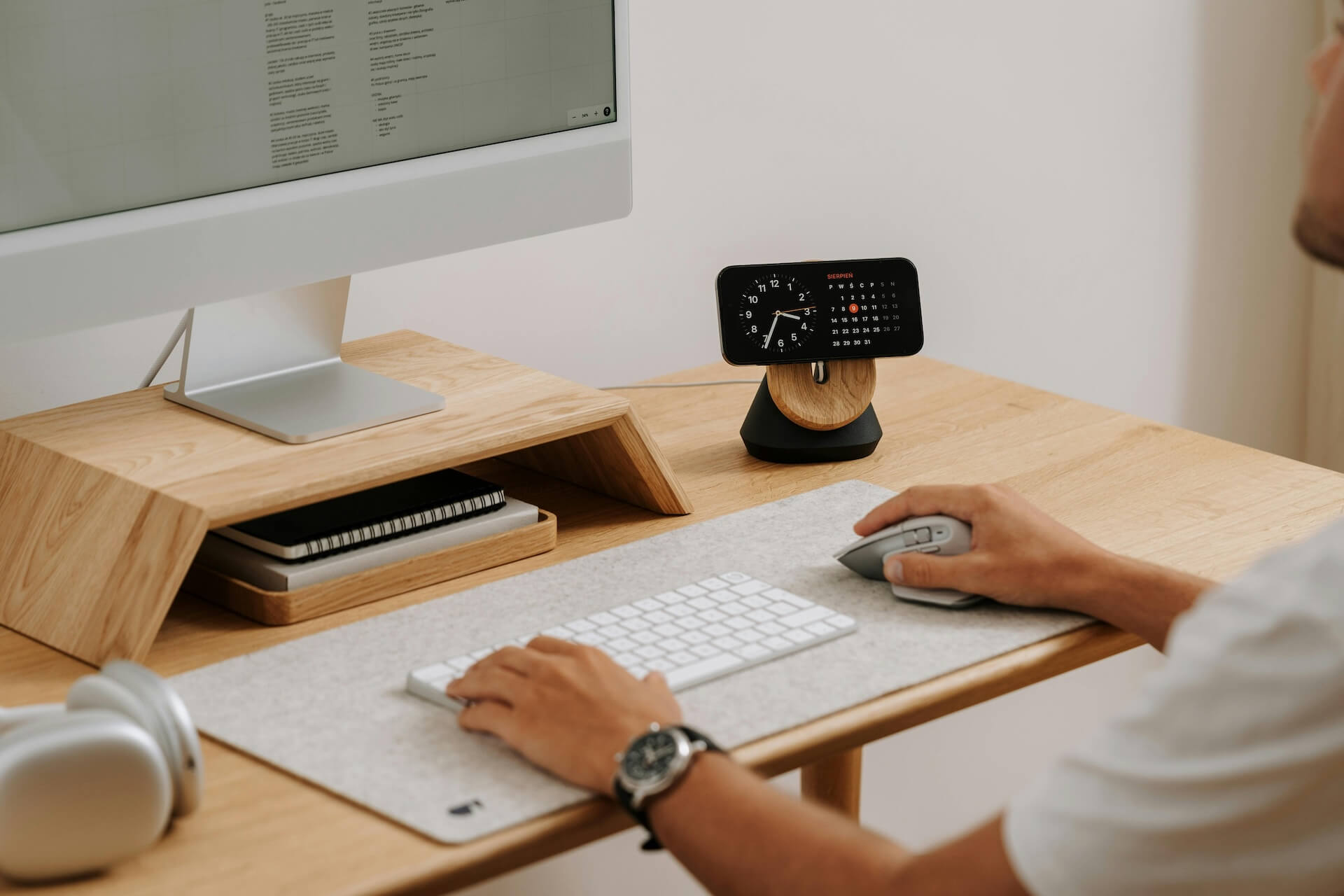
7 Best Monitor Stands for Home Office Desks
Find the 7 best printer base plates for lasting stability. Improve your prints today!
Printer vibrations can turn a simple home office setup into a noisy, rattling annoyance that disrupts the entire household. A stable base plate serves as the foundation for smooth printing, preventing movement that often leads to paper jams or uneven print quality. Choosing the right stand turns an unruly piece of office equipment into a settled, reliable tool for daily tasks.
VIVO Black Wood Stand: Simple and Sturdy
For homeowners who prioritize a clean, uncluttered aesthetic, the VIVO Black Wood Stand offers a straightforward design that blends into most office furniture. Its solid construction minimizes the micro-vibrations generated by inkjet printers, which protects the lifespan of the internal mechanisms.
Because it features a classic, non-fussy look, it suits both traditional home offices and shared living spaces like a den or hallway nook. The assembly process is minimal, making it an excellent choice for those who need a functional fix without spending an afternoon with a toolkit.
The bottom line is simple: this stand provides high-quality stability at a price point that respects a family budget. It is a no-nonsense solution that focuses on performance rather than unnecessary features.
Stand Steady Original Stand: Built to Last
If the household printer is a heavy-duty laser model used for home business or school projects, the Stand Steady Original is engineered to handle that weight without bowing. Its industrial-style design utilizes reinforced materials meant to withstand years of constant use.
This stand is particularly useful in tight quarters, such as an apartment or a small guest room office, because it often provides storage space underneath for extra reams of paper or ink cartridges. By elevating the printer, the unit frees up precious desk surface, allowing for better organization during busy work weeks.
The primary takeaway is durability, as this unit is intended for those who prefer to buy once and avoid replacements. While it may lack the decorative flourishes of other models, its structural integrity remains unmatched for heavy, high-volume printers.
HUANUO Monitor Stand Riser: A Versatile Pick
While marketed as a monitor riser, this stand functions exceptionally well as a printer base due to its adjustable height settings. Households with varying printer sizes often benefit from this flexibility, as it allows for a custom fit that keeps the machine perfectly level.
The stand’s vented platform design also aids in airflow, which is helpful if a printer runs warm during long print jobs. It provides a lightweight but sturdy platform that is easy to reposition if the office layout changes throughout the year.
Choose this model when versatility is the top priority, especially if the printer might be swapped out for a different model in the future. It offers a practical, middle-ground solution that adapts to the shifting needs of a growing home office.
WALI Wood Stand Riser: For Heavier Machines
The WALI Wood Stand Riser is crafted from thick, dense composite materials that provide a rock-solid base for larger all-in-one machines. Its wider footprint ensures that top-heavy printers remain balanced, reducing the risk of tipping when scanning or loading paper.
This stand is a favorite for homeowners who appreciate the warmth of wood finishes over the clinical look of plastic or metal. It fits seamlessly into rooms furnished with bookshelves or traditional wooden desks, maintaining a cohesive look throughout the home.
The bottom line for the WALI riser is that it prioritizes weight distribution and stability above all else. For those with high-capacity printers that require a sturdy, reliable anchor, this remains a top-tier contender.
Allsop Metal Art Jr.: Compact and Very Strong
In scenarios where desk space is at an absolute premium, the Allsop Metal Art Jr. provides a compact footprint without sacrificing strength. Constructed from laser-cut steel, it offers a surprisingly high load capacity despite its small physical presence.
The sleek metal design is resistant to stains and scuffs, making it easy to maintain in high-traffic households. Its perforated surface allows for excellent heat dissipation, keeping equipment cool during heavy usage periods.
This is the ideal selection for students or remote workers operating out of cramped conditions like a closet-office or a bedroom corner. It demonstrates that a minimal footprint does not have to mean minimal strength.
Hemudu Glass Riser: A Sleek, Stable Option
For a more modern, refined look, the Hemudu Glass Riser uses tempered glass to create a stable, non-obtrusive printer base. The transparency of the glass helps a small room feel larger by preventing the visual clutter associated with bulky, opaque stands.
Do not let the elegant appearance fool you; the tempered glass is surprisingly durable and supports significant weight. It is an excellent choice for homeowners who want their office setup to look professional and polished, perhaps in a shared living room space.
Maintenance is straightforward, as the smooth surface wipes clean with a standard cloth in seconds. Invest in this option if balancing office utility with high-end interior design is the goal.
Amazon Basics Riser: An Affordable Workhorse
When the goal is purely functional efficiency at the lowest possible cost, the Amazon Basics Riser is the standard-bearer. It delivers reliable support through a simple, effective design that avoids bells and whistles in favor of raw utility.
This riser is frequently chosen by families who are setting up multiple stations or who simply need a cost-effective way to get a printer off the floor and onto a desk. It holds up well under standard daily usage and is easy to store away if the printer is no longer needed.
The main takeaway is that this product offers the best value for budget-conscious homeowners. It performs its primary job—keeping a printer stable—without the added cost of premium branding or complex features.
How to Measure for the Right Size Base Plate
Before finalizing a purchase, accurate measurements are the difference between a secure setup and a wobbly disaster. Follow these steps to ensure the right fit:
- Measure the feet: Do not just measure the base of the printer; measure the distance between the rubber feet, as these need to sit entirely on the riser.
- Account for clearance: Add at least one inch of space on all sides to allow for easy access to buttons and paper trays.
- Check the desk footprint: Measure the available desk space to ensure the riser itself doesn’t overhang the edge of the furniture.
Always prioritize the footprint of the printer’s feet over the overall width of the machine. If the feet extend beyond the edge of the stand, the weight will not be properly distributed, leading to instability.
Wood vs. Metal: Which Material Holds Up Best?
Each material offers distinct advantages based on the specific environment of the home. Consider the following trade-offs when selecting between wood and metal:
- Wood: Generally quieter as it dampens the vibrations from mechanical printers. It offers a warmer aesthetic but can be susceptible to water damage if liquids are spilled nearby.
- Metal: Extremely durable and usually fire-resistant, making it a safer option for high-heat environments. It is easier to clean but can sometimes amplify the sound of printer vibrations if the stand is not properly cushioned.
For most residential needs, both materials perform admirably. The choice often comes down to which aesthetic better matches existing home furniture and whether noise reduction or extreme durability is more important.
Checking Weight Capacity for Printer Stability
Weight capacity is the most critical safety factor for a printer stand. Always look for the manufacturer’s specified weight limit and compare it to the total weight of the printer, including ink and paper.
- Under-loading: A light printer on a heavy-duty stand is perfectly fine and often adds extra stability.
- Over-loading: Avoid exceeding the weight limit, as this causes the material to fatigue over time, leading to warping or sudden structural failure.
- Dynamic load: Remember that scanners and printers move internal parts during operation, so it is safer to select a stand with a 20% higher weight capacity than the printer itself.
Checking the product specifications for “weight capacity” prevents the risk of damaging the stand or the printer during operation. When in doubt, lean toward a higher capacity model to ensure the base remains firm and level for years to come.
Selecting the right printer base plate turns a functional necessity into a seamless part of a home workspace. By prioritizing the weight, dimensions, and material of the stand, you ensure that your equipment remains stable and reliable for every document, label, or project.