

7 Best Wood Glues for Veneer Repairs That Hold Firm
Restore your furniture with our top 7 wood glue picks for veneer repairs. Discover professional-grade adhesives that ensure a lasting, seamless bond today.
There is nothing more frustrating than noticing a corner of your favorite mid-century dresser veneer starting to curl or bubble. While it might look like a major tragedy, most veneer repairs are well within the reach of any homeowner with a little patience and the right adhesive. This guide will help you choose the perfect glue to restore your furniture without needing a professional workshop.
Titebond Original: The Best for Interior Veneer
Titebond Original Wood Glue offers superior strength, bonding stronger than wood itself. Its fast-setting formula requires short clamp times and cleans up easily with water, making it ideal for woodworking, furniture, and repairs.


When you are working on indoor furniture like bookshelves or headboards, you need a glue that behaves predictably. Titebond Original is the industry standard for a reason; it sets quickly and creates a bond that is actually stronger than the wood fibers themselves.
Because it is designed for indoor use, it doesn’t have the harsh chemical odors found in heavy-duty adhesives. This makes it a fantastic choice for apartment dwellers or those working in a spare bedroom rather than a ventilated garage.
The main trade-off here is moisture resistance; this glue will fail if exposed to high humidity or standing water. For a living room coffee table or a bedroom nightstand, however, it remains the most cost-effective and reliable option on the market.
Gorilla Wood Glue: Strong Bond for Tough Repairs
Gorilla Wood Glue creates an incredibly strong bond in just 20-30 minutes of clamp time. This water-resistant, natural-colored adhesive is versatile for indoor and outdoor use on various wood types, drying paintable and sandable.
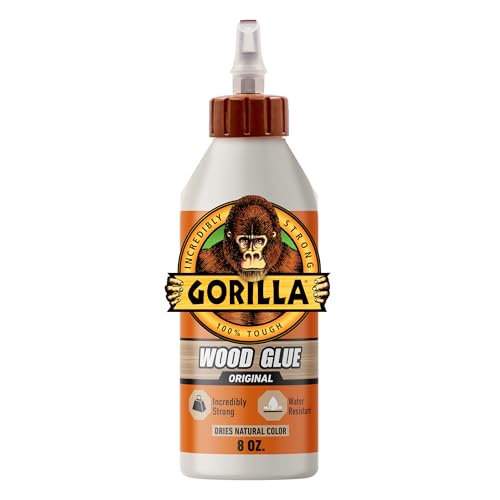
If you are fixing a piece of furniture that sees a lot of action—like a dining room table or a high-traffic entryway console—Gorilla Wood Glue is your go-to. It offers a slightly higher level of water resistance than standard PVA glues, which is a lifesaver if someone accidentally leaves a damp glass on the surface.
This glue is known for its "no-run" consistency, which is a massive help when you are trying to slide a piece of veneer back into a tight corner. It dries a natural color, meaning it won’t leave a dark, unsightly line at the seam of your repair.
Keep in mind that this formula is slightly thicker, so it can be harder to spread into very fine cracks. If you are dealing with a large, flat area, you might find it requires a bit more effort to get an even, thin coat.
Elmer’s Carpenter’s Wood Glue: Best for Precision

We have all used Elmer’s products since childhood, and their Carpenter’s Wood Glue is a surprisingly capable tool for small-scale household repairs. Its thin, manageable consistency makes it perfect for injecting into small bubbles or lifting edges where you don’t want a thick layer of adhesive.
This is the ultimate "renter-friendly" glue because it cleans up easily with water while wet. If you accidentally get a drop on your hardwood floor or carpet, you can wipe it away without leaving a permanent stain.
Because it is so affordable and easy to find, it is a great staple to keep in your junk drawer. It may not be the choice for heavy structural work, but for cosmetic veneer touch-ups, it is a reliable, low-stress solution.
Weldwood Contact Cement: Ideal for Flat Surfaces
Weldwood Contact Cement creates a strong, instant bond for durable projects. Its versatile formula adheres to a wide range of materials, ensuring a reliable hold for your DIY needs.

Sometimes, you aren’t just fixing a corner; you are re-attaching a large sheet of veneer that has completely delaminated. For these larger surface areas, Weldwood Contact Cement is the superior choice because it bonds instantly upon contact.
Unlike wood glues that require hours of clamping, contact cement allows you to press the veneer down and move on with your day. You apply a thin layer to both the furniture and the back of the veneer, let it get tacky, and then press them together.
The downside is that it is very unforgiving; once the two surfaces touch, they are stuck. You must be precise with your placement, as there is no sliding or adjusting once the bond is made.
DAP Weldwood Plastic Resin: Best for Heat Resistance
If you are repairing a surface that might be exposed to heat—such as a kitchen cabinet near an oven or a desk that sits in direct, intense sunlight—standard glues might soften over time. DAP Weldwood Plastic Resin is a powdered glue that you mix with water, creating a bond that is incredibly heat and moisture resistant.
Because it cures into a hard, rigid shell, it is excellent for high-stress areas where you need the repair to stay put regardless of temperature fluctuations. It is a bit more labor-intensive to mix, but the durability is unmatched.
This is a pro-level product that might be overkill for a simple chair leg, but it is worth the effort for heirloom pieces. Just ensure you have a small container for mixing, as you only want to prepare what you need for the immediate job.
Franklin International Titebond II: Water Resistant

If you live in a humid climate or are working on a piece in a bathroom or mudroom, Titebond II is the bridge between standard interior glues and heavy-duty adhesives. It offers a "Type II" water resistance, meaning it can handle occasional splashes and damp environments without losing its grip.
It shares the same ease of application as the original Titebond, making it very user-friendly for beginners. It also has a slightly faster set time, which is helpful if you are working on a vertical surface where you don’t want the veneer to slide.
While it is more expensive than the original, the added durability is a smart investment for furniture that lives in "wet" zones of the house. It is the best middle-ground for homeowners who want professional results without complex application steps.
3M Fastbond 30 Contact Adhesive: Easy Application

For those who are intimidated by the fumes and mess of traditional contact cements, 3M Fastbond 30 is a water-based alternative. It provides the same instant-bond strength of traditional contact cement but is much easier to work with in small, enclosed spaces.
You can apply it with a brush or a roller, and it dries quickly to a clear finish. It is particularly useful if you are working in an apartment where strong chemical odors would be a nuisance to you or your neighbors.
The main trade-off is that it requires a slightly longer drying time before you can press the pieces together compared to solvent-based versions. However, for the sake of safety and ease of use, it is a trade most homeowners are happy to make.
How to Properly Prep Veneer Surfaces for Gluing
The biggest mistake people make is applying glue directly over old, dried-out adhesive. You must gently scrape away the old residue using a plastic scraper or a dull chisel to ensure the new glue makes direct contact with the wood.
Once the old glue is gone, lightly sand the area with fine-grit sandpaper (around 150-180 grit). This creates a "tooth" for the new glue to grab onto, which is essential for a long-lasting bond.
Finally, wipe the area clean with a tack cloth or a damp rag to remove any dust. If you leave sawdust behind, the glue will bond to the dust rather than the wood, and the veneer will inevitably bubble again.
Essential Tools for Clamping Veneer During Curing
Clamping is not just about holding the veneer in place; it is about applying even pressure to ensure a tight bond. You don’t need a professional workshop to do this; a few simple tools will get the job done.
- C-Clamps or Bar Clamps: Use these with a small block of wood to distribute pressure evenly across the repair area.
- Caul Blocks: These are flat, scrap pieces of wood that you place between the clamp and the veneer to prevent the clamp from denting your furniture.
- Heavy Books or Weights: For flat surfaces, sometimes a heavy stack of books is more effective than a clamp.
Always remember to place a piece of wax paper between your clamping block and the veneer. This prevents any squeeze-out glue from accidentally bonding your clamping tool to your furniture.
Troubleshooting Common Veneer Bubbles and Peeling
If you notice a bubble, do not try to rip the veneer off; you will likely cause more damage. Instead, use a sharp utility knife to make a small, clean slit along the grain of the wood, then inject a small amount of wood glue into the opening.
Work the glue into the pocket using a credit card or a small putty knife, then apply pressure with a clamp or a heavy weight. If the veneer is dry and brittle, you can use a household iron on a low, dry setting to gently warm the old glue beneath it, which may allow you to press it back down without needing new adhesive.
If the veneer is completely loose, focus on cleaning the substrate thoroughly before applying new glue. Patience is your best tool here; letting the glue cure fully for 24 hours is always better than rushing the process.
Veneer repair is a manageable project that can save your furniture from the landfill and keep your home looking its best. By selecting the right adhesive for your specific environment and taking the time to prep the surface correctly, you can achieve professional-looking results. Don’t be afraid to start small, and remember that a steady hand and proper clamping will do most of the heavy lifting for you.
