

7 Best Low-profile Circuit Breakers for Shallow Panel Boxes
Finding space in shallow panels is tough. Explore our top 7 low-profile circuit breakers designed to maximize clearance and ensure safe, reliable protection.
Dealing with a cramped electrical panel is a common headache for homeowners living in older houses or compact apartments. When you run out of physical space inside your box, finding a breaker that fits without forcing the door shut is essential for both safety and convenience. This guide helps you navigate the best low-profile options to keep your home’s power running smoothly without unnecessary stress.
Eaton BR Series: Best for Shallow Panel Depth


If you live in a home built in the last few decades, you have likely encountered the Eaton BR series. These breakers are a gold standard for shallow panels because they are engineered to maintain a slim profile without sacrificing the robust internal components required for consistent power delivery.
The beauty of the BR series lies in its widespread availability and ease of installation. Even if you aren’t a professional electrician, the mechanical design allows for a clean, secure snap into the busbar, which is a major plus when you are working in a tight, dimly lit cabinet.
While they are slightly more expensive than generic store brands, the long-term reliability justifies the cost. If you are looking to maximize your panel’s capacity without worrying about depth issues, these should be your first consideration.
Square D Homeline: Reliable Low-Profile Fit
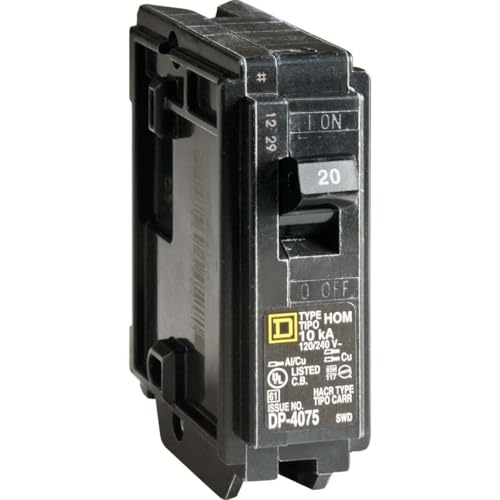
Square D Homeline breakers are the "workhorse" of the residential electrical world. They are particularly effective for homeowners who need a compact solution that doesn’t compromise on the quality of the trip mechanism.
These breakers are designed with a slightly more streamlined casing, making them easier to organize in crowded boxes. If your panel is packed with wires, the smaller footprint of the Homeline series gives you just that extra bit of "breathing room" to manage your cable routing.
It is worth noting that while these are highly reliable, they are brand-specific to Square D Homeline panels. Always check your panel label before purchasing, as trying to force a non-compatible breaker into a slot is a recipe for a dangerous electrical arc.
Siemens QP Series: Compact Design for Tight Boxes

When you are dealing with a shallow wall cavity, every fraction of an inch counts. The Siemens QP series is frequently recommended by pros because of its precise manufacturing, which ensures that the breaker sits flush against the busbar every single time.
These breakers are excellent for homeowners who want a "set it and forget it" solution. They are built to handle the heat of a busy household, meaning you won’t have to worry about nuisance tripping when you are running multiple appliances at once.
The trade-off here is that they can be slightly harder to find in smaller hardware stores compared to the big-box staples. If you have a Siemens panel, stick with the QP series; the design synergy is worth the extra trip to a specialized supplier.
GE Q-Line: Ideal for Older Shallow Enclosures
If you live in an apartment or a home from the mid-20th century, you might be stuck with a legacy GE panel. The GE Q-Line is specifically designed to fit into these older, often shallower, enclosures where modern, bulkier breakers simply won’t fit.
These units are known for their slim, narrow profile, which is a lifesaver when you are trying to add a new circuit to an already crowded box. They are a practical choice for renters or homeowners who need to make an update without replacing the entire expensive panel.
Keep in mind that older panels can be fragile, so handle the installation with care. Always turn off the main power before attempting to swap out a breaker in an older box to avoid any unexpected sparks.
Murray MP Series: Versatile Low-Clearance Choice

The Murray MP series is a favorite among DIYers because it is incredibly versatile and often interchangeable with other brands that share the same design architecture. If you find yourself in a pinch at a local hardware store, these are often the most accessible option for low-clearance needs.
They offer a solid balance between price and performance, making them a great choice for budget-conscious families. You aren’t paying for fancy features you don’t need; you are paying for a reliable, compact breaker that does exactly what it says on the box.
The bottom line is that Murray provides a no-nonsense solution. They are easy to install, easy to find, and they fit comfortably in boxes where space is at a premium.
Connecticut Electric: Best for Legacy Panels

Sometimes you are stuck with a panel brand that no longer exists or is notoriously difficult to find parts for. Connecticut Electric specializes in "classified" breakers that are specifically designed to fit into these older, discontinued panel types.
These are a godsend for homeowners in historic properties who don’t want to undertake a full electrical panel upgrade. They bridge the gap between keeping your home safe and avoiding the massive expense of a complete system overhaul.
Because these are specialized, they may cost a bit more than a standard breaker. However, the ability to safely add a circuit to an obsolete panel is a value that is hard to put a price on.
Eaton Type CL: Classified for Various Breakers

The Eaton Type CL is a unique, "classified" breaker designed to be compatible with a variety of different panel manufacturers. If you are struggling to find an exact match for your specific panel brand, this is often the "universal" solution that saves the day.
This series is built to meet the same safety standards as the original equipment manufacturer (OEM) parts. It is a smart choice for homeowners who have a mix-and-match panel or who simply cannot locate the original brand.
While these are incredibly convenient, always verify the compatibility list on the packaging. Never assume a "universal" fit without confirming that it is tested and approved for your specific panel model.
Measuring Your Panel Depth for Proper Clearance
Before you head to the store, grab a tape measure and check the distance from the busbar to the front of the panel door. You want to ensure that the breaker you choose doesn’t just fit the slot, but also leaves enough room for the wires to bend comfortably without being pinched.
- Measure twice: Check both the left and right sides of the panel, as some boxes are slightly asymmetrical.
- Account for wire gauge: Heavier wires (like those for a dryer or oven) are stiffer and require more depth to bend safely.
- Check for debris: Sometimes an old piece of knockout or wire insulation can prevent a breaker from seating fully, making it seem like the breaker is too deep.
If you find that your wires are consistently being pinched, you may need to reorganize your cable management. A little bit of tidying up can create the space you need for a standard-depth breaker.
Safety Tips for Installing Low-Profile Breakers
Working inside an electrical panel is not the place for guessing games. Always ensure the main breaker is flipped to the "off" position before you touch anything inside the box, and use a non-contact voltage tester to confirm the power is actually dead.
- Wear rubber-soled shoes: This simple step provides an extra layer of insulation.
- Keep one hand in your pocket: This is an old electrician’s trick to prevent a current from passing through your heart if you accidentally touch a live wire.
- Don’t force it: If a breaker doesn’t snap in with moderate pressure, stop and inspect the busbar for damage or obstruction.
If you ever feel uncomfortable or notice signs of arcing or burnt insulation, stop immediately. It is always better to call a licensed electrician than to risk a house fire.
When to Replace Your Existing Circuit Breakers
Breakers don’t last forever, and they often give you subtle signs that they are reaching the end of their life. If you notice a breaker that trips frequently for no apparent reason, or one that feels hot to the touch, it is time to replace it.
- Physical damage: Cracks in the casing or signs of melting are immediate red flags.
- Frequent tripping: If a breaker trips even when the load is light, the internal mechanism is likely worn out.
- Age: If your panel is more than 30 years old, it is worth having an electrician perform a safety inspection.
Replacing a single breaker is a manageable task, but if you find yourself replacing them constantly, it might be a sign that your electrical system is overloaded. In that case, an upgrade to your service panel is the safest and most efficient path forward.
Choosing the right low-profile breaker is all about balancing the physical constraints of your panel with the electrical needs of your home. By taking the time to measure correctly and selecting the right compatible model, you can safely expand your home’s capacity. Remember that when it comes to electricity, patience and precision are your best tools for a job well done.
