

7 Best Snow Blower Lubricants for Winter Maintenance
Keep your machine running smoothly this winter. We review the 7 best snow blower lubricants to prevent rust, reduce friction, and ensure peak performance.
Preparing your snow blower before the first storm hits is the single most effective way to prevent mid-winter equipment failure. A well-lubricated machine runs quieter, throws snow further, and prevents the frustrating jams that leave you stranded in the cold. These seven lubricant picks will help you maintain your machine with minimal effort and maximum reliability.
WD-40 Specialist Silicone: Best All-Around Choice


We’ve all been there: you pull the snow blower out of the shed after months of sitting, only to find the controls are stiff and the plastic housing feels brittle. WD-40 Specialist Silicone is the "utility player" of the maintenance world because it is safe for use on rubber, plastic, and metal surfaces. It leaves behind a protective film that resists water, which is essential for preventing rust during those long, damp storage months.
Because it is non-staining and quick-drying, it is perfect for the homeowner who wants a "one-can" solution for their garage shelf. It won’t attract dust or dirt like traditional oils, meaning your machine stays cleaner for longer. While it may not be as heavy-duty as specialized greases for internal gears, it is the most versatile option for general exterior maintenance.
Bottom line: If you only buy one product for your seasonal prep, make it this one. It is affordable, easy to find at any local hardware store, and covers 90% of your maintenance needs.
Blaster Silicone Lubricant: Best for Metal Parts

If you live in an area where road salt or heavy slush is a constant battle, your snow blower’s metal components are under siege. Blaster Silicone is formulated to handle extreme temperature fluctuations, ensuring that metal-on-metal parts don’t seize up when the thermometer drops below zero. It excels at penetrating tight spaces where rust likes to hide.
This product is particularly useful for the metal linkages and adjustment rods found on larger, two-stage snow blowers. It provides a slick barrier that keeps these components moving smoothly, even when ice crystals try to form in the gaps. It is slightly more aggressive than standard silicone sprays, making it a better choice for older machines that have already seen a few seasons of wear.
Keep in mind that this is a thinner lubricant, so you will likely need to reapply it mid-season if you live in a region with heavy snowfall. It is a budget-friendly way to extend the life of your machine’s metal frame.
Liquid Wrench Dry Lubricant: Best for Chute Areas
There is nothing more irritating than a snow blower chute that freezes in place or gets clogged every five minutes. Liquid Wrench Dry Lubricant uses a PTFE-based formula that dries completely, leaving a slick, non-stick surface that snow simply cannot cling to. By spraying this inside your discharge chute, you create a "Teflon-like" barrier that keeps wet, heavy snow moving freely.
Because it dries to a hard film, it doesn’t wash away easily when the snow melts or turns to slush. It is also excellent for the adjustment crank on the chute, as it won’t attract the grit and road salt that eventually grinds down plastic gears. It is an essential tool for anyone dealing with the "wet snow" common in coastal or transition-zone climates.
The tradeoff here is that it offers less corrosion protection than oil-based sprays. Use this specifically for the chute and exterior plastic parts, and rely on other products for internal metal components.
3-IN-ONE Professional Silicone: Best for Cables
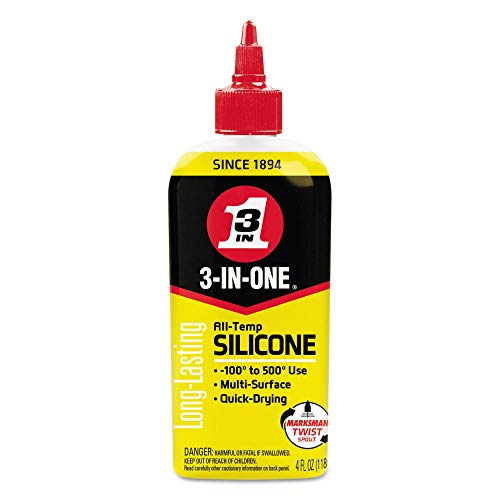
If your snow blower’s drive or auger cables feel sluggish or hard to pull, you are likely dealing with internal friction. 3-IN-ONE Professional Silicone is designed to penetrate the housing of these cables, lubricating the inner wire without leaving a sticky residue that catches debris. It is a simple fix that can make an older, heavy machine feel brand new again.
For apartment dwellers or those with limited storage, this compact can is easy to tuck into a small toolbox or shelf. It is precise and easy to apply, meaning you won’t end up with a mess on your garage floor or driveway. A little goes a long way, so one can will easily last you through several winters.
Be sure to work the cables back and forth after application to ensure the lubricant reaches the entire length of the wire. It is a low-cost investment that prevents the cable snapping that often happens when components are forced to work against friction.
Permatex White Lithium Grease: Best for Gearboxes

White lithium grease is the heavy hitter for the parts of your snow blower that work the hardest. Permatex is a trusted name for a reason; their grease is thick, water-resistant, and designed to stay exactly where you put it. Use this for the auger gearbox and any external grease fittings where high pressure and friction are constant.
Unlike spray lubricants, this grease provides a thick cushion that protects metal teeth from heat and wear. It is the best choice for homeowners who do their own seasonal tune-ups and want to ensure their machine survives heavy-duty use. It is a bit messier to apply, so keep some paper towels or disposable gloves nearby.
While it is more expensive and requires more effort to apply than a spray, it provides the best long-term protection for internal components. It is the gold standard for maintaining the "heart" of your snow blower’s drivetrain.
DuPont Teflon Dry Film: Best for Snow Build-up
If you have ever spent time scraping ice off your auger blades, you know how much time it adds to your snow removal routine. DuPont Teflon Dry Film acts as a release agent that makes your machine’s surfaces incredibly slippery. Applying this to the auger and the inside of the housing prevents the "freeze-up" that happens when warm snow hits cold metal.
This is a fantastic option for those who live in areas with frequent temperature swings where snow melts and refreezes on the machine. It is clean, non-oily, and won’t stain your driveway or garage floor. It is essentially a "non-stick" coating for your snow blower.
Because it is a dry film, it is not a heavy-duty rust inhibitor. Treat this as a performance enhancer for your machine’s efficiency rather than a primary maintenance lubricant.
Lucas Oil White Lithium Grease: Best for Hinges

Hinges, pivot points, and manual adjustment levers are often the first things to rust and seize on a snow blower. Lucas Oil White Lithium Grease is ideal here because it is highly resistant to water washout and provides a long-lasting, heavy-duty barrier. It is perfect for the pivot points on the chute deflector or the height-adjustment levers on the skids.
This grease is thicker than standard sprays, meaning it won’t drip off or evaporate during a long winter. It is great for homeowners who want to "set it and forget it" for the duration of the season. It is also an excellent choice for lubricating the wheel axles if you find your machine is becoming difficult to maneuver.
Keep in mind that thick grease can attract dirt if applied too liberally in exposed areas. Apply a small amount directly to the pivot point and wipe away any excess to keep your machine looking and working its best.
Why Proper Lubrication Extends Snow Blower Life
Regular lubrication is the difference between a machine that lasts twenty years and one that fails after five. Friction is the enemy of any mechanical system; it creates heat, accelerates wear on metal gears, and puts unnecessary strain on the engine. By keeping parts moving smoothly, you reduce the load on your motor, which in turn saves fuel and prevents overheating.
Lubrication also serves as a critical barrier against moisture and salt. Snow blowers are constantly exposed to water, which leads to rust—the silent killer of outdoor power equipment. A thin layer of protective lubricant prevents oxidation on exposed bolts, linkages, and frames, keeping the machine structurally sound.
Ultimately, maintenance is about peace of mind. A well-lubricated machine starts easier, operates more quietly, and is far less likely to break down in the middle of a blizzard. It is a small investment of time that pays off in both equipment longevity and personal convenience.
Where to Apply Lubricant on Your Snow Blower
To get the most out of your maintenance routine, focus on the high-friction "contact points" first. Start with the auger and impeller shafts, as these are the most critical moving parts. Next, move to the chute assembly—both the rotation mechanism and the deflector hinge—to ensure you can aim your snow accurately.
Don’t forget the drive system. If your model has exposed chains or cables, these need regular attention to prevent snapping and binding. The skids (the metal or plastic feet at the bottom of the housing) should also be checked; keeping these lubricated or adjusted ensures the machine glides over your driveway without catching or gouging.
Finally, inspect the wheel axles and any grease zerks (small metal nipples) that may be present on your specific model. Use a grease gun for zerks and a light spray for cables or linkages. Always consult your owner’s manual for a diagram of specific lubrication points, as every model has its own quirks.
Safety Tips for Winter Snow Blower Maintenance
Safety is non-negotiable when working with snow blowers, regardless of the brand or age of the machine. Always remove the spark plug wire before performing any maintenance, especially if you are working near the auger or impeller. This prevents the machine from accidentally starting while your hands are near moving parts.
Never rely on the machine being "off" to keep you safe; trapped energy in the auger blades can cause them to rotate even if the engine is stopped. Use a clean-out tool or a sturdy stick to clear jams—never use your hands, even if you are wearing gloves. It is also a good idea to perform your maintenance in a well-lit, dry area, like a garage or shed, rather than out in the elements.
Keep your lubricants stored in a cool, dry place away from open flames or high heat sources. Always wipe up any excess grease or oil from the floor immediately to prevent slips and falls. By following these simple protocols, you ensure that your maintenance routine remains a safe and productive part of your winter preparation.
Maintaining your snow blower doesn’t require a mechanic’s certification or a massive budget. By choosing the right lubricant for the right part, you can keep your machine running smoothly all winter long. Take an hour this weekend to prep your equipment, and you will thank yourself the next time a major storm hits.

