

7 Best Extra-Long Desktop USB Extension Hubs Tested
We tested seven extra-long USB hubs to find the best reach and speed. Discover which models offer reliable data transfer and cable length for your workspace.
We have all experienced the frustration of crawling under a desk to plug in a flash drive or struggling with a cable that is just a few inches too short. Finding the right USB extension hub transforms your workspace from a cluttered mess into a streamlined hub of productivity. This guide breaks down the most reliable options to help you choose the perfect fit for your home office or family computer station.
Anker 4-Port USB 3.0 Hub: Best Overall Performance
](https://m.media-amazon.com/images/I/41rsnBx1KLL._SL500_.jpg)

When you have a busy home office, you need a hub that just works every time you sit down to start your day. The Anker 4-Port USB 3.0 Hub is a staple because it balances consistent data transfer speeds with a compact, durable frame that doesn’t slide around your desk. It is an ideal choice for the professional who switches between external hard drives and wireless mouse dongles frequently.
This hub excels because it doesn’t require complex software installations; it is truly plug-and-play. Whether you are working from a small apartment desk or a dedicated home office, its slim profile tucks away nicely without taking up valuable surface space.
The bottom line is that Anker provides a reliable bridge between your computer and your peripherals. It is the most dependable "set it and forget it" solution for most households.
Sabrent 4-Port USB 3.0 Hub: Best Budget Selection
If you are setting up a workstation for the kids or just need a simple way to connect a printer and a keyboard, you don’t always need to spend a premium. The Sabrent 4-Port hub is the go-to choice for homeowners who want to keep costs low without sacrificing basic functionality. It is lightweight and portable, making it easy to toss into a laptop bag if you move your work from the kitchen table to the living room.
While the plastic casing feels a bit lighter than more expensive models, it holds up well under standard daily use. It is a fantastic way to stretch your budget while still getting the benefits of USB 3.0 speeds for your files and devices.
For those watching their spending, this hub offers the best utility per dollar. It is a practical, no-frills tool that gets the job done without any unnecessary bells or whistles.
UGREEN USB 3.0 Extension Hub: Best Cable Length

We have all dealt with that one piece of equipment that refuses to reach the back of the computer tower. The UGREEN hub solves this with a generous cable length that allows you to place the hub exactly where you need it, whether that is on top of your desk or mounted to the side. This is particularly helpful for homeowners with large desks or computer towers tucked away in floor cabinets.
The extra reach means you aren’t limited by the proximity of your PC’s ports. It saves you from having to buy separate, potentially unreliable extension cables that can degrade signal quality over time.
If your workspace layout is unconventional or your computer is tucked away, this extra length is a lifesaver. It prioritizes reach and convenience above all else.
Amazon Basics 4-Port Hub: Best Value for Money
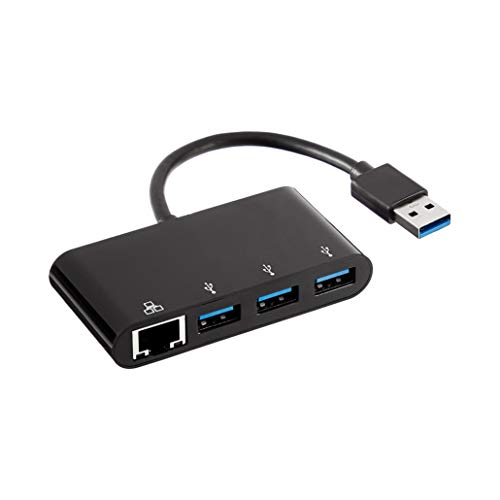
Sometimes the simplest solution is the best one, especially when you are balancing the needs of a busy household. The Amazon Basics hub is a workhorse that consistently delivers on its promises without trying to be anything more than a reliable connector. It is perfect for a shared family computer where multiple people might be plugging in various devices throughout the day.
The build quality is surprisingly solid for the price point, and it fits seamlessly into any home decor. You don’t have to worry about complicated features or high-end aesthetics; it just provides four extra ports exactly where you need them.
This hub is the definition of practical. If you need a straightforward extension for your keyboard, mouse, and a thumb drive, this is the most sensible choice.
Satechi 4-Port USB 3.0 Hub: Best Premium Design

For those who take pride in their desk aesthetic, the Satechi hub offers a sleek, aluminum finish that looks right at home next to high-end laptops and monitors. It isn’t just about looks, though; the sturdy metal construction provides a bit of extra weight, which helps the hub stay put when you are plugging and unplugging devices. It is an excellent choice for a dedicated home office where you want your equipment to look as good as it performs.
The design is slim and minimalist, fitting perfectly into modern, organized workspaces. It feels like a natural extension of your computer rather than an afterthought.
While it comes at a higher price, you are paying for durability and a clean, professional look. It is an investment in the longevity and style of your workspace.
TP-Link 7-Port USB 3.0 Hub: Best for Power Users
If your desk is a command center filled with external drives, webcams, and charging cables, a standard four-port hub just won’t cut it. The TP-Link 7-Port hub provides the extra capacity you need to keep everything connected simultaneously. Because it includes a dedicated power adapter, it ensures that your devices receive the steady current they need to function properly.
Having seven ports allows you to consolidate all your cables into one neat area. It is a must-have for anyone who manages multiple peripherals or needs to sync several devices at once.
If your household relies on heavy tech usage, this powered hub is the ultimate organizational tool. It removes the need to constantly swap cables in and out.
Insignia 4-Port USB 3.0 Hub: Best Local Availability

When you are in the middle of a project and realize you don’t have enough ports, you don’t always have the luxury of waiting for shipping. The Insignia 4-Port hub is a reliable option that you can often find at local big-box electronics stores. It is a solid, mid-range performer that bridges the gap between budget options and premium models.
Because it is widely available, it is easy to pick up in a pinch. It provides the standard USB 3.0 speeds you expect and is backed by a brand that is easily accessible for customer support or returns.
The convenience of local availability is its greatest strength. If you need a solution today, this is the most reliable choice you can find on a store shelf.
Understanding Powered vs. Unpowered USB Hubs
It is important to know the difference between these two types to avoid performance issues. An unpowered hub draws its electricity directly from your computer, which is fine for low-power devices like mice and keyboards. However, if you try to plug in multiple external hard drives or power-hungry accessories, the hub may struggle, leading to connection drops.
Powered hubs, on the other hand, plug into a wall outlet. This provides a dedicated power source that keeps all your ports running at full capacity, regardless of what is plugged into them.
- Choose Unpowered if: You are only connecting a mouse, keyboard, and an occasional flash drive.
- Choose Powered if: You are using external hard drives, high-definition webcams, or charging mobile devices.
Key Features to Consider Before You Buy a Hub
Before making your purchase, take a moment to look at your specific workspace setup. Consider how many devices you actually use on a daily basis versus how many you use occasionally. It is better to have one or two extra ports than to find yourself short-handed after a hardware upgrade.
Also, think about the physical layout of your desk. Do you need a hub with a long cable to reach a hidden tower, or would a compact, port-mounted hub be better for a laptop?
- Cable Length: Ensure the cord is long enough to reach from your PC to your preferred hub location.
- Port Spacing: Look for hubs with enough room between ports to accommodate bulky flash drives.
- Build Quality: If you move your hub often, look for metal or reinforced plastic housings.
How to Properly Manage Your Desktop Cable Setup
The best USB hub in the world can’t fix a "rat’s nest" of tangled wires. Once you have your new hub, take ten minutes to route your cables neatly behind your desk using adhesive clips or velcro ties. This keeps your workspace clean and prevents accidental tugs on your cables that could damage the ports.
Grouping cables by function—like keeping your charging cables separate from your data cables—makes it much easier to troubleshoot if something goes wrong. A clean desk isn’t just for looks; it helps you stay focused and prevents the frustration of tangled cords.
- Use Cable Ties: Keep cords bundled together to reduce visual clutter.
- Mount the Hub: If your desk surface is limited, use double-sided tape to attach the hub to the underside of the desk.
- Labeling: For complex setups, a small piece of masking tape on the cable ends helps you identify what is plugged into which port.
Choosing the right USB hub is a small but impactful upgrade that significantly improves your daily productivity. By assessing your specific needs for port count, power, and cable length, you can eliminate desktop clutter and keep your devices running smoothly. Pick the option that best fits your household routine, and enjoy a more organized, efficient workspace.
