

7 Best Handheld Seed Spreaders For Even Coverage
Achieve a professional lawn with our top 7 handheld seed spreaders. We compare the best models for even coverage, ease of use, and durability for your garden.
Achieving a lush, uniform lawn often comes down to the simple act of consistent seed distribution. Whether you are patching a small bare spot or overseeding a modest yard, a handheld spreader offers the control that larger push models simply cannot match. This guide will help you navigate the best options on the market to ensure your grass grows in thick and even.
Scotts Wizz Hand-Held: Best for Small Lawns


If you are a renter with a tiny patch of grass or a homeowner dealing with frequent bare spots, you don’t need a massive piece of equipment clogging up your garage. The Scotts Wizz is designed for those quick, targeted jobs where maneuverability is the primary goal. It is battery-operated, which removes the physical fatigue of constant hand-cranking.
The EdgeGuard technology is a standout feature here, as it prevents seed from flying onto your driveway or sidewalk. This saves you from the tedious chore of sweeping up stray seeds after you finish. It is lightweight and easy to store on a high shelf in a utility closet.
However, keep in mind that the battery requirement means you need to keep a few spare AAs on hand. It isn’t meant for large-scale lawn renovation, but for the average suburban homeowner, it hits the sweet spot of convenience and efficiency.
Earthway 2750 Hand Crank: Best for Durability

When you live in an area with rugged terrain or you simply prefer gear that feels like it will last a lifetime, the Earthway 2750 is a workhorse. It features a heavy-duty gearbox that feels significantly more robust than the plastic-heavy alternatives found in big-box stores.
The bag-style design is excellent for those who need to carry a larger volume of seed without constantly stopping to refill. Because it hangs over your shoulder, it keeps your hands free to focus on the cranking motion, which helps maintain a steady pace. It is a favorite for people with uneven slopes or hilly yards where a wheeled spreader would simply tip over.
The tradeoff here is the learning curve; it takes a moment to get used to the rhythm of the crank in relation to your walking speed. If you prioritize longevity and build quality over "plug-and-play" simplicity, this is your best investment.
Solo 421 Portable Spreader: Best for Precision

There are times when you need to be surgical with your seed application, especially when working around delicate flower beds or narrow side yards. The Solo 421 is a professional-grade handheld unit that excels at directional control.
Its internal agitator is uniquely designed to prevent clumping, which is the leading cause of patchy, uneven growth. If you have ever dealt with a "clogged" spreader mid-task, you will appreciate how smoothly this unit handles different seed types and fertilizer granules. It is a bit more expensive, but you are paying for the consistency of the output.
This model is ideal for the perfectionist who wants a golf-course-quality finish in their own backyard. Just remember that it requires a bit more maintenance to keep the internal gears clear of debris after each use.
Chapin 82000 Spreader: Best for Easy Loading

One of the most frustrating parts of using a handheld spreader is the constant mess that happens while trying to refill the hopper. The Chapin 82000 features a wide-mouth design that makes loading seed from a heavy bag significantly easier and less prone to spilling.
This unit is very straightforward, utilizing a simple thumb-operated gate control. It is perfect for those who want a "no-nonsense" tool that doesn’t require reading a manual to operate. It is compact enough to hang on a pegboard in a small shed or garage.
While it lacks some of the bells and whistles of more expensive units, its simplicity is its greatest strength. It is a reliable choice for the homeowner who just wants to get the job done and get back to their weekend.
Agri-Fab 45-0143: Best for Large Handheld Use
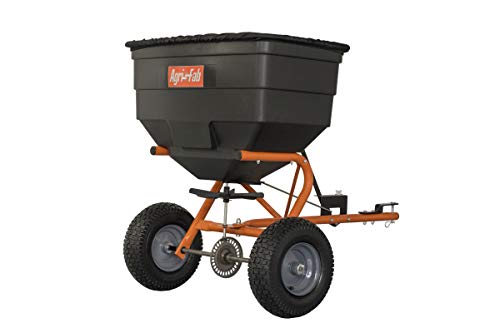
If you have a mid-sized yard that is just a bit too large for a standard handheld but too small to justify a push spreader, the Agri-Fab 45-0143 is your middle ground. It features a larger hopper capacity, meaning fewer trips back to the shed for refills.
The ergonomic handle design is a notable benefit, as it reduces wrist strain during longer sessions. It balances the weight well, making it feel less cumbersome than other high-capacity handhelds. It is a great choice for those who have a bit more ground to cover but still want the agility of a handheld device.
Because of its size, storage is a slightly bigger consideration than with smaller models. Make sure you have a dedicated corner in your garage or basement where it can sit upright to avoid hopper damage.
Echo RB-60 Hand Spreader: Best for Versatility

The Echo RB-60 is a fantastic all-rounder that handles everything from fine grass seed to heavier ice-melt pellets in the winter. Its versatility makes it a year-round tool rather than a seasonal one, which adds significant value to your purchase.
The spread pattern is impressively wide for a handheld unit, allowing you to cover more ground in less time. It feels sturdy in the hand and the controls are intuitive, making it accessible for anyone in the household to use.
If you live in a climate where you also need to spread salt or sand in the winter, this is the most practical choice. It saves you from buying two separate tools and helps keep your storage space organized.
Precision Products PS100: Best Budget Choice
You don’t always need premium features to get a healthy lawn, and the Precision Products PS100 proves that. It is an affordable, functional, and lightweight option that gets the job done without any unnecessary complexity.
It is perfect for apartment dwellers with a balcony garden or small lawn areas who don’t want to spend a lot of money on equipment. It is simple to operate and easy to clean, making it a great entry-level choice.
While it may not have the heavy-duty components of the more expensive models, it is more than capable of handling occasional light-duty tasks. It is the definition of a "practical choice" for those who value utility over brand names.
How to Calibrate Your Spreader for Even Output
Calibration is the secret to avoiding those unsightly "stripes" of thick and thin grass. Before you start, place a small amount of seed in the hopper and test the flow rate on a flat, paved surface like your driveway.
Adjust the gate opening until the seed flow matches the recommended rate on your seed bag. Most bags provide a setting number, but these are often just guidelines; always do a quick test pass to see how the seed is actually landing.
If the seed is clumping, check your agitator; if it is throwing too far to one side, adjust your walking speed or the angle of the spreader. Consistency in your walking pace is just as important as the gate setting.
Essential Tips for Consistent Seed Distribution
The most effective way to ensure even coverage is to use a "grid" pattern. Walk the entire area in one direction, then walk it again at a 90-degree angle to the first pass. This cross-hatching technique effectively fills in any gaps left by the first pass.
Always keep your hand level while cranking to ensure the seed is thrown in a uniform circle rather than an oval. If you are working on a slope, try to walk along the contours of the hill rather than straight up and down to maintain a steady rhythm.
Finally, avoid spreading on windy days. Even the best spreader in the world cannot fight a strong breeze, which will inevitably lead to uneven seed distribution and wasted product.
Maintaining Your Spreader for Longevity
The biggest enemy of any spreader is leftover seed or fertilizer, which can corrode internal parts or cause the mechanism to seize. After every single use, empty the hopper completely and rinse it out with a light spray of water.
Allow the unit to dry completely in the shade before storing it, as moisture trapped in the gears can lead to rust. If your model has a metal gearbox, a quick spray of silicone lubricant once a season will keep the crank turning smoothly.
Store your spreader in a cool, dry place away from direct sunlight, which can degrade plastic components over time. By taking these five minutes after each use, you ensure your tool is ready to go the next time you need it.
Investing in a quality handheld spreader is a small step that yields big results for your home’s curb appeal. By choosing the model that fits your specific yard size and storage situation, you can stop guessing and start growing a healthier, thicker lawn. Remember that consistent maintenance is the real key to making any of these tools last for years to come.
