

7 Best Financial Document Folder Labels for Tax Season
Organize your tax season with these 7 essential folder labels. Streamline your filing process, reduce stress, and ensure every document is easy to locate.
Tax season often feels like an overwhelming mountain of paper that threatens to take over your dining room table or home office. By choosing the right filing system, you can transform this chaotic chore into a manageable, orderly process. These seven label solutions will help you regain control of your financial records with ease and efficiency.
Pendaflex Essentials: Best for Standard Filing
If you are a renter with a modest filing cabinet or a small plastic crate, you don’t need high-end bells and whistles. Pendaflex Essentials provide the classic, no-nonsense approach that has worked for decades. They are the "bread and butter" of home organization.
These folders are perfect for those who want to keep things simple without overthinking their system. Because they are widely available and affordable, you won’t feel guilty about using them for temporary tax documents that you might clear out after the standard seven-year retention period.
The main tradeoff here is durability; the paper stock is thinner than premium alternatives. However, for the average household that only accesses these files once a year, they are more than sufficient.
Smead Colored Tabs: Best for Color Coding Tax


Visual learners often struggle with standard manila folders because everything starts to look the same after an hour of sorting. Smead Colored Tabs allow you to assign specific colors to different categories, such as red for expenses, green for income, and yellow for charitable donations.
This system is a game-changer if you share household finances with a partner or spouse. By creating a visual language for your documents, you reduce the time spent squinting at labels when you are in a rush to find a specific receipt.
Just keep in mind that color coding requires a bit of discipline to maintain. If you don’t stick to your own color key, the system can quickly become more confusing than a monochromatic one.
Avery Ready Index: Best for Professional Sorting

When you have a complex financial life—perhaps involving freelance work, rental properties, or multiple investment accounts—you need more than just a label. Avery Ready Index dividers act as a roadmap for your tax binder, allowing you to flip directly to the section you need.
These are excellent if you prefer keeping your tax records in a three-ring binder rather than a filing cabinet. They provide a clean, professional look that makes your paperwork feel much less intimidating.
While these are slightly more expensive than basic stick-on labels, the time saved in navigation is well worth the investment. They are particularly useful for those who need to present documents to an accountant or tax professional.
Blue Summit Supplies: Best for Bulk Tax Filing
Securely mail QuickBooks checks with these 500 No. 8 self-seal envelopes. The double window design ensures only addresses are visible, while the security tint and durable paper protect your financial information during transit.
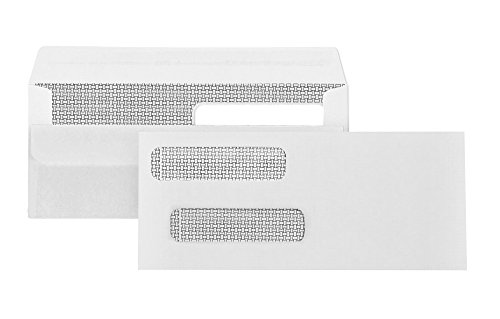
If you are managing the finances for a large family or a household with multiple side hustles, you likely have a massive volume of paperwork. Blue Summit Supplies offers bulk packs that are significantly more cost-effective than buying small, retail-sized boxes.
These supplies are built for high-volume storage where you need consistency across a large number of files. You won’t have to worry about running out of matching labels halfway through your organization project.
The downside is that you will end up with a large box of supplies that might take up precious storage space in a small apartment. If you have the room, however, the price-per-unit savings are hard to beat.
Oxford Reinforced Tabs: Best for Frequent Use

Do you find yourself pulling your tax folders out throughout the year to check on deductions or update records? Oxford Reinforced Tabs are designed to withstand constant handling without tearing or bending at the edges.
These are a sturdy choice for the homeowner who treats their tax folder as a living document rather than a "set it and forget it" pile. The reinforcement at the tab edge prevents the common frustration of labels falling off or folders becoming tattered.
While the upfront cost is higher, you are paying for longevity. You won’t need to replace these folders every few years, making them a smart long-term investment.
FileSmart Adhesive Labels: Best for Flexibility

Sometimes, you already have a set of folders you like, but the labels are faded or poorly written. FileSmart Adhesive Labels allow you to upgrade your existing system without replacing your entire filing cabinet.
These are perfect for renters who move frequently and want to keep their existing filing system consistent. You can simply peel off the old labels and apply new, crisp ones whenever your filing needs change.
The key here is to choose a high-quality adhesive that won’t leave a sticky residue behind. Always test one on a spare folder first to ensure it doesn’t damage the surface if you decide to peel it off later.
Esselte Hanging Folders: Best for Quick Access

If your filing cabinet is a "black hole" where documents go to disappear, you need the visibility provided by Esselte Hanging Folders. These folders use a unique tab system that sits at a readable angle, making it easy to scan your categories at a glance.
They are ideal for busy households that need to drop receipts into the correct folder in seconds. The ease of access encourages better habits, as you are much more likely to file a document if it takes two seconds rather than ten.
Be aware that these require a specific type of filing cabinet or a hanging folder crate. If your storage space is limited to a shelf or a desk drawer, these might not be the right fit for your furniture.
How to Categorize Your Essential Tax Documents
The most effective way to categorize is to mirror the actual tax forms you file each year. Start with broad buckets like "Income," "Deductions," and "Investments," then break them down into specific sub-folders.
- Income: W-2s, 1099s, and bank interest statements.
- Deductions: Mortgage interest, property taxes, and medical expenses.
- Business/Freelance: Mileage logs, office supplies, and equipment costs.
Don’t be afraid to create a "Miscellaneous" folder for those odd documents that don’t fit anywhere else. Just make sure to review this folder once a month so it doesn’t become a catch-all for clutter.
Choosing Durable Labels for Long-Term Storage
Tax records must be kept for several years, so your labeling method needs to be archival quality. Avoid using cheap, water-soluble markers that might fade or smudge if they come into contact with a little humidity.
- Use permanent ink: Always use a high-quality felt tip or ballpoint pen that won’t bleed.
- Consider label makers: A printed label is much easier to read than handwriting, especially if you have to look through dozens of folders.
- Protect the tab: If you are storing files in a basement or garage, look for plastic tab covers to keep moisture and dust away from your labels.
Remember that the goal is to be able to read these labels five years from now. If you can’t decipher your own handwriting, the entire system loses its value.
Best Practices for Organizing Your Tax Records
Consistency is more important than perfection when it comes to tax organization. Set a recurring date on your calendar—perhaps once a month—to clear out your "to-be-filed" pile and put everything into its proper home.
Keep your most active tax documents in the most accessible spot in your filing cabinet. You don’t need to waste prime real estate on documents from five years ago; move those to a deeper, less accessible box to save space.
Finally, involve your family members in the process if they contribute to the financial records. A system only works if everyone understands where the documents belong and is willing to use it.
Organizing your tax documents doesn’t have to be a source of anxiety if you have the right tools in your corner. By selecting labels that suit your specific storage situation and usage habits, you can simplify your life significantly. Start small, stay consistent, and you will find that tax season becomes just another routine task rather than a major household event.


