7 Best One-handed Can Openers for Limited Mobility
Discover the top 7 one-handed can openers designed for ease and safety. These ergonomic tools offer independence and efficiency for those with limited mobility.
Struggling with a standard manual can opener can turn a simple meal prep task into a painful, frustrating experience for anyone with arthritis or limited grip strength. Finding the right tool isn’t just about convenience; it’s about maintaining your independence in the kitchen. These seven options focus on reducing physical strain so you can get back to what matters most.
Hamilton Beach Smooth Touch: Best Overall Choice
When you’re preparing a quick weeknight dinner, the last thing you want is to wrestle with a stuck lid. The Hamilton Beach Smooth Touch is a standout because it cuts along the side of the can, leaving a smooth edge rather than a jagged, dangerous one. It’s a reliable workhorse for any kitchen, whether you’re in a sprawling house or a compact apartment.
The operation is remarkably straightforward: you place the can, press the lever, and the machine handles the rest. Because it uses a side-cutting mechanism, it doesn’t leave the lid falling into your food, which is a common annoyance with traditional openers. It’s an ideal balance of price and performance for those who need consistency without high-tech complexity.
Keep in mind that this model is corded, meaning you’ll need a dedicated spot on your countertop. If you have limited counter space, you might need to store it in a cabinet, but its stable base makes it easy to set up and use repeatedly. It is the most well-rounded option for someone who wants a "set it and forget it" experience.
Kitchen Mama Electric: Best for Hands-Free Use


If you find that holding a can steady while trying to operate a tool causes hand fatigue, the Kitchen Mama is a game-changer. This battery-operated device sits directly on top of the lid and does the work for you, allowing you to walk away while it rotates around the rim. It’s perfect for those with significant mobility challenges who cannot apply sustained pressure.
The beauty of this design is its portability; since it’s cordless, you aren’t tethered to a wall outlet. You can store it in a drawer and take it out only when needed, which is a major advantage for people living in small rentals with limited counter space. Just ensure you keep a spare set of batteries on hand, as you don’t want to be mid-recipe when the power fades.
While it’s incredibly convenient, remember that it is a plastic-heavy device compared to metal manual openers. It may not have the same multi-decade lifespan as an old-fashioned crank, but for the sake of daily comfort, the trade-off is usually well worth it. It’s a practical, modern solution for a daily chore.
BangRui Smooth Edge: Best for Easy Operation
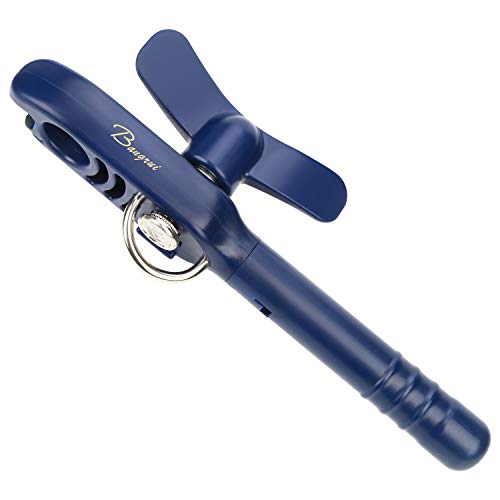
The BangRui is designed for those who appreciate simplicity but want to avoid the sharp edges of traditional cans. It operates with a single button press, making it an excellent choice for individuals who struggle with the repetitive squeezing motion required by standard manual openers. It’s compact, lightweight, and fits easily into any kitchen drawer.
This model is particularly helpful for people who have trouble with fine motor skills. Because it locks onto the lid automatically, you don’t have to worry about aligning the blade perfectly or keeping the can steady with your other hand. It is a very forgiving device that minimizes the chance of user error.
However, because it is battery-operated, it is slightly slower than a high-powered electric countertop model. If you are opening multiple cans for a large batch of soup or a holiday meal, you’ll need a little patience. For the average home cook, though, it offers a perfect mix of safety and ease of use.
EZ-DUZ-IT Deluxe: Best Manual Lever Design
Sometimes, you just want a manual tool that works every single time without needing batteries or electricity. The EZ-DUZ-IT Deluxe is a classic for a reason: it features a heavy-duty crank and a gear-driven system that makes turning much smoother than cheap, flimsy store-brand openers. It’s a great choice for those who prefer a tactile, analog experience.
The long handles provide extra leverage, which is essential if you have reduced grip strength. By using the length of the handle, you can apply more force with less actual pressure from your hand. It’s a durable, all-metal construction that feels substantial in the hand, giving you confidence that it won’t snap under pressure.
Since this is a manual tool, it does require two hands to operate—one to hold the handles together and one to turn the crank. If you have limited mobility in both hands, this might not be the most comfortable choice. For those with strength in one hand and a need for a reliable, non-electric tool, it is a top-tier contender.
Kuhn Rikon Auto Safety: Best Ergonomic Grip
The Kuhn Rikon is famous for its unique, circular design that is incredibly gentle on the joints. Instead of squeezing long handles, you simply twist a large, easy-to-grip knob on the top. This circular motion is often much easier for people with arthritis than the pinching motion required by traditional side-handle openers.
This opener also features a "lid lifter" claw, which allows you to remove the lid without ever touching the sharp metal. It’s a thoughtful feature that adds an extra layer of safety to your kitchen routine. It’s small enough to tuck into a utensil organizer, making it a favorite for those who value efficiency in small spaces.
Because it is a manual tool, you do need to provide the twisting motion yourself. If your wrist mobility is very restricted, the twisting might eventually cause some discomfort. However, for most users, the ergonomic shape of the knob makes it significantly more comfortable than any standard opener on the market.
ZYLISS Lock N’ Lift: Best for Minimal Effort
The ZYLISS Lock N’ Lift is designed specifically to solve the problem of clamping. It features a locking mechanism that secures the opener to the can automatically, so you don’t have to maintain a tight grip while you turn the handle. This "lock and forget" feature is a massive relief for anyone who struggles with hand pain.
The handle is coated in a soft, non-slip material that feels secure even if your hands are slightly damp. This is a small detail, but it makes a huge difference when you are busy in the kitchen and need to move quickly. It also includes a magnet that lifts the lid away once the cut is complete, keeping your fingers away from the metal.
This is a mid-sized tool that balances durability with ease of storage. It is built to last, though like any geared tool, it’s best to keep it clean and dry to ensure the mechanism stays fluid. It’s a great middle-ground for someone who wants the reliability of a manual tool with a bit of modern, ergonomic flair.
Cuisinart CCO-50 Deluxe: Best Countertop Model

If you have a large family or frequently prepare meals for others, the Cuisinart CCO-50 is the gold standard for countertop power. It is a heavy-duty electric opener that can handle cans of almost any size with ease. The wide base ensures it doesn’t tip over, even when opening large, heavy cans of tomatoes or beans.
This model is a favorite for those who need a stable, permanent solution. It features a magnetic lid holder and a power-pierce blade that makes opening cans effortless. You don’t need to hold the can or the opener; you just press the lever and let the machine do the heavy lifting.
The main drawback is its footprint—it is quite large and will occupy a permanent spot on your counter. If you have a small kitchen, this might feel like a luxury, but for the convenience it provides, it is often worth the space. It is the most robust option for a household that relies on canned goods for daily meal preparation.
Key Features for Those With Limited Mobility
When choosing an opener, prioritize tools that offer assisted clamping. Being able to lock the opener onto the can without having to squeeze handles together is the single most important feature for people with arthritis. This removes the need for constant, painful grip pressure.
Consider the type of handle or turning mechanism. Large, rubberized knobs or long, ergonomic levers are far superior to small, thin metal cranks. You want a surface that provides friction and allows you to use the strength of your palm or wrist rather than just your fingertips.
Finally, look for safety features like lid magnets or smooth-edge cutting. These features prevent you from having to fish a sharp lid out of a can, which is a major safety risk. Always balance these features against your available storage space and whether you prefer an electric or manual setup.
How to Maintain Your Can Opener for Longevity
To keep your opener working smoothly, avoid putting it in the dishwasher unless the manufacturer explicitly states it is safe. Water and harsh detergents can rust the internal gears or degrade the finish of manual openers. Instead, wipe the cutting blade with a damp cloth after each use to remove food debris.
For manual openers, a tiny drop of food-grade mineral oil on the gears once or twice a year can work wonders. This keeps the crank turning smoothly and prevents the metal from grinding. If you notice the opener starting to skip or get stuck, it’s usually a sign that food buildup is clogging the gear teeth.
For electric models, keep the area around the blade free of dust and grease. If the magnetic lid holder stops working, it’s often just because a layer of grease has coated the magnet; a quick wipe with a degreasing cleaner will usually restore its strength. Regular, simple maintenance will prevent the need for frequent replacements.
Safety Tips for Handling Sharp Metal Lid Edges
Even with a smooth-edge opener, it is a good practice to treat every lid with caution. Never use your bare fingers to press down on a lid to "check" if it’s open, as even a smooth cut can be razor-sharp. Use a fork or the magnetic tip of your opener to lift the lid away from the can.
If you are using a traditional opener that leaves a jagged edge, be extra careful when disposing of the lid. Place the lid inside the empty can before recycling it, or place it directly into your trash bin to avoid accidental cuts while taking out the garbage. Never leave sharp lids sitting on the counter where they could be brushed against.
If you ever find a can that is dented or bulging, do not attempt to open it, as this can be a sign of spoilage. When in doubt, it is safer to discard the item rather than risking a spill or contamination. Always prioritize your safety over the contents of the can.
Choosing the right can opener is a simple yet impactful step toward making your kitchen more accessible and stress-free. Whether you opt for the hands-free convenience of an electric model or the reliable, tactile feel of an ergonomic manual tool, the goal is to reduce your daily fatigue. Pick the tool that fits your unique strength level and kitchen space, and enjoy the confidence that comes with a kitchen designed for your needs.