7 Best USB Hubs With Individual Power Switches
Boost your workflow with these 7 top-rated USB hubs featuring individual power switches. Save energy and protect devices with our expert, curated selection.
We have all dealt with the frustration of crawling under a desk to unplug a printer or a camera that keeps drawing power when not in use. A USB hub with individual power switches turns a messy, always-on tangle of cables into a streamlined, controllable workstation. These simple devices are the unsung heroes of a tidy home office, saving both your electronics and your patience.
Sabrent 4-Port USB 3.0 Hub: Best Overall Choice
If you live in a small apartment where your desk doubles as your dining table, space is at a premium. The Sabrent 4-Port hub is a compact, no-nonsense solution that fits easily into a drawer when you need to clear your surface for dinner. It strikes a perfect balance between a small footprint and the utility of having four distinct ports.
The individual LED indicators are bright enough to see at a glance but subtle enough not to be distracting during evening work sessions. Because it is lightweight, it is perfect for renters who might move frequently and need gear that packs away without a fuss. It is a reliable, "set it and forget it" tool that just works.
The bottom line is that the Sabrent is the most versatile option for the average homeowner. It handles basic peripherals like mice, keyboards, and flash drives without the need for complex software or heavy power bricks.
Anker 4-Port USB 3.0 Data Hub: Reliable Speed
](https://m.media-amazon.com/images/I/41rsnBx1KLL._SL500_.jpg)

Anker has earned a reputation for building gear that survives the daily wear and tear of a busy household. If you have kids who are constantly plugging in controllers or school tablets, you need a hub that won’t break after a month of heavy use. This hub is built to handle the hustle of a family environment.
The data transfer speeds are impressively stable, making it a great choice if you frequently back up photos or move large files between drives. It doesn’t feel flimsy, and the cable length is just right for most standard desk setups. You won’t find yourself worrying about connection drops during important tasks.
While it lacks the heavy-duty power adapter found on larger hubs, it is excellent for data-focused tasks. If your goal is to keep your laptop ports safe from constant plugging and unplugging, this is your best bet for longevity.
Atolla Powered USB 3.0 Hub: Best for Expansion
When your home office grows to include external hard drives, ring lights, and document scanners, a simple hub often runs out of "juice." The Atolla Powered USB Hub solves this by including an external power adapter. This ensures that every connected device receives the consistent voltage it needs to function properly.

This is particularly useful for homeowners who use power-hungry peripherals that cause other hubs to disconnect randomly. The extra power means you can charge your phone or tablet while simultaneously transferring files to an external drive. It essentially turns one port on your computer into a mini-power station.
The tradeoff here is the extra cable clutter from the power brick. However, for the added stability and expansion capabilities, it is a small price to pay for a professional-grade setup.
Cateck 7-Port USB 3.0 Hub: Ideal for Desktops
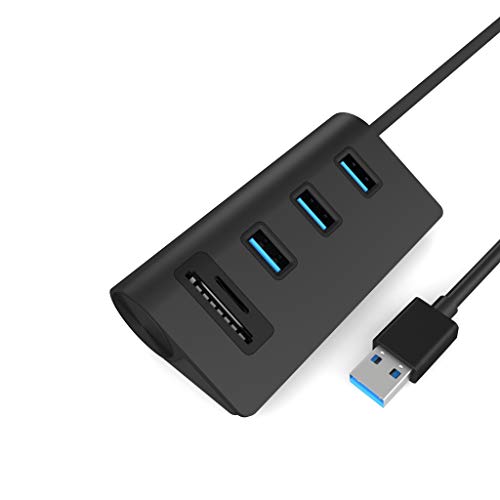
If you have a dedicated home office or a large desk, you likely have more peripherals than you realize. The Cateck 7-Port hub is designed for those who want to keep everything connected at once, from printers to specialized audio equipment. It is a workhorse that eliminates the need to swap cables ever again.
The aluminum casing provides excellent heat dissipation, which is important if you keep your devices powered on for long hours. Its slim profile allows it to sit neatly against the back of a monitor stand or the edge of a keyboard tray. It keeps the desk looking organized rather than cluttered.
This hub is ideal for the power user who wants to consolidate their workspace. Just be sure you have the desk space to accommodate its longer, seven-port design before you buy.
SSK 7-Port USB 3.0 Hub: Best for Power Control

The SSK 7-Port hub stands out because of the physical layout of its switches, which are very easy to toggle. If you have limited dexterity or just prefer a tactile "click" to know your device is off, this is a great choice. It gives you total command over your hardware without needing to pull a plug.
This hub is particularly helpful for managing devices that have "always-on" lights that might keep you awake in a bedroom office. By simply hitting the switch, you kill the power and the light instantly. It is a simple, effective way to manage your energy consumption on a micro-scale.
It is a sturdy, functional unit that doesn’t try to be flashy. For those who value control and simplicity above all else, the SSK is a highly practical addition to any desk.
Powered USB Hub by UIGM: Great for Peripherals
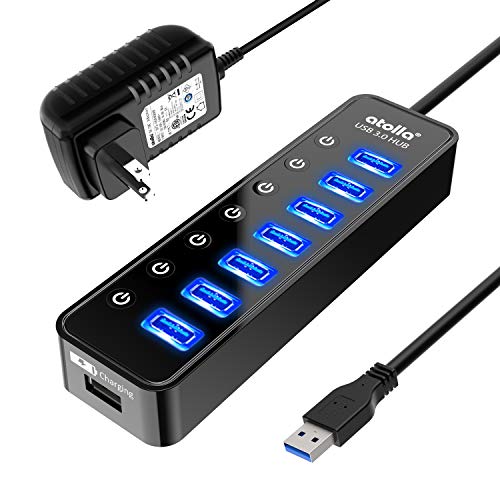
Sometimes you need a hub that acts more like a power strip for your digital life. The UIGM powered hub is designed specifically to handle multiple high-drain items like external cooling fans or portable hard drives. It provides the necessary amperage to keep everything running without the dreaded "USB device not recognized" error.
This is a fantastic option for gaming setups or home editing stations where hardware reliability is paramount. The build quality is solid, and the power supply is robust enough to handle a full load of seven devices. It is built for performance rather than portability.
If you are tired of your devices intermittently disconnecting, the UIGM is the solution. It is a bit larger than the portable options, but the stability it brings to your peripheral setup is unmatched.
Vantec 4-Port USB 3.0 Hub: Durable Build Quality

If you are worried about your hub getting knocked off the desk or stepped on, the Vantec 4-Port hub is built like a tank. It features a robust chassis that stands up to the rigors of a busy household, whether it’s in a kids’ study area or a shared living room desk. It is designed to last for years, not months.
The ports are spaced well, which is a big deal if you have thick, bulky flash drives that usually block adjacent ports. Even with only four slots, the thoughtful physical design makes it feel like it offers more. It is a classic example of "quality over quantity."
While it might cost a few dollars more than the bargain-bin alternatives, the durability makes it a better value over time. It is an honest, well-made product that respects your investment.
Why Individual Power Switches Save Your Devices
Many people don’t realize that leaving devices plugged into an active USB port can cause unnecessary wear and tear. Even when a device isn’t actively transferring data, it may be drawing a small amount of "vampire" power. This can lead to heat buildup and premature failure of internal components.
Individual switches allow you to keep your cables organized and plugged in, ready for use, without the electrical connection. This is also a safety measure; if a peripheral starts acting up or shorting out, you can kill the power instantly without fumbling for the cord. It is the safest way to manage a complex desk setup.
Think of these switches as a circuit breaker for your accessories. They protect your expensive computer’s motherboard from potential surges and keep your peripheral batteries from overcharging.
How to Choose the Right Hub for Your Workstation
When shopping for a hub, start by counting how many devices you actually use daily. If you only have a mouse and a keyboard, a 4-port hub is plenty and saves you desk space. If you are a content creator or a power user, don’t settle for less than 7 ports to avoid needing a second hub later.
Consider your power needs carefully. If you are charging phones, tablets, or using external hard drives, you must look for a "powered" hub that includes an AC wall adapter. Unpowered hubs rely on your computer’s limited power output, which often leads to connection drops and slow charging.
Finally, look at the physical size and cable length. Measure your desk and decide if you want the hub to sit hidden behind your monitor or right in front for easy access. A little bit of planning here will save you from a messy desk later.
Troubleshooting Common USB Hub Connectivity Issues
The most common issue with USB hubs is the "insufficient power" error, which usually happens when you plug too many high-drain devices into an unpowered hub. If you see this, simply move your power-hungry devices to a hub with an external power supply. This almost always solves the problem immediately.
If a device isn’t being detected, check that the hub’s individual switch is actually turned on. It sounds simple, but it is the most common reason for a "dead" port. If that doesn’t work, try a different port on your computer to rule out a software glitch or a faulty motherboard connection.
Lastly, keep your ports clean. Dust and lint can build up in USB slots over time, preventing a good connection. A quick blast of compressed air every few months is usually all it takes to keep your hub running smoothly for years.
Finding the right USB hub is a small but significant step toward a more organized and efficient home. By choosing a model with individual power switches, you gain control over your devices while protecting your hardware from unnecessary strain. Whether you need a simple 4-port unit or a 7-port power station, there is a reliable option here to suit your specific household needs.