7 Best Garment Racks For Organizing Sewing Projects
Struggling with fabric clutter? Discover the 7 best garment racks to organize your sewing projects, maximize studio space, and keep your materials accessible.
Organizing a sewing room is a constant battle against piles of fabric, half-finished garments, and unruly patterns. A dedicated garment rack transforms your studio from a chaotic workspace into a professional-feeling design hub. By keeping your projects vertical and accessible, you reclaim your floor space and keep your materials wrinkle-free.
Honey-Can-Do Rolling Rack: Best for Heavy Fabrics
Expand your closet space with this adjustable rolling garment rack. Easily customize width and height to fit your needs and accommodate long garments, offering up to 48 inches of durable hanging storage.


If you frequently work with upholstery weight fabrics, denim, or heavy wools, you know that standard racks often buckle under the pressure. The Honey-Can-Do rack is built with a reinforced frame designed specifically to handle significant weight without sagging or bowing in the middle.
Because it features a sturdy steel construction, it provides the peace of mind needed when hanging multiple heavy coats or long cuts of drapery fabric. It is a reliable workhorse for the serious sewist who doesn’t want to worry about frame fatigue.
However, keep in mind that this rack is utilitarian in design rather than decorative. It is the perfect choice for a garage-based sewing station or a basement studio where function must strictly outweigh form.
Songmics Metal Garment Rack: Top Sturdy Choice

Many home sewing rooms double as guest bedrooms or offices, meaning you need a rack that looks decent while holding a heavy load. The Songmics rack offers a sophisticated aesthetic with a powder-coated finish that resists scratching, making it a great choice for shared living spaces.
What sets this model apart is the additional storage shelf at the base. This is an ideal spot for keeping bins of notions, heavy sewing machine accessories, or spare rolls of batting off the floor.
While it is exceptionally sturdy, assembly can be a bit more involved than cheaper models. Take your time with the hardware to ensure the joints are fully tightened, as this is the secret to its long-term stability.
Whitmor Double Rod Rack: Best for Project Variety
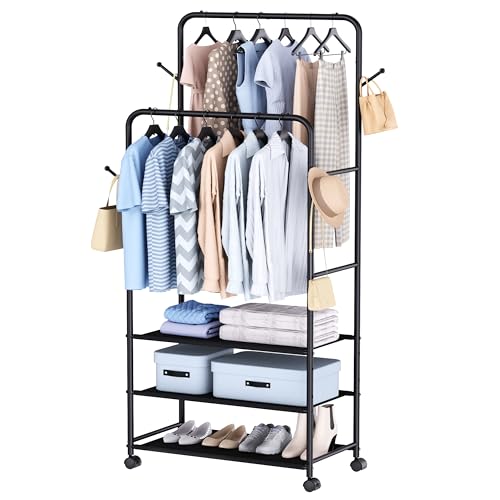
When you are juggling multiple projects at once, such as a quilt in progress and a stack of dress patterns, a single rod simply isn’t enough. The Whitmor Double Rod Rack allows you to separate your current "in-work" garments from your finished pieces or raw fabric bolts.
The adjustable nature of the rods means you can tailor the height to accommodate long maxi dresses or shorten it to fit under a window. This versatility is a lifesaver in smaller apartments where you have to maximize every square inch of wall space.
Be aware that when you load both rods to capacity, the footprint of the rack increases significantly. Ensure you have the floor clearance to navigate around it before committing to this dual-level solution.
Simple Houseware Rack: Best for Small Sewing Rooms
Living in a studio apartment or a tiny craft nook often means you have zero room for bulky storage. The Simple Houseware rack is a slim-profile solution that tucks neatly into corners, making it a favorite for those who sew in shared living areas.
It is lightweight and easy to move, which is helpful if you need to push your project aside to make room for guests. While it isn’t designed for extreme weight, it is perfectly adequate for light-to-medium weight garments and finished items.
The bottom line is that you are sacrificing some weight capacity for a smaller footprint. If you stick to cottons and lightweight blends, this rack will serve your needs beautifully without overwhelming your room.
Seville Classics Commercial Rack: Best Durability
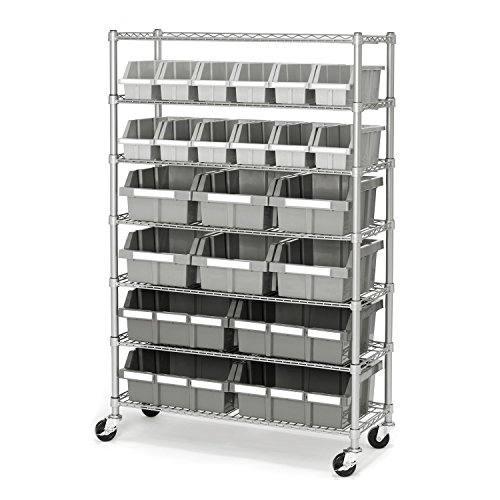
If you are a professional sewist or someone who spends hours at the machine every single day, you need equipment that won’t fail. The Seville Classics Commercial Rack is built with thicker steel and industrial-grade casters that glide smoothly even when fully loaded.
This is an investment piece that is meant to last for years of heavy use. The chrome finish is highly resistant to moisture and rust, which is a major benefit if your sewing space is in a humid basement or a garage.
It is significantly heavier than standard home racks, so it is best suited for those who don’t plan on moving their storage solution frequently. Once you set this up, it becomes a permanent, reliable fixture in your workflow.
Amazon Basics Expandable Rack: Best Budget Option

Not every sewing setup requires a high-end industrial rack, especially if you are just starting your hobby or working on a tight budget. The Amazon Basics Expandable Rack provides a simple, no-frills way to organize your projects without a large financial commitment.
The expandable rods are a clever feature, allowing you to widen the rack when you have a large project and shrink it back down when you need the space. It is a straightforward, honest piece of hardware that does exactly what it promises.
While it lacks the heavy-duty reinforcements of more expensive models, it is perfectly capable of holding a moderate amount of sewing projects. It is a great starting point for anyone looking to organize their space without overspending.
Tatkraft Falcon Rolling Rack: Best for Mobility
Sometimes you need your sewing project to follow you from the cutting table to the ironing board and finally to the sewing machine. The Tatkraft Falcon is designed with high-quality, smooth-rolling casters that make moving a full rack of fabric effortless.
The design is sleek and modern, fitting well into contemporary home decor. It balances the need for mobility with a surprisingly high weight capacity, making it a versatile choice for those who don’t have a dedicated sewing room.
Because it is so easy to move, it is tempting to overload it; however, always remember to distribute the weight evenly across the rod. This simple habit will prevent the wheels from wearing out prematurely and keep your rack rolling smoothly for years.
How to Select the Right Rack for Sewing Projects
- Assess your fabric weight: Heavy upholstery and denim require steel-reinforced frames, while cottons can be supported by lighter models.
- Measure your floor space: Always account for the footprint, including the width of the legs, not just the length of the hanging rod.
- Consider verticality: If your floor space is limited, look for racks with bottom shelves to store bins of notions and patterns.
- Check for mobility: If you move your projects between rooms, prioritize high-quality, lockable casters over fixed-leg models.
Maximizing Vertical Space in Your Sewing Studio
Vertical space is the most underutilized asset in a sewing studio. Beyond just hanging garments, you can use S-hooks on the rack rods to hang bags of scraps, patterns, or even your cutting mats.
If your rack has a shelf, use clear, labeled bins to keep small items like thread spools, bobbins, and zippers visible. This prevents the "out of sight, out of mind" problem where you end up buying duplicates of things you already own.
Finally, consider adding a secondary wall-mounted hook or rack above your garment rack for items you rarely use. By stacking your storage, you keep your primary workspace clear for the actual act of sewing.
Maintenance Tips for Maintaining Garment Rack Life
- Tighten hardware annually: Vibrations from sewing machines or general movement can loosen screws over time; check all joints every few months.
- Clean the casters: Thread and lint often get caught in the wheels; remove them periodically to ensure the rack continues to roll easily.
- Distribute weight evenly: Avoid hanging all your heavy items on one side, as this puts unnecessary stress on the frame and can lead to permanent bending.
- Wipe down rods: Dust and fabric lint can build up on the hanging rod; a quick wipe with a microfiber cloth keeps your finished garments clean.
Investing in a quality garment rack is one of the most practical upgrades you can make for your sewing practice. By choosing a model that matches your fabric weight and spatial constraints, you will spend less time hunting for materials and more time creating. Keep your rack maintained, stay organized, and enjoy the newfound clarity in your creative space.