

7 Best Kitchen Knife Sharpeners For Seniors Safe to Use
Finding a safe, easy-to-use knife sharpener is vital for seniors. We review the top 7 models that prioritize stability, ergonomic design, and injury prevention.
Cooking should remain a joy rather than a physical struggle as we age, but a dull kitchen knife often turns simple meal prep into a dangerous chore. Choosing the right sharpener can restore your kitchen tools to their former glory without requiring the steady hand of a professional chef. These seven selections prioritize safety, ergonomic comfort, and consistent results for your daily routine.
Chef’sChoice Trizor XV: Best Edge Precision
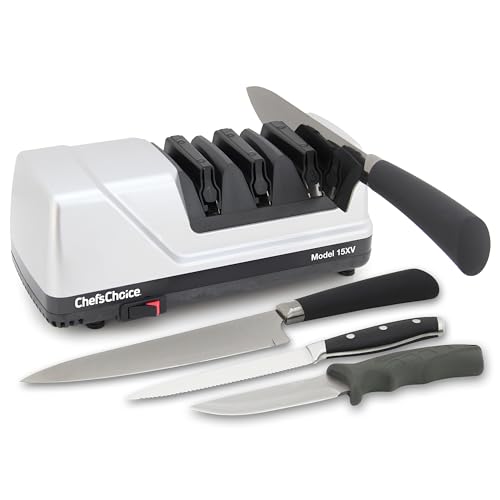

If you have invested in high-quality cutlery and want to maintain that professional "razor" feel, this electric sharpener is a standout choice. It uses a three-stage process to create a 15-degree edge, which is sharper than most standard factory blades.
For seniors who might struggle with the manual labor of whetstones, this machine does all the heavy lifting. You simply guide the blade through the slots, and the precision guides ensure you never have to guess the angle.
While it is a larger unit that requires counter space, it is incredibly stable. It’s an excellent investment for those who cook frequently and want to avoid the fatigue associated with pushing a dull blade through tough vegetables.
Work Sharp E5: Safest Automated System
The Work Sharp E5 is designed for the homeowner who values safety above all else. It utilizes flexible abrasive disks that automatically adjust to the knife’s geometry, meaning you cannot accidentally ruin your blade.
The unit features a built-in "sharpening guide" that holds the knife at the correct angle, which is a major relief for those with arthritis or limited grip strength. It essentially takes the human error out of the equation.
Because it is compact and quiet, it fits well in smaller kitchens or apartment counters. It is pricier than manual options, but the peace of mind it provides regarding blade control is worth the premium.
KitchenIQ Edge Grip: Best Manual Stability
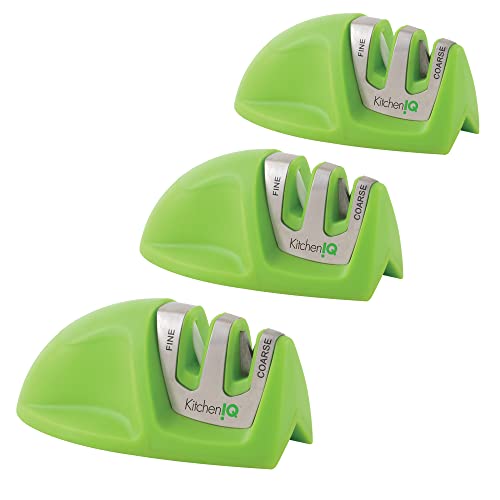
Sometimes you don’t need a heavy electric motor; you just need a reliable tool that stays put. The KitchenIQ is a compact manual sharpener specifically designed with a "non-slip" base that hooks over the edge of your countertop.
This feature is a game-changer for seniors who might worry about a sharpener sliding while they are applying pressure. By anchoring it to the edge of the table, you gain extra leverage and significantly more stability.
It is an affordable, low-maintenance solution that fits easily into a junk drawer or utensil organizer. It is the perfect "quick fix" for someone who only needs to touch up a few knives once a month.
Wüsthof 2-Stage: Simple Pull-Through Design

If you prefer simplicity over bells and whistles, the Wüsthof 2-Stage pull-through is about as straightforward as it gets. It features a coarse slot for dull blades and a fine slot for regular maintenance, clearly labeled for ease of use.
The handle is ergonomically shaped, allowing you to get a firm, comfortable grip while keeping your fingers safely away from the sharpening elements. It is lightweight, making it easy to pull out and put away without straining your wrists.
This is a no-nonsense tool that works well for standard kitchen knives. It isn’t intended for specialized Japanese blades, but for the average household chef, it provides a consistent, safe edge every time.
Smith’s Jiffy-Pro: Best Handheld Safety
The Smith’s Jiffy-Pro is designed with a unique finger guard that acts as a physical barrier between your hand and the blade. This is particularly useful for those who might have slight tremors or concerns about hand-eye coordination.
It is a small, handheld device that you can use while standing at the counter or sitting at the kitchen table. Its portability means you aren’t tied to a power outlet, which is a great benefit for those with limited counter space.
While it lacks the finesse of electric sharpeners, its safety-first design is its biggest selling point. It is an inexpensive, effective way to keep your knives functional without needing a dedicated storage spot.
AccuSharp Knife Sharpener: Ergonomic Grip

The AccuSharp is widely recognized for its large, oversized handle that is very easy to grasp. If you have limited dexterity or find smaller tools difficult to hold, the design of this sharpener will feel much more natural.
It uses diamond-honed tungsten carbide blades to sharpen knives in just a few strokes. Because it is so efficient, you don’t need to spend long periods of time working on a single blade, which helps prevent hand fatigue.
It is a durable, long-lasting tool that works on almost any blade, including serrated ones. It is a fantastic choice for the practical homeowner who wants a tool that works reliably for years without needing replacement parts.
Lansky 4-Rod Turn Box: Controlled Angle

If you are looking for a system that provides professional results without the high cost of electric machines, the Lansky Turn Box is an excellent middle ground. It uses ceramic rods set into a wooden base at a fixed, preset angle.
You hold the knife vertically and move it down the rod, meaning you don’t have to worry about maintaining a specific angle with your wrist. This "vertical" motion is often much easier on the joints than the horizontal pulling motion of other sharpeners.
The base is sturdy and keeps the rods organized, making it a safe and tidy system for your pantry or cabinet. It is a slightly slower process than an electric sharpener, but it offers a level of control that is very rewarding for the patient home cook.
Why Sharp Knives Are Safer for Senior Hands
Many people mistakenly believe that a dull knife is safer because it is less "sharp." In reality, a dull knife requires significantly more force to cut through food, which increases the likelihood of the blade slipping and causing an injury.
When you use a sharp knife, the blade does the work for you, allowing you to use light, controlled movements. This reduces the strain on your hands and wrists, which is vital for maintaining comfort during meal preparation.
By keeping your knives sharp, you are actually preventing accidents. A smooth, clean cut is far less likely to result in a slip than a jagged, forced cut made with a dull edge.
Key Features for Seniors to Look for Today
- Non-Slip Bases: Always prioritize tools with rubberized feet or edge-locking mechanisms to prevent movement.
- Ergonomic Handles: Look for tools with wide, textured grips that are easy to hold even if your hands are slightly damp.
- Fixed Angles: Choose systems that have built-in guides so you don’t have to rely on steady hands to maintain the perfect sharpening angle.
- Low Maintenance: Seek out tools that don’t require oiling or complex assembly, allowing for "grab-and-go" usability.
Simple Tips for Maintaining Sharp Blades
The best way to keep a knife sharp is to avoid dulling it in the first place. Always use a wooden or plastic cutting board rather than glass, ceramic, or stone, which can ruin an edge instantly.
Hand-wash your knives immediately after use and dry them right away. Leaving knives in a sink full of soapy water is not only dangerous for your fingers but also corrosive to the metal edge of the blade.
Finally, consider using a honing steel regularly. Honing doesn’t sharpen the knife, but it realigns the microscopic metal teeth on the blade, keeping it feeling sharp for much longer between actual sharpening sessions.

Maintaining sharp kitchen knives is one of the most effective ways to ensure your time in the kitchen remains safe and enjoyable. By selecting a tool that matches your physical comfort level and storage space, you can easily turn a daunting chore into a quick, routine task. Choose the system that makes you feel most confident, and your hands—and your recipes—will thank you.
