

7 Best Short 12-foot Tape Measures for Indoor Projects
Find the best 12-foot tape measures for indoor tasks. Our guide reviews 7 compact, precise tools perfect for quick home measurements and DIY project accuracy.
Whether you are measuring a window for new curtains or checking if a new bookshelf will fit in your apartment nook, the right tool makes all the difference. While massive 30-foot tapes are great for construction sites, they are often bulky and unnecessary for everyday home tasks. A 12-foot tape measure provides the perfect balance of precision, portability, and ease of use for almost any indoor project.
Stanley PowerLock 12-Foot: Best Overall Choice


When you think of a classic tape measure, the Stanley PowerLock is likely what comes to mind. It has been a staple in toolboxes for decades because it strikes the perfect middle ground between price and performance. For the average homeowner, it offers a reliable locking mechanism that holds the blade firmly in place without slipping.
The metal case is surprisingly tough, capable of surviving the occasional drop onto a hardwood floor or tile. While it lacks some of the bells and whistles of modern "pro" tapes, its simplicity is its greatest strength. You won’t find yourself fumbling with complex buttons or locking levers when you just need a quick measurement.
If you are a renter who keeps a small "junk drawer" kit or a homeowner just starting your tool collection, this is the gold standard. It is affordable enough that you can keep one in the kitchen and one in the garage without breaking the bank. It is the definition of a "buy once, use forever" household staple.
Komelon Self-Lock 12-Foot: Best for Accuracy

We have all dealt with the frustration of a tape measure that snaps back too quickly or fails to lock when you need it most. The Komelon Self-Lock solves this by automatically locking the blade as you pull it out, allowing you to take measurements single-handedly. This is a game-changer when you are balancing on a step stool while measuring a high window frame.
Beyond the convenience, the blade itself is printed with high-contrast markings that are easy to read in dim lighting. If you often work in closets or under cabinets where visibility is poor, this clarity reduces the chance of a misread. Accuracy is the primary goal here, and the blade stays remarkably straight during use.
The trade-off is that the auto-lock mechanism requires a slightly different technique than traditional tapes. You must press a button to retract the blade, which can take a few minutes to get used to. However, for precise DIY projects where every fraction of an inch matters, this is a top-tier choice.
Lufkin Hi-Viz 12-Foot: Best for High Visibility
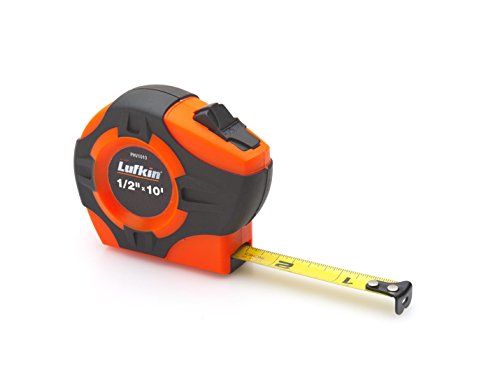
If your tool drawer is a chaotic mess, you know the struggle of trying to find a tape measure that blends into the background. The Lufkin Hi-Viz features a bright, neon-colored case that stands out instantly, whether it is sitting on a workbench or buried in a storage bin. It is a simple feature, but it saves you time and frustration during quick home repairs.
The blade is equally easy to see, featuring bold, clear numbers that don’t fade quickly with regular use. For homeowners with aging eyes or those working in poorly lit basements, this tape offers a significant advantage. You won’t need to strain to see exactly where the mark falls on the tape.
While the case is made of lightweight plastic rather than heavy-duty metal, it is more than sufficient for indoor use. It is lightweight and easy to carry in a pocket while you move from room to room. If you value efficiency and hate losing your tools, the Hi-Viz is a practical investment.
Milwaukee Compact 12-Foot: Best for Durability

Even if you only use your tape for indoor projects, tools inevitably get dropped, stepped on, or knocked off tables. The Milwaukee Compact is built with a reinforced frame that can handle more abuse than most 12-foot tapes on the market. It feels substantial in the hand, giving you confidence that it won’t break if it hits the floor.
Despite its rugged construction, the "compact" design means it doesn’t take up excessive space in your drawer. It fits comfortably in the palm of your hand, making it ideal for smaller hands or tight spaces. The blade has a protective nylon coating that prevents rust and wear, ensuring the markings stay legible for years.
This is an excellent option for households with kids or active pets where tools might be moved around frequently. You are paying a slight premium for the durability, but the peace of mind is worth it. It is a professional-grade tool scaled down for the home user.
Tajima Hi-Conve 12-Foot: Best for Rigid Blade

One of the biggest annoyances with small tape measures is the blade "folding" or collapsing when you try to measure a long distance. The Tajima Hi-Conve is famous for its exceptionally rigid blade, which can extend several feet without bending or buckling. This is incredibly helpful when you are measuring the length of a room or the height of a wall by yourself.
The blade is finished with a matte, non-glare coating that makes it easy to read even under direct overhead lights. It feels premium and professional, offering a level of stability that most 12-foot tapes simply cannot match. If you do a lot of solo projects, this rigidity is a massive time-saver.
Because of the high-quality materials, this tape is usually more expensive than standard options. It is a specialized tool that might be overkill for someone who only measures a picture frame once a year. However, for the serious DIYer, it is a joy to use.
Crescent Lufkin 12-Foot: Best for Portability

If you live in a small apartment or a studio, you know that every inch of storage space is precious. The Crescent Lufkin 12-foot tape is designed with a slim, low-profile case that slides easily into a kitchen drawer, a small tool bag, or even a jacket pocket. It is arguably the most "carry-friendly" tape on this list.
Don’t let the small size fool you; the blade is still robust and features a reliable locking mechanism. It is designed for the person who needs a tool that is there when they need it but invisible when they don’t. It is the perfect "grab-and-go" solution for minor home maintenance.
The trade-off for such a small profile is a slightly smaller thumb lock, which might be difficult for those with limited dexterity. If you prioritize space-saving above all else, this is your best bet. It is the ultimate tool for the minimalist homeowner.
FastCap PSSR12 12-Foot: Best for Woodworking
The FastCap PSSR12 is a favorite among woodworkers for one specific reason: it includes a built-in pencil sharpener and a notepad on the side of the case. When you are measuring for shelves or furniture, you can mark your spot and write down your dimensions without hunting for a pen. It is a thoughtful design that addresses the actual workflow of home improvement projects.
The tape also features a "lever-action" belt clip and a blade that is printed on both sides. This makes it incredibly easy to take measurements in awkward positions where you can’t easily turn the tape over. It is a specialized tool that turns a simple measuring task into a more efficient process.
While it is perfect for hobbyists and woodworkers, it might feel a bit "busy" for someone who just wants a simple tape. However, if you are planning to build a desk or install shelving, the extra features are genuine conveniences. It is a tool designed by people who actually spend time working on projects.
Why 12-Foot Tapes Are Ideal for Indoor Projects
Many people assume they need a 25 or 30-foot tape measure for their home, but that is rarely the case. A 12-foot tape is significantly lighter, smaller, and easier to handle for the types of tasks you do inside. Most interior walls, windows, and furniture items fall well within that 12-foot range.
Using a massive tape for a small job is like using a sledgehammer to drive a thumbtack. You deal with unnecessary weight, a bulky case, and a blade that is often too wide and stiff for measuring smaller objects. A 12-foot tape is nimble, allowing you to get into corners and tight spaces with ease.
For renters, these tapes are perfect because they fit into standard apartment storage solutions without cluttering your space. They are also much safer to use indoors, as the smaller blades are less likely to cause damage if they snap back quickly. When it comes to indoor projects, smaller is almost always better.
Key Features to Consider Before You Buy a Tape
When shopping for a tape, the first thing to look at is the blade stand-out. This refers to how far you can extend the tape horizontally before it bends under its own weight. A better stand-out makes solo measurements much easier, especially when measuring across a room.
Next, consider the locking mechanism. You want a lock that is easy to engage with your thumb but sturdy enough to hold the blade firmly when you are marking a measurement. Test the button to ensure it doesn’t feel "mushy" or prone to slipping, as a loose lock can lead to inaccurate cuts.
Finally, look at the hook and markings. A good hook should have a small amount of "play" to account for its own thickness, ensuring accuracy when measuring from both the inside and outside of an object. Clear, high-contrast markings are non-negotiable for preventing errors during your projects.
How to Properly Clean and Maintain Your Tape
A tape measure is a precision tool, and keeping it clean is the best way to ensure it lasts for years. If your tape gets dusty or covered in sawdust, wipe the blade down with a dry cloth before retracting it. Avoid using oils or lubricants, as these can attract more debris and gunk up the internal spring mechanism.
If the tape gets wet, pull the blade all the way out and let it air dry completely before retracting it. Retracting a wet blade can cause the internal spring to rust, which will eventually lead to the tape failing to retract properly. A little bit of patience during the drying process prevents a permanent breakdown.
Lastly, never let the tape "snap" back at full speed. This habit puts massive stress on the hook and the internal spring, which is the most common cause of tape failure. Always guide the blade back into the case with your hand to keep the mechanism in top shape.
Choosing the right 12-foot tape measure is about matching the tool to your specific home habits and project types. Whether you prioritize high visibility, extreme durability, or clever storage-saving features, there is an option here that will serve you well. Remember that the best tape is the one that is comfortable in your hand and reliable when you need it most.
