

7 Best Soldering Iron Kits for Basic Electronics Repair
Discover the 7 best soldering iron kits for basic electronics repair. We evaluate essential features, performance, and value to help you solder with precision.
Whether you are fixing a loose connection on a child’s toy or repairing a broken wire in a kitchen appliance, having a reliable soldering iron is a game-changer for any homeowner. Investing in the right tool saves you from discarding perfectly good electronics and keeps your household running smoothly. This guide will help you navigate the market to find a kit that fits your space, budget, and project needs.
Hakko FX-888D: Best Overall Soldering Station
If you are a homeowner who values longevity and precision, the Hakko FX-888D is widely considered the gold standard for a reason. It is a workhorse designed to last for years, making it an excellent investment for those who plan on doing occasional repairs around the house for the next decade.
The digital interface allows for precise temperature control, which is vital when you are working on sensitive circuit boards or delicate components. Because it is a station rather than a handheld iron, it stays firmly planted on your workbench or kitchen table, reducing the risk of accidental burns.
While it does take up a bit more counter space than a simple stick iron, the stability and consistent heat recovery are worth the footprint. For the serious DIYer, this is the tool that turns a frustrating repair into a satisfying, professional-grade task.
Weller WLC100: Top Pick for Hobbyists and DIY


The Weller WLC100 is a classic choice for those who prefer simple, analog controls over complex digital menus. It is perfect for the homeowner who wants to plug in, turn a dial, and get straight to work without fussing over settings.
This unit is incredibly robust and can handle a wide variety of household tasks, from light stained glass work to basic electrical wire splicing. It is a no-nonsense tool that has been a staple in workshops for generations because of its straightforward reliability.
The tradeoff here is the lack of a digital temperature readout, meaning you will need to learn how your iron behaves at different dial settings. However, for most household repairs, this simplicity is actually a benefit, as there is less that can go wrong or break over time.
Pinecil V2: Best Portable Smart Soldering Iron

If you live in a small apartment or lack a dedicated workshop space, the Pinecil V2 is a revolutionary option. It is incredibly compact, fitting easily into a junk drawer or a small tool kit, and it runs on USB-C power, allowing you to use a high-wattage power bank if needed.
Despite its tiny size, it is a "smart" iron that heats up in seconds, which is a massive advantage when you only have a few minutes to fix a broken headphone cable or a battery contact. It is the ultimate tool for those who value minimalism and portability above all else.
Keep in mind that you will need to purchase a compatible power supply separately, which is an additional step in the setup process. For the tech-savvy homeowner who values a clutter-free home, this is the most space-efficient solution on the market.
Velleman VTSS5: Best Budget Starter Kit Choice

Not every household repair requires a professional-grade station, and the Velleman VTSS5 proves that you don’t need to break the bank to get the job done. This is an ideal entry-level kit for someone who just needs to fix a one-off issue and wants to keep costs as low as possible.
It provides a stable base and a basic soldering iron that will get the job done for simple tasks like repairing holiday lights or small remote controls. It is lightweight and easy to store, making it a great "just in case" tool for renters who don’t have a lot of storage space.
The main drawback is that it lacks the rapid heat recovery and refined temperature control of more expensive models. If you find yourself doing repairs more than once or twice a year, you may eventually want to upgrade, but for a starter, it is perfectly functional.
X-Tronic 3020-XTS: Best Value Digital Station
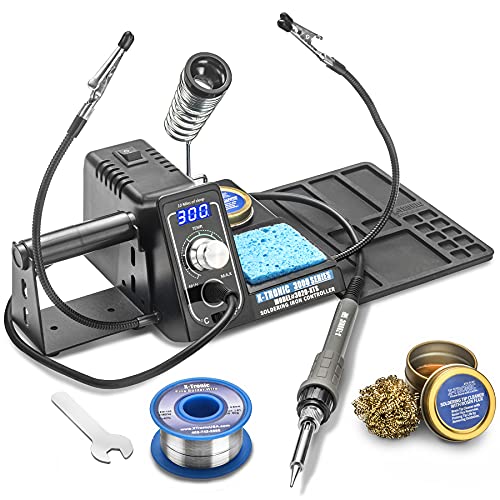
The X-Tronic 3020-XTS strikes a perfect balance between price and performance, offering digital features that usually cost twice as much. It comes with a variety of accessories, including brass sponge cleaners and extra tips, which saves you from having to buy add-ons later.
This station is ideal for the homeowner who wants a professional experience without the premium price tag. It features a clear display and a sturdy iron holder, providing a safe and organized environment for your repairs.
Because it is a feature-rich unit, it does require a bit more shelf space than a portable iron. However, if you have a small corner of a garage or a basement workbench, the value proposition here is hard to beat for long-term home maintenance.
Anbes 60W Kit: Best Complete Beginner Bundle
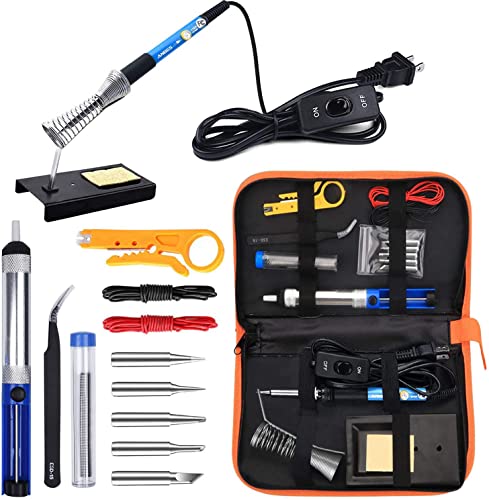
If you are just starting out and don’t own any soldering accessories, the Anbes 60W kit is an excellent "all-in-one" solution. It includes the iron, a stand, wire cutters, and even some solder, so you won’t have to make multiple trips to the hardware store.
This kit is designed for convenience, making it perfect for someone who wants to start learning the craft immediately. It is an approachable way to tackle basic household repairs without the intimidation of high-end equipment.
The quality of the individual components is geared toward light, occasional use rather than heavy-duty daily operation. It is a great way to test your interest in DIY electronics before committing to a more expensive, permanent station.
Yihua 939D+: Best Professional-Grade Station
The Yihua 939D+ is for the homeowner who treats DIY repair as a serious hobby or a secondary trade. It offers exceptional heat stability and a very intuitive interface that makes working on complex projects feel effortless.
This station is built to handle sustained, long-term use, making it the best choice if you are refurbishing old electronics or building your own projects from scratch. It is a substantial piece of equipment that commands respect on any workbench.
Because of its size and power, it is likely overkill for someone who only fixes a broken wire once a year. If you have the space and the ambition to take on more complex repairs, however, this is a tool that will grow with your skills.
Essential Features to Look for in a Soldering Kit
When choosing a kit, focus on these non-negotiable features to ensure you aren’t fighting your tools:
- Adjustable Temperature Control: This is vital for preventing damage to sensitive components or circuit boards.
- Heat Recovery Speed: A good iron should return to its set temperature quickly after touching a cold joint.
- Interchangeable Tips: Ensure the kit allows you to swap tips for different tasks, such as fine-point tips for small wires or chisel tips for larger connections.
- Stable Stand: Always prioritize a heavy, secure stand to prevent the hot iron from tipping over and damaging your surfaces.
How to Properly Maintain and Tin Your Iron Tips
The secret to a long-lasting soldering tip is "tinning," which involves keeping the tip coated in a thin layer of fresh solder. Before you turn your iron off, always apply a small amount of solder to the tip to prevent oxidation, which is the primary cause of tip failure.
Never use sandpaper or a metal file to clean your tip, as this will destroy the protective plating and ruin the tool. Instead, use a brass wire sponge or a damp cellulose sponge to gently wipe away debris while you are working.
If your tip does become oxidized and black, try using a specialized "tip tinner" paste to restore it. Properly maintained tips transfer heat much more efficiently, making your repairs faster and far less frustrating.
Safety Tips for Working With Hot Soldering Tools
Soldering involves temperatures that can easily exceed 700°F, so safety must be your top priority in any household setting. Always work in a well-ventilated area, as the smoke produced by melting solder flux can be irritating to your lungs.
Keep your workspace clear of flammable materials like paper, fabric, or cleaning chemicals. Even if you are just taking a short break, always place the iron back in its dedicated holder; never lay it down on a table or workbench surface.
Finally, always wear safety glasses to protect your eyes from accidental solder splashes. By treating the tool with respect and keeping your workspace organized, you can safely tackle almost any electronic repair in your home.
Choosing the right soldering kit is about balancing your current repair needs with the space you have available in your home. Whether you opt for a compact portable iron or a robust digital station, the ability to repair your own electronics is a valuable skill that pays for itself over time. Start with a kit that fits your budget, keep your tips clean, and you will be well-equipped to handle the next household repair that comes your way.
