

7 Best Winged Plastic Anchors for Lightweight Shelving
Secure lightweight shelves easily with our top 7 winged plastic anchors. This guide compares durability and ease of installation for your DIY home projects.
Hanging a lightweight shelf seems like a simple weekend project until you realize your drywall is crumbling under the pressure of a simple bracket. Choosing the right winged plastic anchor is the difference between a sturdy display for your books and a jagged hole in your wall. This guide will help you navigate the hardware aisle to ensure your walls stay intact and your shelves stay level.
TOGGLER All-Purpose Plastic Toggle Anchors


When you are dealing with hollow walls or irregular backing, the TOGGLER is often the gold standard for reliability. These aren’t your typical cheap plastic plugs; they feature a unique design that locks behind the drywall to create a secure, vibration-resistant hold.
They are particularly useful if you live in an older apartment where the drywall might be soft or prone to crumbling. Because they create a physical toggle mechanism, they provide peace of mind that a simple expansion plug simply cannot match.
The trade-off here is the installation process, which requires a slightly larger drill bit than standard anchors. However, for a shelf that will hold daily essentials like spices or small plants, the extra security is well worth the effort.
Hillman Group Winged Plastic Wall Anchors

If you are looking for a straightforward, budget-friendly solution for a basic shelf, the Hillman Group winged anchors are a reliable staple. These are designed to expand as the screw is driven in, with the wings preventing the anchor from spinning inside the hole.
These are perfect for the "quick fix" scenario where you need to hang a small shelf in a rental and want to minimize wall damage. They are incredibly easy to install, usually requiring nothing more than a standard drill and a screwdriver.
Keep in mind that these are best suited for truly lightweight items, such as decorative picture ledges or small knick-knacks. They aren’t intended for heavy-duty storage, so be realistic about the weight limit of your shelf before loading it up.
E-Z Ancor Stud Solver Winged Drywall Anchors
Easily install anchors directly into drywall, even if you hit a stud, with no pre-drilling required. Their wide thread design ensures a strong grip for secure hanging.

There is nothing more frustrating than drilling a hole only to realize you’ve hit a stud, or worse, missing the stud entirely when you needed it. The E-Z Ancor Stud Solver is designed to be versatile enough to work in both drywall and wood studs without pre-drilling.
This is a fantastic time-saver for homeowners who are tired of switching back and forth between drill bits. The self-tapping tip allows you to drive the anchor directly into the wall, which makes the installation process feel much faster.
While these are slightly more expensive per unit, the convenience of not needing a drill for every single hole is a major advantage. They are a smart choice for busy households where time is a limited commodity during DIY projects.
Fischer UX Universal Plastic Plug Anchors

Fischer is a brand known for engineering precision, and their UX universal plugs are designed to adapt to almost any wall material. Whether you are anchoring into drywall, brick, or concrete, these plugs knot up behind the surface to provide a solid grip.
These are the "one-size-fits-all" solution for someone who isn’t entirely sure what is behind their wall. If you live in a house with a mix of drywall and masonry, keeping a box of these on hand simplifies your hardware inventory significantly.
The primary downside is that they can be a bit more expensive than standard plastic anchors. However, the versatility they offer means you won’t have to buy multiple types of hardware for a single shelf project.
Home Depot Everbilt Winged Plastic Anchors
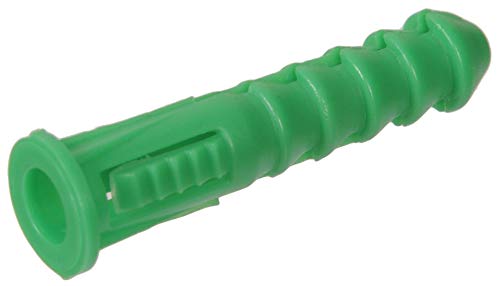
Everbilt anchors are the go-to choice for the thrifty DIYer who needs to get a project done without breaking the bank. These are widely available, simple to use, and effective for basic, lightweight shelving installations.
They feature classic wings that provide just enough friction to keep the anchor seated while you tighten the screw. They are ideal for large-scale projects where you might be hanging multiple shelves and need to keep your hardware costs low.
Because they are an entry-level product, ensure you aren’t over-tightening the screws, which can cause the plastic to strip or the anchor to pull through the wall. Use them for their intended purpose—lightweight decorative storage—and they will serve you well.
Cobra TripleGrip Advanced Winged Anchors

The Cobra TripleGrip is a step up for those who want a more "professional" feel to their installation. These anchors feature an advanced design that expands in three different directions, creating a very strong hold in drywall.
They are particularly effective at preventing the "wobble" that often plagues lightweight shelves over time. If you have a busy household with kids or pets that might bump into your shelves, the extra stability provided by the TripleGrip is a valuable feature.
They can be a bit more difficult to remove if you ever need to patch your walls, so they are better suited for permanent fixtures. Think of these as a long-term investment in the stability of your home’s storage.
OOK Professional Winged Drywall Anchors
OOK is well-regarded for their high-quality hanging hardware, and their winged anchors are no exception. These are designed with a focus on ease of installation and a clean, flush finish against the wall.
They are an excellent choice if you are concerned about the aesthetics of your installation, as they sit very neatly against the drywall surface. They are reliable, sturdy, and come with clear instructions that make them approachable for beginners.
While they carry a slightly higher price point, the quality control is generally higher than generic store-brand versions. If you are hanging a shelf that is a focal point in your living room, the OOK anchors provide a polished, professional look.
How to Choose the Right Anchor for Drywall
Choosing the right anchor starts with a simple reality check: what exactly are you hanging? For a shelf holding a few lightweight books, a standard winged anchor is sufficient, but for anything heavier, you may need a toggle bolt or a screw-in metal anchor.
- Weight: Always check the manufacturer’s weight rating for the anchor, and then cut that number in half to be safe.
- Wall Thickness: Standard drywall is 1/2 inch; if your walls are thicker or thinner, your anchor’s grip will change.
- Material: If you are unsure if you are hitting a stud, use a stud finder first to avoid unnecessary damage.
Don’t be afraid to over-engineer your solution if it means preventing a future accident. It is always better to use an anchor rated for ten pounds on a five-pound shelf than to risk the shelf pulling out of the wall.
Essential Tools for Installing Winged Anchors
You don’t need a professional workshop to install these anchors, but having the right tools makes the process significantly easier. At a minimum, you will need a power drill, a set of drill bits, a screwdriver, and a level.
- Power Drill: Essential for creating clean holes without damaging the surrounding drywall.
- Level: A small bubble level is non-negotiable for ensuring your shelf doesn’t look crooked.
- Hammer: Useful for gently tapping the anchor flush with the wall if the hole is a tight fit.
Always keep a vacuum or a small dustpan nearby to catch the drywall dust as you drill. Keeping your workspace clean makes the job feel much less like a chore and more like a satisfying home improvement project.
Troubleshooting Common Wall Anchor Failures
If you find that your anchor is spinning in the hole, it usually means the hole you drilled is too large. In this case, pull the anchor out and use a slightly larger size, or fill the hole with a bit of spackle, let it dry, and try again.
If the anchor pulls out of the wall entirely, it means the weight of the shelf exceeded the anchor’s capacity. Don’t try to reuse the same hole; patch it, let it cure, and move the shelf location slightly to ensure a fresh, solid grip.
Finally, if you strip the head of the screw, don’t force it. Use a pair of pliers to back it out or a screw extractor tool to remove it, and replace the screw with a fresh one to ensure a tight final fit.
Finding the right anchor is all about balancing the weight of your items with the realities of your wall material. By choosing a product that matches your specific DIY skill level and home layout, you can create functional storage that lasts for years. Take your time with the installation, and your shelves will be both sturdy and perfectly level.
