

7 Best Compact Stud Finders For Small Toolboxes
Maximize efficiency with our top 7 compact stud finders. These portable tools offer precision and reliability for any small toolbox, perfect for quick projects.
Whether you are hanging a gallery wall in a new apartment or mounting a heavy shelf in your family home, finding a stud is the difference between a secure fixture and a damaged wall. A compact stud finder is an essential tool that saves you from the frustration of "Swiss cheese" drywall caused by missed attempts. This guide helps you choose a reliable, space-saving device that fits perfectly in your toolbox without compromising on performance.
Franklin Sensors ProSensor M50: Best Overall Pick


When you are in the middle of a DIY project, you don’t want to spend five minutes calibrating your tool. The Franklin Sensors M50 is a game-changer because it uses a series of LED lights to show you the exact width of the stud instantly. It eliminates the guesswork, which is perfect for busy parents or renters who want to get the job done quickly and move on.
Because it lacks a traditional "center-finding" needle, it is incredibly intuitive for beginners. You simply place it against the wall and press the button; if there is a stud, the lights illuminate. It is compact enough to slide into a small drawer or a small portable toolbox, making it a reliable companion for quick fixes.
The trade-off here is that it requires batteries, which can be a nuisance if you rarely use the tool. However, for the sheer speed and accuracy it provides, it is arguably the most practical choice for most homeowners. It strikes a perfect balance between professional-grade results and user-friendly simplicity.
CH Hanson Magnetic Stud Finder: Best Budget Option

If you prefer a tool that never needs batteries and fits in the palm of your hand, a magnetic finder is your best friend. The CH Hanson uses powerful rare-earth magnets to detect the screws or nails holding the drywall to the stud. It is arguably the most durable option because there are no electronic components to break or corrode over time.
This tool is ideal for those who live in older homes where studs are often marked by identifiable nail patterns. It is incredibly affordable, making it a low-risk purchase for someone who only hangs a picture frame once or twice a year. Its tiny footprint makes it the ultimate space-saver for a minimalist toolbox.
The catch is that it requires a steady hand and a bit of patience to locate the fasteners. It won’t work well on walls with thick plaster or heavy textures, so keep that in mind if you live in a historic building. For the vast majority of modern drywall homes, however, it is a reliable, "set it and forget it" tool.
Zircon MultiScanner A200: Best for Precision
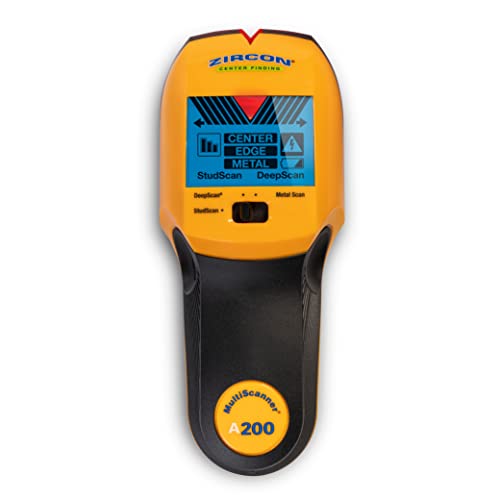
Sometimes you need more than just a stud finder; you need to know exactly what is hiding behind your walls before you drill. The Zircon MultiScanner is a step up for those who are planning to mount heavy cabinetry or televisions. It detects wood studs, metal studs, and even live AC wiring, which is a vital safety feature.
The precision of this device is its strongest selling point. It provides clear, actionable feedback that helps you avoid drilling into electrical lines, a common fear for many homeowners. While it is slightly larger than a basic magnetic finder, it still fits comfortably in standard toolboxes.
You do pay a premium for this extra functionality, and the learning curve is slightly steeper than a basic "on/off" device. If you are a homeowner who tackles frequent renovation projects, the peace of mind regarding electrical safety is well worth the investment. It is a professional-grade tool distilled into a consumer-friendly package.
StudBuddy Magnetic Stud Finder: Best Simple Tool

The StudBuddy is the definition of "keep it simple." It is a small, lightweight magnetic tool that you can literally stick to the wall while you mark your spot. It is perfect for those who work alone and don’t have a third hand to hold a level or a pencil.
Because it is so small and inexpensive, you can keep one in your kitchen junk drawer and another in your primary toolbox. It is highly effective for standard drywall installations and requires zero technical knowledge to operate. Its simplicity is its greatest strength, as there is virtually nothing that can go wrong with it.
It does not offer the advanced features of digital sensors, so it won’t alert you to hidden wires or pipes. If you are working on a simple project like hanging curtains or a mirror, this is all you will ever need. It is an honest, no-nonsense tool that delivers exactly what it promises.
Walabot DIY 2: Best Advanced Imaging Device

For the tech-savvy homeowner, the Walabot DIY 2 turns your smartphone into a wall-imaging powerhouse. It connects via Wi-Fi to your phone, allowing you to see a visual representation of what is behind the drywall. It is essentially an X-ray vision tool that fits in your pocket.
This is the ultimate tool for complex projects where you need to map out studs, pipes, and wires simultaneously. It is incredibly impressive for showing guests or family members exactly why you are choosing a specific spot to drill. It is also excellent for troubleshooting issues like finding the path of a wire.
The downside is that it depends on your smartphone’s battery and app connectivity, which can be frustrating if you are in a rush. It is also the most expensive option on this list, so it is best reserved for those who do frequent home improvements. For the right user, it provides a level of detail that no other tool can match.
Stanley Stud Sensor 100: Best Basic Reliability

Stanley is a household name for a reason: they make tools that work reliably for decades. The Stud Sensor 100 is a classic, no-frills electronic finder that does exactly what it says on the box. It is easy to hold, easy to read, and very affordable for the average family.
This model is perfect for someone who wants a digital tool without the complexity of advanced sensors or smartphone integration. It uses a simple interface to indicate the edges of a stud, which is sufficient for hanging most household items. Its slim design is easy to store in any small tool bag or utility drawer.
While it lacks the "wow" factor of newer tech, its reliability is its defining feature. You won’t find yourself struggling with confusing menus or calibration errors. It is a "workhorse" tool that will likely stay in your collection for years to come.
Ryobi Phone Works Stud Finder: Best Digital Tech
Ryobi has carved out a niche by making high-tech tools accessible to the average DIYer. Their Phone Works stud finder uses your phone’s screen to display precise measurements and stud locations. It is a great middle ground for those who want digital precision without the high cost of industrial sensors.
The app interface is clean and easy to navigate, making it a fun tool to use for home projects. It is very compact, as the device itself is just a small module that attaches to your phone or works via Bluetooth. It is a great way to modernize your toolbox without taking up extra space.
Like all app-based tools, it requires your phone to be charged and the app to be updated. If you are someone who hates juggling gadgets, you might find this setup a bit cumbersome. However, for those who enjoy using their tech to solve physical problems, it is a very satisfying tool to own.
Key Features to Prioritize in Compact Detectors
When shopping for a compact stud finder, you must prioritize ease of use over raw power. A tool that is too complicated will end up gathering dust in your toolbox instead of helping you on the wall. Look for devices that offer clear, unambiguous signals, such as bright LED lights or loud beeps.
Consider your specific wall type before making a purchase. If you live in a modern apartment with standard drywall, a basic magnetic or simple electronic finder is perfectly sufficient. If you are dealing with thick plaster, lath, or textured surfaces, you will need a more powerful electronic sensor to get an accurate reading.
Finally, think about battery management and storage. If you only use your tool once a year, a battery-powered device might be dead when you need it most, making a magnetic finder a better choice. Always check the dimensions to ensure it fits into the specific "home" you have designated for your tools.
How to Properly Calibrate Your Stud Finder Tool
Calibration is the most misunderstood part of using an electronic stud finder. Most people fail to realize that you should place the tool against a "blank" section of the wall—where you know there is no stud—before turning it on. This allows the sensor to "zero out" and understand the density of your specific drywall.
If you skip this step, your tool will likely give you false positives or struggle to find the center of the stud. Always follow the manufacturer’s instructions for the specific model you own, as some require you to hold a button while moving, while others calibrate automatically. Taking five seconds to calibrate properly saves you minutes of frustration later.
If the tool starts acting erratically, it is usually a sign that it needs to be recalibrated or that the batteries are running low. Don’t be afraid to reset the device if you feel like it is giving you inconsistent readings. A little bit of patience during the calibration phase ensures a perfect hole every single time.
Tips for Storing Your Tools in Small Toolboxes
In a small toolbox, every cubic inch of space counts. Store your stud finder in a dedicated pouch or a small bubble-wrap sleeve to protect the sensor lens from scratches or debris. A damaged sensor lens is the quickest way to ruin the accuracy of your tool.
If you own an electronic stud finder, always remove the batteries if you don’t plan on using the tool for more than a month. Battery leaks are the number one cause of tool failure in home garages and basements. It is a small habit that will keep your tools functioning for years.
Lastly, group your tools by task rather than by size. Keep your stud finder, a small level, a pencil, and a tape measure together in one "hanging kit" bag. This way, when you decide to hang a picture, you grab one bag and have everything you need to finish the job without digging through the entire box.
Choosing the right stud finder is about balancing the complexity of your projects with the space you have available in your home. Whether you opt for a simple magnetic tool or a high-tech imaging device, the goal is to make your home improvement tasks safer and more efficient. With the right tool in your kit, you can confidently hang anything on your walls and enjoy the results of a job well done.



