

7 Best Filament Tapes for Reinforcing Heavy Packages
Secure your heavy shipments with our top 7 filament tapes. Discover high-tensile, adhesive solutions designed for superior durability and package reinforcement.
Moving house or shipping heavy equipment often leads to the frustrating realization that standard clear tape simply cannot hold the weight. Filament tape, reinforced with embedded fiberglass strands, is the secret weapon for ensuring your boxes arrive intact. This guide breaks down the top options to help you secure your belongings without the stress of mid-transit failures.
3M Scotch 893: Best Overall for Heavy Shipping


When you are sending a heavy box of books or kitchen appliances across the country, you need a tape that won’t snap under pressure. The 3M Scotch 893 is the industry standard for a reason; it features a synthetic rubber adhesive that bonds instantly to corrugated cardboard.
It strikes the perfect balance between tensile strength and ease of use, making it ideal for the average homeowner who isn’t a professional mover. You won’t struggle with the tape snapping while you’re trying to pull it off the roll, which saves time and frustration.
Bottom line: If you want peace of mind for a one-off move or occasional heavy shipping, this is the reliable, no-nonsense choice that rarely disappoints.
Uline S-416: Best for Industrial Strength Needs
If you are running a small home business or dealing with a massive move involving heavy tools, you need something tougher than the store-bought variety. The Uline S-416 is designed for extreme duty, offering a higher tensile strength that handles sharp edges and heavy loads with ease.
This tape is thicker and slightly stiffer, which means it is best used with a dedicated tape dispenser rather than by hand. While it might be overkill for a small shoe box, it is indispensable for securing heavy plastic bins or crates that might otherwise pop open.
Bottom line: Invest in this if you have a high volume of heavy packages and need professional-grade security that won’t fail under stress.
Duck Brand Filament Tape: Best Value for Money
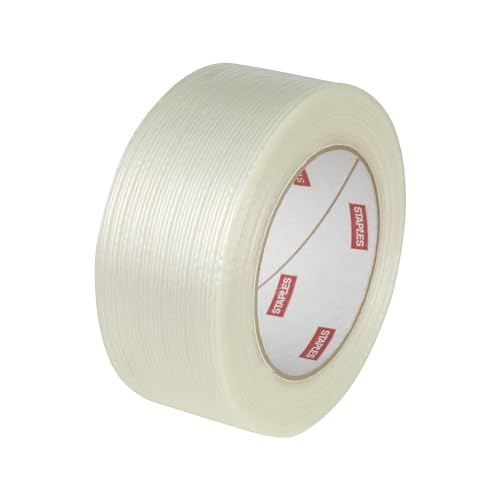
Not every project requires a specialized industrial roll that costs a premium. Duck Brand filament tape is widely available in most hardware stores, making it the most accessible option for someone who needs a quick solution for a weekend project.
It provides enough reinforcement to handle standard heavy household boxes while remaining affordable enough for everyday use. While it may not have the same extreme adhesive longevity as industrial brands, it performs perfectly for storage and standard shipping needs.
Bottom line: This is the smart choice for the budget-conscious homeowner who needs reliable performance without paying for professional-grade overkill.
Intertape Polymer Group RG300: Best for Bundling

Bundling items like PVC pipes, wooden dowels, or garden tools can be a nightmare if your tape doesn’t have the right "tack." The IPG RG300 is specifically engineered for bundling, meaning it holds items tightly together without slipping or sliding over time.
Because it is designed to stick to itself, it creates a secure wrap that holds odd-shaped items in a tight, manageable package. It is an excellent tool for organizing a garage or basement, keeping loose items from scattering during a move.
Bottom line: Choose this if your goal is to hold multiple loose objects together in a single, secure bundle rather than just sealing a box.
Powerfix Filament Strapping Tape: Best for Pallets

If you are shipping heavy items on a small pallet or securing very large crates, you need a tape that mimics the strength of plastic strapping. Powerfix is designed for these high-tension applications, resisting the stretching that often causes other tapes to fail.
Its high-strength backing is specifically made to withstand the rigors of warehouse handling and forklift transit. For the average homeowner, this is likely too heavy-duty for a standard cardboard box, but it is a lifesaver for heavy-duty shipping projects.
Bottom line: If you are moving heavy machinery or large, oversized items, this tape provides the structural integrity required to prevent shifting.
Tape Logic 360 Filament Tape: Best High Adhesion

Sometimes, the surface of your shipping container isn’t perfectly clean or smooth, which causes standard tapes to peel off. Tape Logic 360 is famous for its aggressive adhesive, which bites into the surface of the box to create a permanent bond.
This high-tack quality is particularly useful when shipping in colder climates, where traditional adhesives often become brittle and lose their grip. You can trust that the seal will remain intact even if the package is exposed to fluctuating temperatures during transit.
Bottom line: Use this for packages that will be stored in unheated garages or shipped through varying climates where adhesion failure is a risk.
JVCC FIL-24 Filament Tape: Best for Heavy Repair
Beyond shipping, filament tape is a fantastic tool for quick household repairs, such as reinforcing a cracked plastic bin or patching a torn tarp. The JVCC FIL-24 is a high-quality, versatile tape that handles these "fix-it" tasks with surprising durability.
It is clear enough that you can see what you are patching, but strong enough to act as a semi-permanent hinge or structural patch. It is a great item to keep in a junk drawer for those moments when you need a repair that is stronger than duct tape but less bulky.
Bottom line: Keep a roll of this handy for emergency household repairs where you need high tensile strength and a clean, non-obstructive finish.
How to Properly Apply Filament Tape for Strength
The secret to filament tape isn’t just the product itself, but the "H-tape" method. You should apply one strip across the center seam, followed by two more strips along the edges where the flaps meet the side walls.
Always use a dispenser if possible to apply tension as you lay the tape down, which prevents air bubbles from forming. Air bubbles are the enemy of adhesion; pressing the tape firmly with your palm after application ensures the adhesive fully bonds to the fibers of the cardboard.
Bottom line: A little extra effort in the application process is worth ten times the strength of just slapping a single strip across the middle.
Filament Tape vs. Standard Packing Tape Explained
Standard packing tape is designed for moisture resistance and general closure, but it lacks the internal structure to handle significant weight. Filament tape contains fiberglass strands running longitudinally, which provide the "skeleton" that prevents the tape from stretching or snapping under load.
Think of standard tape as a skin and filament tape as a muscle; one keeps dust out, while the other holds weight in. Using standard tape on a heavy box is a recipe for a bottom-drop disaster, while using filament tape on a light box is simply a waste of resources.
Bottom line: Use standard tape for light, everyday boxes and reserve filament tape for items weighing over 30 pounds or those with sharp, heavy contents.
Essential Tips for Securing Very Heavy Packages
- Distribute weight: Never pack all your heavy items at the bottom of one large box; use smaller boxes to keep the weight manageable.
- Fill the voids: Use packing paper or bubble wrap to fill empty spaces so items don’t shift and put unnecessary pressure on the tape.
- Double-box: For extremely heavy or fragile items, place the filled box inside a slightly larger box with padding in between.
- Check the seams: Always tape the bottom of the box with the same rigor you use for the top, as the bottom is the most common point of failure.
Bottom line: Packaging is a system, not just a single step; combine strong tape with smart packing techniques to ensure your items arrive safely.
Choosing the right filament tape is a small investment that pays off by protecting your valuable items from damage during transit or storage. By matching the tape’s strength to your specific needs, you can move with confidence and avoid the stress of broken boxes. Remember that the best tape in the world works best when combined with careful packing and a solid, multi-strip application technique.

