

7 Best Root Pruning Seed Trays for Stronger Roots
Boost plant health with our top 7 root pruning trays. These designs prevent circling, promote dense root growth, and ensure stronger starts for your garden.
Every gardener knows the frustration of pulling a plant from a pot only to find a tangled, circling mess of roots. By switching to root-pruning trays, you stop this cycle before it starts, ensuring your seedlings grow vigorous, fibrous root systems that thrive upon transplanting. These specialized containers are the secret to healthier plants and less stress during your spring garden setup.
Air-Pot Propagation Trays for Superior Air Pruning
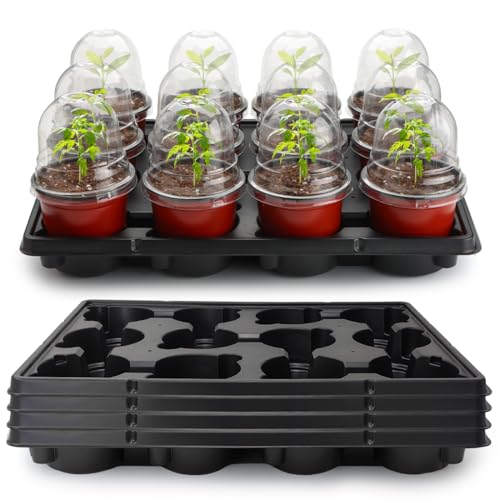

If you are tired of plants struggling for weeks after you move them to the garden, Air-Pot trays might be your solution. These trays use a unique dimpled design that directs roots toward holes in the side, where the air naturally "prunes" the tip. This process forces the plant to branch out, creating a dense, fibrous root ball instead of one long, circling taproot.
For apartment dwellers or those with limited balcony space, these trays are remarkably efficient. Because they encourage such rapid root development, you can often keep plants in smaller containers for longer periods without them becoming root-bound. While they are a bit more expensive than standard plastic trays, the survival rate of your seedlings makes them a smart long-term investment.
The main tradeoff here is cleaning; the textured surface requires a bit more attention with a scrub brush at the end of the season. If you are a busy parent or professional, keep this maintenance in mind before buying. Ultimately, if you want professional-grade root structures in a home setting, these are hard to beat.
RootMaker 18-Cell Trays for Rapid Root Growth

RootMaker trays are a favorite among serious home orchardists and those starting trees or woody perennials. These trays utilize a vertical ribbing system that guides roots toward air-pruning holes, effectively "training" the plant to build a robust foundation. It is a highly effective way to ensure your future shrubs and trees don’t suffer from transplant shock.
If you have a larger yard and plan on growing long-term plants, these trays offer a significant advantage over standard nursery pots. They are durable enough to be reused for many seasons, which helps justify the higher upfront cost. You won’t have to replace them every year, saving you money and reducing plastic waste in your garage or shed.
However, these trays are bulky and take up more shelf space than traditional flat trays. If your seed-starting area is just a small corner of a kitchen counter, you might find them a bit cumbersome. They are best suited for those with a dedicated potting bench or a garage workspace.
Ellepot Paper Pots for Root-Friendly Transplanting

Ellepot systems are perfect for the homeowner who wants to minimize plastic waste while maximizing convenience. Instead of a rigid tray, you use a biodegradable paper sleeve that holds the soil together. When it is time to plant, you place the entire unit into the ground, eliminating the need to physically pull the seedling out of a tray.
This method is incredibly gentle on delicate root systems, making it ideal for fast-growing vegetables like cucumbers or squash that hate having their roots disturbed. Because the paper decomposes, the roots simply grow through the sides and into the surrounding soil. It is a seamless transition that keeps your plants growing without a single day of "transplant pause."
The downside is that you need to purchase the proprietary paper rolls or pre-filled trays, which can be an ongoing expense. If you are looking for a one-time purchase, this isn’t it. But for the sheer ease of transplanting, it is often worth the recurring cost for busy gardeners who value their time.
Anderson 32-Cell Root Trainer for Deep Rooting
When you are starting deep-rooted vegetables like peppers or tomatoes, the Anderson Root Trainer is a reliable workhorse. These trays are designed with deep, vertical cells that encourage downward growth while preventing the roots from spiraling at the bottom. The cells are often hinged, allowing you to open them like a book to inspect roots or remove the plant with zero damage.
This is a fantastic option for renters who might be moving their garden containers frequently. The sturdy construction holds up well to being moved around, and the cell depth ensures that your plants develop the deep, strong structure they need to support heavy fruit later in the season. It is a middle-ground choice that balances durability with ease of use.
Be aware that these trays can be quite tall, so ensure your grow lights or window sills have the necessary vertical clearance. If you have low shelves, you may need to adjust your setup before these arrive. They are a practical, no-nonsense tool that delivers consistent results for the average home gardener.
Deepot Cell Trays for Optimal Seedling Development

Deepot trays are essentially the "high-rise" apartments of the seed-starting world. They are exceptionally deep, which is ideal for species that naturally grow a long taproot, such as native wildflowers or certain types of beans. By allowing the roots to extend downward, you prevent the common issue of the roots hitting the bottom and bending into a knot.
Because these trays are so deep, they are very stable and less likely to tip over on a windy patio or a crowded shelf. They are excellent for homeowners who want to start larger plants that need a head start before hitting the ground. The extra volume also means they hold more moisture, which is helpful if you sometimes forget to water your seedlings on a busy day.
The main trade-off is the sheer amount of potting mix required to fill them. If you are starting hundreds of seeds, your soil costs will add up faster than with shallow trays. However, the resulting plant health usually makes the extra soil investment well worth it.
Haxnicks Root Trainer for Stronger Root Systems

The Haxnicks system is famous for its unique "opening" design that makes transplanting nearly foolproof. The sides of the cells open up, allowing you to lift the entire root plug out without tugging on the stem. This is a massive benefit for beginners who might accidentally snap a stem while trying to remove a seedling from a standard, tight-fitting plastic cell.
These are particularly great for families gardening with children, as the process is tactile and easy to manage without causing damage. The design promotes air pruning at the bottom, ensuring that your plants aren’t just tall, but also well-anchored. It’s a very user-friendly system that takes the anxiety out of the transplanting process.
While they are excellent for beginners, the hinges can eventually wear out after several years of heavy use. If you are looking for a "buy it once for life" product, treat the hinges with care. Otherwise, they are an excellent, accessible choice for any home gardener.
Gardener’s Supply Air-Pruning Pots for Success

Gardener’s Supply offers a range of air-pruning pots that focus on simplicity and accessibility for the everyday homeowner. These pots are designed to be intuitive, with clear airflow channels that prevent root circling without requiring complex assembly. They are a great entry point if you are curious about air pruning but don’t want to invest in a professional-grade setup.
These pots are versatile enough to work in a variety of spaces, from small apartment windowsills to larger backyard greenhouses. They are generally lightweight and easy to clean, making them a low-stress option for someone who just wants their plants to grow better without a steep learning curve. They strike a nice balance between price, quality, and ease of use.
One thing to keep in mind is that they can dry out faster than traditional solid-walled pots due to the increased airflow. You will need to keep a closer eye on your watering schedule, especially during hot, dry spells. If you are prone to forgetting to water, you might want to place these on a tray that can hold a little bit of water at the base.
Why Root Pruning Trays Improve Plant Vigor
Root pruning trays fundamentally change how a plant develops by mimicking the natural environment of the forest floor. In a standard pot, roots hit the wall and circle, which eventually strangles the plant and limits its nutrient uptake. By using air to "prune" these tips, the plant is forced to create a dense network of fine, white, active root hairs.
This dense root ball is the engine of your plant’s growth. A plant with a strong, fibrous root system can absorb water and nutrients far more efficiently than one with a few long, circling roots. When you finally transplant these seedlings into your garden or larger pots, they experience almost no lag time.
Instead of spending weeks recovering from the shock of being moved, your plants hit the ground running. You will notice stronger stems, greener leaves, and earlier flowering or fruiting. It is one of the most effective ways to boost your garden’s performance without relying on chemical fertilizers.
Key Features to Consider When Buying Root Trays
When shopping for these trays, your first priority should be the size and depth of the cells relative to what you are growing. A tiny tray might work for lettuce, but it will stunt a tomato plant within weeks. Always check the dimensions to ensure they fit your specific grow lights or shelf space, as these trays can be surprisingly large.
- Durability: Are you looking for something to use once or for a decade? Hard plastic lasts longer but costs more; thin plastic is cheaper but may crack after a season.
- Cleaning: Look for smooth interior surfaces if you want to avoid scrubbing out soil residues.
- Accessibility: Does the tray open up (like a book) for easy transplanting, or do you have to push the plant out from the bottom?
- Compatibility: Do the trays fit inside standard 1020 watering flats? This makes watering much easier.
Don’t feel pressured to buy the most expensive professional equipment. If you are a casual gardener, a simple air-pruning pot will likely give you better results than a high-end system that you find too complicated to use. Prioritize a system that fits into your current routine, not one that forces you to change your life to accommodate it.
Best Practices for Transplanting Seedlings Safely
Even with the best trays, transplanting is a high-stakes moment for a seedling. Always wait until the plant has developed its "true leaves" and the root ball is firm enough to hold its shape. If the roots are still too loose, the soil will crumble, and the plant will suffer unnecessary stress.
Water your seedlings thoroughly an hour or two before transplanting to ensure the roots are hydrated and the soil is pliable. This makes the removal process much smoother and reduces the risk of root breakage. If you are using a tray that doesn’t open, gently squeeze the sides of the cell rather than pulling on the stem.
Finally, always "harden off" your plants by gradually exposing them to outdoor conditions over a week. Even the best-pruned roots won’t save a plant that is shocked by a sudden change in temperature or direct sunlight. Take it slow, be gentle, and your plants will reward you with a strong, healthy season.
Investing in root-pruning trays is one of the most effective ways to ensure your gardening efforts yield the results you deserve. By choosing a system that fits your space, budget, and maintenance habits, you can stop root-bound plants for good. Start small, observe how your plants respond, and enjoy the confidence that comes with a healthy, vigorous garden.
