

7 Best Backer Rod Foams for Deep Gaps That Seal Well
Seal deep gaps effectively with our top 7 backer rod picks. Discover the best foam materials for superior insulation, durability, and a perfect airtight fit.
We have all stared at that widening gap between the baseboard and the floor or the unsightly crack in the driveway, wondering how to stop the drafts and pests from getting inside. Backer rods are the unsung heroes of home maintenance, providing the essential foundation for a clean, professional-looking caulk job. Choosing the right one saves you money on sealant and prevents those frustrating "caulk blowouts" that ruin a weekend project.
M-D Building Products Foam: Best for Large Gaps


When you are dealing with those deep, cavernous gaps around older door frames or wide floor transitions, you need a rod that fills space without collapsing. M-D Building Products offers a dense, reliable foam that holds its shape even when pushed into irregular openings.
It is particularly useful for homeowners in older houses where settling has created uneven gaps that standard caulk simply cannot bridge. Because it is highly compressible, you can force it into tight spots while still maintaining enough internal pressure to stay firmly in place.
The trade-off here is that it can be a bit stiff to work with in very tight, winding gaps. However, for sheer volume and structural support in large voids, it is a workhorse that won’t let you down.
Frost King Poly Foam: Top Pick for DIY Projects

If you are a renter or a homeowner tackling a Saturday afternoon project, you likely want something that is easy to find and simple to handle. Frost King is the gold standard for accessibility, available at almost every local hardware store.
This foam is soft, forgiving, and incredibly easy to cut with a pair of household scissors. It is perfect for those quick fixes, like sealing around a drafty window unit or filling a small gap in baseboard trim.
While it might not be the most heavy-duty option for extreme weather exposure, it is more than sufficient for interior needs. It is the most cost-effective choice for those who don’t want to overspend on professional-grade materials for simple household maintenance.
Sika Backer Rod: Best for Professional Sealants

When you are working with high-end, heavy-duty sealants—like those used for exterior masonry or high-traffic walkways—you need a rod that won’t react negatively to the chemicals. Sika is the go-to for pros because it is chemically inert and highly compatible with almost any sealant you choose.
This rod is designed to maintain its integrity under the weight of thick, industrial-grade caulks. It doesn’t shrink or sag, ensuring that your seal remains airtight and waterproof for years to come.
While it is priced a bit higher than basic hardware store foam, the investment is worth it for exterior areas exposed to harsh sun and rain. If you want to do the job once and not think about it for a decade, this is your best bet.
Armacell Closed Cell Rod: Superior Moisture Seal
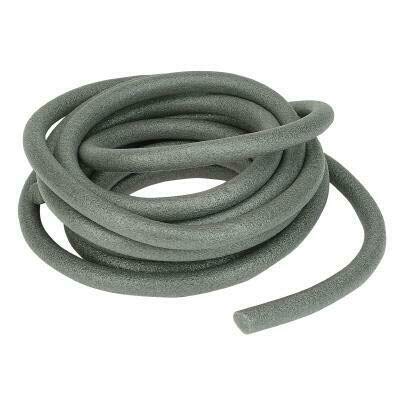
Moisture is the enemy of any home, leading to rot, mold, and structural decay. Armacell’s closed-cell construction is specifically engineered to be non-absorbent, meaning it won’t soak up water like a sponge if the outer seal ever fails.
This makes it the ideal choice for bathrooms, kitchens, or any area where water splash is a daily reality. Because it doesn’t hold moisture, it provides an extra layer of defense for your home’s framing.
It is slightly firmer than open-cell alternatives, so make sure you measure your gap accurately before buying. If your primary goal is moisture management in damp environments, this is the clear winner.
Dap Caulk Backer Rod: Best for Concrete Cracks
Concrete driveways and sidewalks are notorious for shifting, creating cracks that expand and contract with the seasons. Dap’s backer rod is flexible enough to move with these surfaces without popping out of place.
It is particularly effective for filling those jagged, uneven cracks that occur in aging concrete. By providing a soft landing for your masonry sealant, it ensures the caulk can stretch and compress without tearing.
Keep in mind that for very wide concrete expansion joints, you may need to double up or buy a thicker diameter. It is a reliable, no-nonsense solution that keeps water from seeping beneath your driveway and causing further frost heave.
Owens Corning Foam Rod: Ideal for Window Frames

Windows are the primary source of heat loss in many homes, and a drafty frame can significantly increase your energy bills. Owens Corning offers a specialized foam rod that is lightweight and highly conformable to the complex shapes of window casings.
This rod is excellent for filling the small gaps between the window jamb and the rough opening of the wall. Because it is so pliable, it fits into corners and tight angles without creating gaps or air pockets.
It is an affordable way to make a noticeable difference in your home’s comfort level during the winter months. For anyone living in an apartment or a house with older windows, this is a must-have for seasonal weatherproofing.
Backer Rod Mfg. Celflex: Best for Expansion Joints
Sometimes you need a product that is designed for heavy-duty, high-movement structural joints. Celflex is engineered for the kind of expansion and contraction that happens in large-scale building gaps.
It is exceptionally resilient, meaning it can be compressed repeatedly and still spring back to its original shape. This makes it perfect for long, linear gaps that experience significant temperature fluctuations throughout the year.
While it might be overkill for a tiny gap behind a kitchen sink, it is the superior choice for garage floors or exterior siding joints. It offers a level of durability that most standard foam rods simply cannot match.
How to Measure Your Gap for the Perfect Rod Fit
The cardinal rule of using a backer rod is to choose a size that is slightly larger than the gap itself. Generally, you want your rod to be about 25% to 30% wider than the opening to ensure a snug, friction-fit seal.
- Measure the widest point: If your gap is uneven, measure the widest section to ensure the rod won’t fall through.
- Use a tape measure or calipers: For precision, a cheap plastic caliper is much easier to use than a metal tape measure when dealing with narrow cracks.
- Don’t force it: If you have to fight the rod to get it in, it is too big and will cause your caulk to bulge outward.
If you are unsure, buy one size up and one size down; it is a small expense that saves you a trip back to the store. A snug fit is the difference between a seal that lasts and one that pulls away after a few months.
Open Cell vs. Closed Cell: Choosing Your Material
The biggest technical decision you will make is choosing between open-cell and closed-cell foam. Open-cell foam is like a sponge, allowing air and moisture to pass through, which makes it very compressible and easy to install in irregular gaps.
Closed-cell foam is dense and non-absorbent, acting as a true barrier against water and vapor. It is much firmer and holds its shape better, which is vital for exterior applications where weatherproofing is the priority.
- Choose Open-Cell for: Interior gaps, window frames, and areas where you need high flexibility.
- Choose Closed-Cell for: Exterior masonry, driveways, bathroom tiles, and areas prone to water exposure.
If you are a beginner, open-cell is generally more forgiving to work with because it compresses so easily. However, always prioritize closed-cell if you are sealing anything that touches the outside elements.
Pro Tips for Installing Backer Rods Like a Pro
The secret to a professional finish is ensuring your backer rod is installed at the correct depth. You want the rod to sit deep enough that you have space for a bead of caulk that is at least half as deep as the joint is wide.
Use a dull tool, like a plastic putty knife or a specialized backer rod insertion tool, to push the rod into the gap. Avoid using sharp screwdrivers or knives, as these can easily puncture the foam and ruin the integrity of the seal.

Finally, clean the gap thoroughly of debris or loose paint before you start. A clean surface allows the caulk to adhere properly, ensuring that your hard work stays in place through every season.
Investing in the right backer rod is a small step that transforms a messy, drafty gap into a seamless, insulated seal. By choosing the right material for your specific environment, you protect your home from moisture and energy loss with minimal effort. Take your time with the measurements, pick the rod that fits your needs, and enjoy the satisfaction of a job done right.
