

7 Best Extra-Long Levels For Deck Building Projects
Maximize your deck building with our guide to the 7 best extra-long levels. Learn how to ensure precision, stability, and professional results every time.
Building a deck is a major undertaking that hinges entirely on the precision of your foundation and framing. When you are spanning long distances, a standard two-foot level simply won’t cut it, as it cannot bridge the gaps between joists effectively. These seven extra-long options provide the necessary reach to ensure your outdoor space remains flat, safe, and professional-looking for years to come.
Stabila 37896 Type 196-2: The Pro Decking Standard


When you are framing a large deck, you cannot afford to guess if your ledger board or joist run is perfectly level. The Stabila 196-2 is widely considered the gold standard for contractors because its accuracy is locked in at the factory and stays that way. It is a significant investment, but it eliminates the "measure twice, cut once" frustration that comes from using cheaper, flexible tools.
The standout feature here is the shock-absorbing end caps, which are essential when you are working on a busy job site where tools get knocked around. Even if you drop it, the vial remains calibrated, saving you the headache of recalibrating mid-project. For a homeowner looking to build a deck that will last decades, this is the "buy it once" choice.
If you are tackling a multi-level deck project, the rigidity of this frame ensures no bowing over long spans. It is heavy, which provides stability, but keep in mind that it requires dedicated storage space in your garage or shed. Bottom line: If your budget allows, this is the most reliable tool for achieving professional-grade results.
Empire 72-Inch True Blue: Best Value for Framing
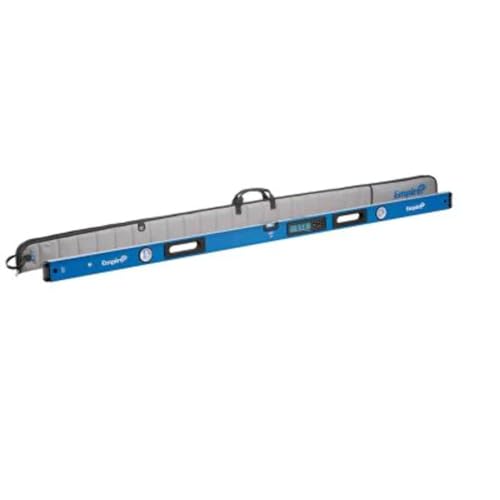
Not every homeowner needs a top-tier professional tool that costs a premium. The Empire True Blue offers a fantastic balance of durability and affordability for those who want a straight deck without breaking the bank. It features the signature blue vials that are famously easy to read, even in the harsh glare of direct sunlight.
The aluminum frame is robust enough for residential use, though it lacks the extreme reinforcement of the higher-end Stabila models. It is lightweight, which makes it easier to maneuver when you are working solo on a weekend project. For a DIYer building a standard backyard deck, this level provides more than enough precision for the job.
The primary trade-off is that it might not survive a heavy-duty construction site environment for years on end. However, for a one-off deck build or occasional home renovations, it is a smart, cost-effective choice. It’s the perfect tool for the homeowner who values functional utility over professional-grade over-engineering.
Johnson Level 9600 Series: Precision for Joists
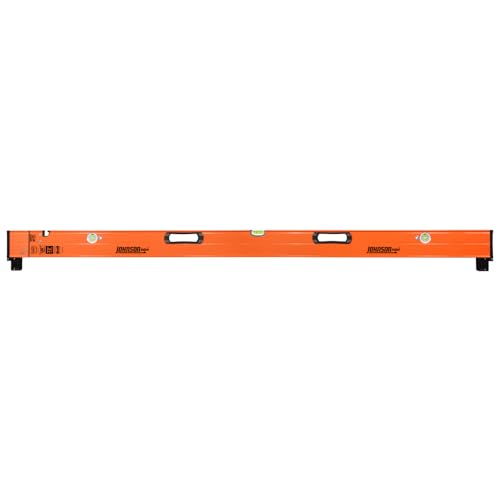
When you are setting joists, you are dealing with small margins of error that can make your deck boards look wavy if you are off by even a fraction. The Johnson 9600 series is designed specifically for high-visibility reading, ensuring you can see the bubble clearly from a distance. This reduces the need to constantly climb up and down ladders to check your work.
These levels are known for their solid, box-beam construction which resists twisting under pressure. When you are trying to level a long run of joists, the last thing you want is a tool that flexes in the middle. The Johnson provides a solid, flat surface that acts as a reliable reference point across your entire frame.
While it doesn’t have the same "legendary" reputation as some European brands, it performs admirably in residential settings. It is a workhorse that respects your wallet while maintaining the accuracy required for a safe, level deck. It is an excellent middle-ground option for the serious weekend warrior.
Swanson 72-Inch Aluminum: Durable Daily Workhorse

If your home projects frequently involve heavy-duty framing beyond just decking, the Swanson aluminum level is a reliable companion. It is built to be tough, with a frame that can handle the occasional bump or scrape without losing its integrity. The length is ideal for checking long ledger boards before you bolt them into your house.
One thing to appreciate about the Swanson is its simplicity. There are no fancy, fragile bells and whistles—just a solid, accurate, and easy-to-read tool. It is straightforward to wipe down after a day of working in the dirt, which keeps the vials clear and the frame clean.
Because it is a standard aluminum design, it is lighter than heavy-duty box-beam levels. This makes it a great choice if you have limited storage space or if you prefer a tool that doesn’t feel like a weight when you are moving it around. It is a dependable, no-nonsense tool for the pragmatic homeowner.
Kapro 935 Optivision: Best Visibility for Layouts
If you struggle to see the bubble in low-light conditions or under the shade of a deck, the Kapro 935 is a game-changer. Its Optivision technology creates a high-contrast red effect around the bubble, making it nearly impossible to misread. This is particularly helpful when you are working in the early morning or late afternoon when light is tricky.
The frame is reinforced and includes milled surfaces, which help the level sit perfectly flat against your lumber. This is essential for deck building, where even a slight wobble can lead to a crooked frame. It feels substantial in the hands, providing the confidence that your measurements are accurate.
While it is a bit more expensive than basic aluminum levels, the visibility advantage is worth the cost for many. If you have ever felt eye strain from squinting at a tiny bubble, this level is a worthwhile upgrade. It bridges the gap between high-end professional gear and user-friendly design.
Stanley FatMax 72-Inch: Reliable for Large Decks
Measure up to 14 feet alone with this durable STANLEY FATMAX tape measure. Its high-impact, non-slip case and abrasion-resistant blade coating ensure long-lasting, easy-to-read measurements on any job.

Most homeowners are familiar with the Stanley name, and the FatMax line is designed for those who want a tool that "just works." The 72-inch version is wide and sturdy, providing a stable base for checking long spans. It is a very common sight in home improvement stores for a reason: it is accessible and consistently performs well.
The box-beam design is resistant to the warping that can happen with cheaper, I-beam style levels. It is also equipped with large, easy-to-grip handles, which are a benefit when you are maneuvering a six-foot tool in tight spaces. You won’t find yourself struggling to keep a grip on it while working on your joists.
The trade-off is that it is a mass-produced tool, so occasionally you should double-check the calibration out of the box. However, for the majority of residential deck projects, it is more than capable of delivering a flat, level result. It is a solid, reliable choice for the average homeowner.
Klein Tools 72-Inch Level: Rugged Construction

Klein Tools is a brand built for professionals who treat their tools like an extension of their bodies. Their 72-inch level is built to survive the harshest conditions, making it an excellent choice if you live in an area with extreme weather or if you plan to use this tool for a variety of outdoor projects. It feels incredibly solid and dense.
The vials on this level are protected by a high-impact cover, which is a great feature if you are working on a deck where tools tend to slide off joists. It is built for longevity, meaning you likely won’t need to replace it for many years. It is a heavy-duty option that doesn’t compromise on accuracy.
Because it is so rugged, it is also quite heavy. You will need to consider whether you have the physical strength and space to manage a tool of this size and weight. If you want a "forever" level that can handle anything you throw at it, this is the one to pick.
How to Check Your Level for Accuracy Before Use
Before you start your deck, you must verify that your level is actually level. Place your level on a surface that is reasonably flat, note the position of the bubble, and then flip the level end-for-end. If the bubble stays in the exact same position relative to the lines, your level is accurate.
If the bubble shifts, your level is out of calibration. Many professional levels have adjustable vials, but if your level is a budget model, it may not be adjustable at all. In that case, it is safer to return it or mark it as "unreliable" rather than building a deck that will be crooked for years.
- Always perform this test on a flat surface like a workbench or a finished floor.
- Do not assume a brand-new tool is perfectly calibrated out of the box.
- Checking your tool takes less than a minute and saves you hours of rework later.
Choosing the Right Length for Deck Joist Spacing
The length of your level should be determined by the span of your joists and the footprint of your deck. A 72-inch level is ideal because it allows you to span across multiple joists at once, ensuring that the entire frame is level rather than just individual boards. This is critical for preventing "swales" or low spots in your decking.
If you are working in a tight space, such as a deck attached to a small apartment balcony, a 72-inch level might be cumbersome. However, for most backyard decks, the extra length is a massive advantage. You want a level that can bridge at least three joists to ensure a consistent plane.
- Small decks (under 10 feet): A 48-inch level may suffice, but 72-inch is still preferred for framing.
- Large decks (over 10 feet): A 72-inch level is non-negotiable for accurate ledger and joist leveling.
- Consider storage: Ensure you have a clear, flat space to store a 6-foot level so it doesn’t warp over time.
Essential Maintenance Tips for Aluminum Levels
Aluminum levels are durable, but they are not indestructible. The most important maintenance tip is to keep the frame clean and free of debris, especially dried concrete or wood glue. These substances can build up on the base, causing the level to sit unevenly and giving you false readings.
Store your level in a climate-controlled environment whenever possible. Extreme heat or cold can cause the aluminum to expand and contract, which may affect the accuracy of the vials over time. Hanging the level vertically on a wall or laying it flat on a dedicated shelf is better than leaning it in a corner where it might bend.
- Wipe the level down with a damp cloth after every project.
- Avoid dropping the level; even "shockproof" models have limits.
- Periodically check the vial screws to ensure they haven’t loosened during transport.
Investing in a high-quality 72-inch level is the best way to ensure your deck project stays on track and ends with a professional finish. While there are many options ranging from budget-friendly to professional-grade, the most important factor is confirming your tool is accurate before you drive the first screw. Choose a level that fits your storage situation and your budget, and you will have a reliable partner for this and many future home improvements.
