

7 Best Circuit Breaker Finder Tools for Identifying Tripped Breakers
Simplify electrical maintenance with our top 7 circuit breaker finder tools. Discover reliable, efficient devices to identify tripped breakers in seconds.
We have all experienced the sudden frustration of a darkened room after plugging in one too many appliances. Identifying exactly which breaker controls a specific outlet can feel like a game of trial and error, especially in older homes with poorly labeled panels. These circuit breaker finder tools take the guesswork out of electrical maintenance, saving you from repeated trips to the basement or garage.
Klein Tools ET310: Best Overall Circuit Finder
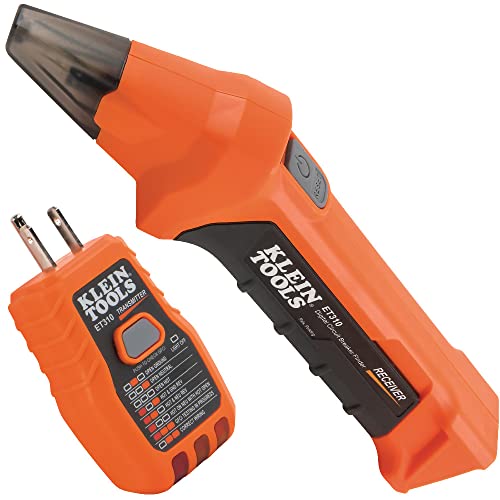

If you are a homeowner who values a tool that just works without requiring a degree in electrical engineering, the Klein Tools ET310 is your go-to. This device includes a built-in GFCI outlet tester, which is a massive bonus for anyone living in a home built before the 1990s.
The receiver is ergonomic and provides clear, audible, and visual feedback when you hover over the correct breaker. It strikes the perfect balance between professional-grade accuracy and the intuitive design needed for occasional household use.
For most families, this is the "Goldilocks" tool—it’s not so expensive that it gathers dust, but it’s reliable enough to handle a kitchen renovation or a simple bedroom rewiring. If you want one tool that serves multiple purposes, this is the one to keep in your utility drawer.
Sperry Instruments CS61200: Best Budget Pick

When you are a renter or a first-time homeowner on a strict budget, you don’t always need bells and whistles. The Sperry Instruments CS61200 is a no-frills, highly effective solution that gets the job done at a fraction of the cost of high-end testers.
It is straightforward to operate: plug the transmitter into your outlet and scan the breaker panel until you hear the clear, consistent beep. While it lacks some of the advanced diagnostic features of pricier models, it is incredibly durable and easy to store in a small apartment toolkit.
This is the perfect choice for those who only need to map their home once or twice a year. You sacrifice some sensitivity compared to premium units, but for standard residential panels, it is more than sufficient.
Extech CB10: Top Choice for Professional Use

Sometimes you need a tool that can handle the complexities of a large, older house with a tangled, poorly labeled electrical system. The Extech CB10 is built for those who prioritize precision and need a tool that can distinguish between closely packed breakers.
It offers high sensitivity settings, which allow you to narrow down the specific circuit even when the panel is crowded or the wiring is messy. This is an investment piece for the dedicated DIYer who tackles major home projects regularly.
While it is more expensive, the time you save by not having to re-test the same circuit multiple times pays for itself. It is a robust, reliable workhorse that will last for decades if treated with basic care.
Triplett Breaker Sniff-It: Best Compact Tool
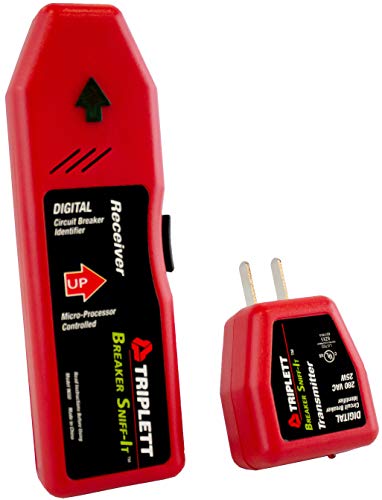
If you live in a tiny home, a studio apartment, or a condo with limited storage, you know how valuable every square inch of space is. The Triplett Breaker Sniff-It is remarkably compact, fitting easily into a junk drawer or a small kitchen utility caddy.
Don’t let the small size fool you; this tool is surprisingly responsive and accurate. It is designed to be tucked away and forgotten until the moment a light flickers out, making it the ultimate "set it and forget it" household tool.
It is ideal for those who don’t want a bulky plastic case taking up room in their limited storage areas. The trade-off is a slightly smaller form factor that might be harder to grip for those with larger hands, but its portability is unmatched.
Zircon BreakerID: Best for Ease of Use
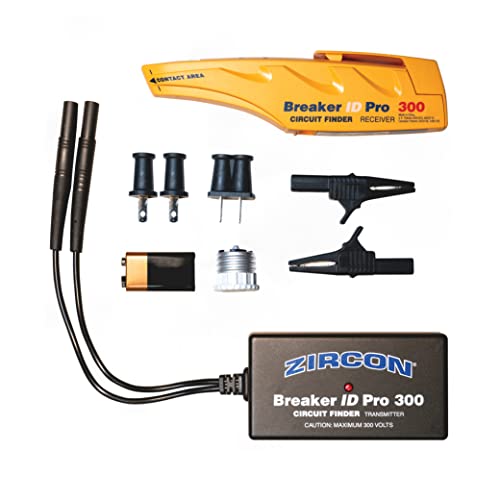
There is nothing more intimidating than an electrical panel filled with unlabeled switches. The Zircon BreakerID is designed specifically for the non-expert, using a simple LED indicator system that removes the need for interpreting complex beeps or signals.
This tool is incredibly beginner-friendly, making it a great gift for new homeowners who might be nervous about interacting with their electrical system. It is very difficult to misinterpret the results, which provides a nice layer of confidence for the user.
If you find traditional tools confusing or frustrating, the Zircon’s visual-first approach will be a breath of fresh air. It is simple, effective, and takes the anxiety out of a task that many people find daunting.
Southwire 40116S: Most Reliable Performance

Consistency is the most important factor when you are standing in a dark basement trying to figure out why the freezer stopped running. The Southwire 40116S is widely respected for its ability to provide stable, repeatable readings every single time you use it.
It is built with a rugged exterior that can survive being dropped on concrete floors, which is a common occurrence during home maintenance. This durability makes it a favorite for those who keep their tools in a garage or shed where temperature and humidity might fluctuate.
If reliability is your primary concern, this unit is a solid choice that won’t let you down. It provides a clear signal that cuts through the noise of a busy electrical panel, ensuring you find the right breaker on the first try.
Fluke 2042: Best Premium Professional Option
The Fluke 2042 is the "Cadillac" of circuit finders, offering features that go far beyond basic breaker identification. It can trace cables behind walls and identify breaks in circuits, making it an essential tool for major home renovations.
This is undoubtedly a premium purchase, and it is likely overkill for someone who just needs to label their kitchen outlets. However, if you are doing extensive work on your home or helping friends with theirs, the accuracy and depth of information it provides are unparalleled.
Think of this as a long-term investment in your home’s infrastructure. If you have the budget and the inclination to do deep-level electrical work, you will never need to buy another circuit finder again.
How to Safely Use a Circuit Breaker Finder
Safety must always be your first priority when dealing with any electrical component. Before using your finder, ensure your hands are dry and you are standing on a dry surface; never reach into a panel if there is standing water nearby.
- Plug the transmitter in firmly: Ensure the outlet is not loose, as a poor connection can lead to inaccurate readings.
- Keep the receiver flat: When scanning the panel, move the receiver at a steady pace and keep it parallel to the breakers.
- Don’t force it: If you see any signs of corrosion, burning, or melting inside the panel, stop immediately and call a licensed electrician.
Always remember that these tools are for identification, not for diagnosing underlying electrical faults. If your breaker trips repeatedly, it is a sign of a deeper issue that a finder cannot fix.
Key Features to Consider Before You Purchase
When choosing a tool, consider how often you actually plan to use it. If you are in a new build with a perfectly labeled panel, you might only need a simple, inexpensive model.
- Audible vs. Visual: Some people prefer a loud beep, while others find flashing lights easier to follow in a noisy environment.
- GFCI Testing: If you live in an older home, having a built-in GFCI tester is a massive time-saver.
- Sensitivity Adjustment: This is crucial if your panel is crowded, as it prevents the tool from picking up signals from adjacent breakers.
Think about your storage space as well. A large, feature-heavy unit might be superior in performance, but if it doesn’t fit in your designated tool drawer, you are less likely to use it when the need arises.
Troubleshooting Common Electrical Panel Issues
Sometimes the problem isn’t the tool, but the panel itself. If you are having trouble getting a clear signal, ensure that you are scanning the breakers slowly and that the transmitter is fully seated in the outlet.
If you are still struggling, try checking the panel for loose wires or signs of heat damage. If your panel is exceptionally old, it may have "multi-wire branch circuits" that can confuse even the best testers, requiring you to turn off multiple breakers to isolate the power.
Finally, if you find that a breaker trips immediately after being reset, do not keep trying to turn it back on. This indicates a short circuit or a significant overload that requires professional attention to prevent a fire hazard.
Investing in a circuit breaker finder is one of the smartest ways to gain control over your home’s electrical system. Whether you choose a simple budget model or a professional-grade tool, the peace of mind you gain is well worth the small effort. Keep your tool in a consistent, dry location, and you will be ready to tackle any future power outage with confidence.
