

7 Best Glass Tube Fuses for Antique Appliance Restoration
Restore vintage gear safely with our top 7 glass tube fuses. Learn how to select the right amperage and size to preserve your antique appliance’s longevity.
Bringing an antique appliance back to life is one of the most rewarding projects a homeowner can undertake. However, the unsung hero of any successful restoration is the humble glass tube fuse, which protects your vintage treasure from electrical surges. Choosing the right fuse ensures your restored piece remains a functional part of your home rather than a fire hazard.
Bussmann AGC Fast-Acting Glass Tube Fuses


If you are restoring a vintage radio or a small desk fan from the mid-century era, you likely need a fuse that reacts instantly to electrical spikes. Bussmann AGC fuses are the industry standard for fast-acting protection, designed to blow the moment a short circuit occurs to prevent further damage to delicate internal wiring.
Because these are readily available at most local hardware stores, they are the most convenient choice for a weekend project. You won’t have to wait for shipping, which helps keep your momentum going when you’re in the middle of a repair.
The trade-off here is that they offer zero tolerance for minor power surges that occur during startup. If your appliance has a motor that draws a high initial current, these might blow prematurely.
Littelfuse 312 Series for Vintage Electronics
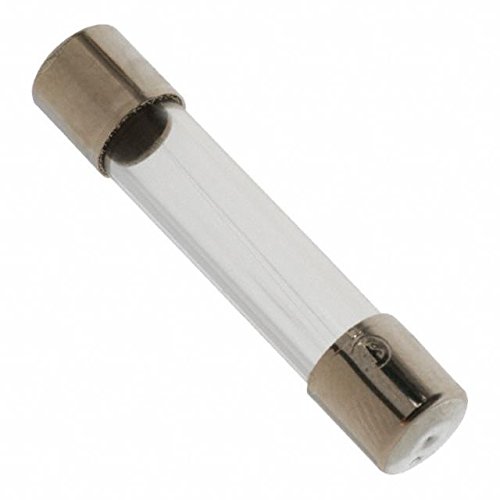
When you are working on sensitive vacuum tube equipment or vintage audio gear, the Littelfuse 312 series is often the gold standard. These fuses are engineered specifically for electronic circuits where precision and reliability are non-negotiable.
Many vintage electronics enthusiasts prefer these because they are widely documented in old service manuals. Using a component that matches the original specifications helps maintain the integrity of the device’s design.
While they are slightly more expensive than generic store-brand options, the peace of mind they provide is well worth the extra few cents. They are a staple for anyone who values the longevity of their electronics over the absolute lowest price point.
Eaton MDL Time-Delay Glass Cartridge Fuses
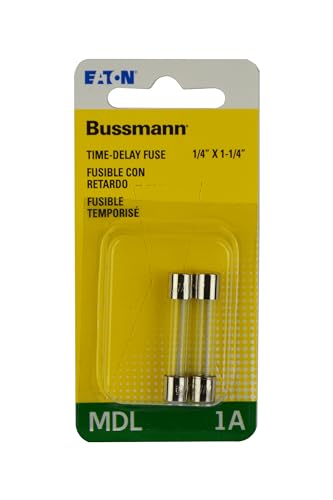
Some antique appliances, such as vintage mixers or sewing machines, require a "time-delay" or "slow-blow" fuse. These are designed to allow a brief surge of power during the initial startup without snapping the internal wire.
The Eaton MDL series is my go-to recommendation for these specific household scenarios. They prevent the frustration of a fuse blowing simply because you turned the machine on, while still offering robust protection against actual electrical faults.
If you live in an older apartment building with inconsistent power delivery, these fuses are particularly helpful. They filter out the minor fluctuations that might otherwise cause a fast-acting fuse to fail unnecessarily.
OptiFuse Glass Fuses for Antique Appliance Use

If you are looking for a balance between affordability and consistent quality, OptiFuse is a reliable brand that fits most household budgets. They are excellent for general-purpose restoration projects where you don’t need highly specialized, industrial-grade components.
These fuses are perfect for homeowners who are restoring several small items at once and need to keep costs down. You can buy them in small variety packs, which is a smart way to stock your workbench without overcommitting to a single size.
Just keep in mind that these are best suited for standard household appliances. If you are restoring a high-value piece of equipment, you might want to stick with the more specialized brands mentioned earlier.
Acme Electric AGU Fuses for Older Equipment

AGU fuses are often found in older, heavy-duty equipment where the fuse holder is slightly larger than the standard 1/4-inch diameter glass tubes. If your antique appliance has an oversized fuse block, Acme Electric provides the necessary dimensions to ensure a snug, secure fit.
A loose fuse can cause arcing, which is a major fire risk in any home. Always ensure that the physical dimensions of the fuse match the clips in your device perfectly to avoid poor electrical contact.
These are a bit more niche, so you might need to order them online rather than picking them up at a big-box store. Plan ahead so your project isn’t stalled by a missing part.
Bel Fuse 3AG Series for Reliable Restoration

The 3AG series is a classic in the world of vintage restoration, known for its consistent performance across a wide range of temperatures. If you are restoring an appliance that generates heat, like a vintage toaster or space heater, the construction of these fuses holds up remarkably well.
Their build quality is consistently high, which reduces the likelihood of "nuisance" failures. For a busy household, this means fewer interruptions to your daily routine.
I recommend keeping a small organizer box of these in your garage or utility room. Having a few spares on hand means you won’t have to stop your work to run to the store when a fuse finally reaches the end of its life.
Wickmann 19194 Series for Precision Protection
For the perfectionist restorer, the Wickmann 19194 series offers an extra level of precision. These fuses are often used in European-made appliances, which sometimes have slightly different electrical requirements than their American counterparts.
If you have inherited a piece of equipment from overseas, check the original fuse markings closely. Using a precision-rated fuse like this can prevent damage to rare, hard-to-find internal components.
While they can be harder to source, they are an essential investment for high-end restorations. Don’t settle for "close enough" when the safety of your vintage gear is on the line.
How to Identify Correct Fuse Amperage and Voltage
Before buying a replacement, you must read the markings on the metal end caps of the original fuse. You will typically see a letter code (like AGC or MDL) followed by the amperage (e.g., 2A) and the voltage rating (e.g., 250V).
- Amperage: Never replace a fuse with one that has a higher amperage rating than the original. This is a critical safety rule, as a higher-rated fuse will not blow when it should, potentially causing a fire.
- Voltage: You can safely use a fuse with a higher voltage rating than the original, but never a lower one.
- Dimensions: Always measure the length and diameter of the old fuse to ensure the new one will fit the holder correctly.
When in doubt, consult the original service manual or look for a label inside the appliance chassis. If you cannot find the specifications, it is better to seek professional advice than to guess.
Testing Antique Fuses With a Digital Multimeter
A fuse can look perfectly fine on the outside while being broken on the inside. To test one, set your digital multimeter to the "continuity" or "ohms" setting.
Place one probe on each metal end cap of the fuse. If the meter beeps or shows a reading close to zero, the fuse is good. If there is no sound or the reading remains at "OL" (open loop), the fuse is blown and must be replaced.
This quick test saves you from throwing away perfectly good fuses or wasting time troubleshooting a circuit that is actually fine. It is a fundamental skill for any homeowner doing their own repairs.
Safety Protocols for Restoring Vintage Appliances
Safety should always be your first priority when working on antique electronics. Always unplug the appliance before touching any internal components, and be aware that some devices—especially those with large capacitors—can hold a dangerous electrical charge even when unplugged.
- Work in a well-lit area: Use a desk lamp to ensure you can clearly see the wiring and labels.
- Keep your workspace dry: Never work on appliances near water or on damp surfaces.
- Use insulated tools: A basic set of screwdrivers with rubberized handles is a must for any home workshop.
If you are ever unsure about the condition of the internal wiring or the state of the power cord, stop immediately. It is better to have an appliance professionally inspected than to risk your home or your health.
Restoring an antique appliance is a fantastic way to connect with the past while adding a unique touch to your home. By selecting the right glass tube fuse and following these basic safety steps, you can ensure your vintage pieces are both beautiful and safe to use. Remember, the best restoration is one that respects the original design while keeping your household protected.
