

7 Best Illuminated Circuit Breaker Switches for Dark Basements
Light up your dark basement with our top 7 illuminated circuit breaker switches. Discover safe, reliable, and easy-to-locate options for any home setup.
Navigating a dark, cluttered basement to find a tripped breaker can be a frustrating and potentially dangerous ordeal. Upgrading to illuminated circuit breaker switches provides instant visual feedback, saving you from fumbling in the dark during a power outage. This guide outlines the most practical, reliable options to bring safety and clarity to your home’s electrical panel.
Eaton CH 20-Amp Single Pole: Best Overall Choice


When you are managing a busy household, you need equipment that works the first time, every time. The Eaton CH series is widely respected by professionals for its consistent performance and high-quality internal components. It strikes the perfect balance between professional-grade engineering and user-friendly design.
The standout feature here is the precision of the trip mechanism, which minimizes nuisance tripping—a common headache in older homes with varied appliance loads. While it carries a slightly higher price tag than entry-level models, the long-term reliability justifies the investment.
For the average homeowner, this is the "set it and forget it" option. It provides peace of mind that your basement lighting and outlet circuits are protected by a robust, industry-leading component.
Leviton 120V LED Switch: Best for Visibility

If you have a basement that serves as a workshop or a laundry area, you know how quickly the light can fail when you need it most. The Leviton LED-illuminated switch is designed specifically for high-visibility applications. Its integrated LED glows clearly, making it easy to identify which circuit needs attention even in pitch-black conditions.
This switch is particularly helpful for families with children or elderly members who may need to navigate the basement safely. By providing a clear visual cue, it eliminates the guesswork and panic that often accompany a sudden loss of power.
Installation is straightforward, making it an excellent weekend project for DIYers. While it is a specialized component, the benefit of immediate visual confirmation is worth the minor premium over standard non-illuminated switches.
Siemens Q120 Circuit Breaker: Best Reliability

Reliability is the cornerstone of any electrical system, especially in basements where humidity can sometimes affect older panels. The Siemens Q120 is a workhorse that has earned its reputation through decades of consistent service in residential settings. It is built to withstand the rigors of daily use without failing.
What makes this a great choice for your home is its compatibility and ease of replacement. If your current panel is already set up for Siemens, swapping in a new Q120 is a seamless process. It is a no-nonsense, functional component that prioritizes safety over flashy features.
If your priority is a breaker that simply won’t let you down, this is your best bet. It is an affordable, durable solution that keeps your basement circuits stable and secure.
Square D Homeline 20A: Best for Quick Install
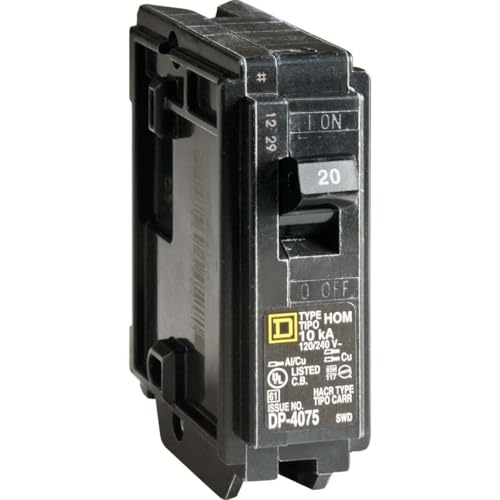
For the homeowner who wants to get the job done quickly without sacrificing quality, the Square D Homeline is the gold standard. These breakers are designed for efficiency, featuring a plug-on neutral design that simplifies the wiring process significantly. This reduces the time you spend inside the panel, which is a major plus for safety.
The Homeline series is also widely available at most hardware stores, meaning you won’t have to wait for special orders if you need a replacement in a hurry. It is an ideal choice for quick repairs or upgrading an existing panel on a budget.
Despite its ease of installation, it remains a highly dependable unit. It is the perfect marriage of convenience and professional-grade construction for the busy DIYer.
GE THQL 20-Amp Breaker: Best Value Option

Not every electrical upgrade needs to break the bank, and the GE THQL series proves that you can get high quality at a modest price point. These breakers are excellent for homeowners who need to replace multiple units at once without a massive expenditure. They offer solid, basic protection that meets all modern safety standards.
The design is compact, which is helpful if your basement panel is already crowded with wires. While it lacks some of the advanced diagnostic features of more expensive models, it excels at its primary job: protecting your home’s electrical integrity.
If you are a budget-conscious homeowner or a landlord managing multiple properties, the GE THQL is a practical, sensible choice. It provides reliable performance without the unnecessary bells and whistles.
Schneider Electric QO Series: Best Durability

When you are looking for a breaker that can handle the wear and tear of a basement environment, look toward the Schneider Electric QO series. These are often referred to as the "black handle" breakers, known for their rugged construction and superior materials. They are built to last longer than standard residential breakers, often outliving the panels themselves.
The QO series is a favorite among electricians because of its heavy-duty design and high-quality internal arc-quenching technology. While they are more expensive than standard options, the durability they offer is unmatched.
If you plan on staying in your home for many years, investing in the QO series is a smart long-term strategy. You are paying for the peace of mind that comes with superior engineering and long-term protection.
Cutler-Hammer BR 20A: Best for Old Basements
Older homes often have unique electrical challenges, and the Cutler-Hammer BR series is specifically designed to be versatile and accommodating. It is a highly compatible breaker that works well with a wide range of older panel configurations. If you are struggling to find a replacement for an aging basement system, this is often the solution.
The BR series is known for its ease of use and consistent performance in older electrical environments. It provides a modern safety upgrade for vintage homes without requiring a complete panel overhaul.
For anyone living in a house built several decades ago, the BR series is a reliable, cost-effective way to modernize your basement safety. It is the practical choice for those who value compatibility and ease of installation.
How to Safely Install Your New Breaker Switch
Safety is the absolute priority when working with your electrical panel. Before starting, always turn off the main power supply to the panel and use a non-contact voltage tester to verify that no power is flowing. Never assume a circuit is dead just because the switch is in the "off" position.
- Clear the area: Ensure the floor is dry and you have adequate lighting.
- Wear protection: Use insulated tools and safety glasses to prevent accidental shorts.
- Verify fit: Ensure the breaker snaps firmly into the bus bar; it should not feel loose.
- Check connections: Ensure the wire is properly stripped and tightened to the manufacturer’s torque specifications.
If you feel at all uncomfortable or if the panel looks corroded or damaged, do not hesitate to call a licensed electrician. It is better to pay for a professional installation than to risk a fire or injury.
Understanding Amperage Needs for Dark Basements
A 20-amp breaker is standard for most basement lighting and outlet circuits, but it is important to know what you are running. If your basement includes a home office, a space heater, or a workshop, those items can draw significant power. Overloading a circuit is the most common cause of nuisance tripping.
- Lighting: LED bulbs draw very little power, allowing for extensive lighting setups.
- Appliances: Space heaters and power tools draw high amperage and should ideally be on dedicated circuits.
- Balance: Try to distribute your load across different circuits to avoid pushing one breaker to its limit.
Understanding your load prevents the "dark basement" scenario from happening in the first place. When in doubt, consult the label on your appliances to see their wattage and calculate the total amperage load.
Maintenance Tips for Long-Lasting Switch Safety
Your electrical panel is the heart of your home’s safety system, yet it is often ignored. Once a year, take a moment to inspect your panel for signs of heat, such as melted plastic or a burning smell. Keep the area around the panel clear of storage boxes, dust, and moisture to ensure proper ventilation and easy access.
- Exercise the breakers: Every few months, gently toggle your breakers to ensure they move freely and don’t become "stuck" over time.
- Keep it dry: If your basement is damp, consider a dehumidifier to protect your electrical components from oxidation.
- Labeling: Ensure every switch is clearly labeled so you know exactly what it controls during an emergency.
Regular maintenance is the best way to prevent electrical failures before they start. By keeping your panel clean, dry, and well-labeled, you ensure that your home remains safe and functional for years to come.
Upgrading your basement’s electrical components is one of the most effective ways to improve home safety and reduce daily frustration. By choosing a breaker that matches your specific needs and budget, you can ensure your home remains well-lit and protected. Remember, a little bit of maintenance and careful planning goes a long way toward keeping your household running smoothly.
