

7 Best High-capacity Toners for Printing Genealogy Research
Preserve your genealogy research with our top 7 high-capacity toners. Discover cost-effective, long-lasting options that ensure crisp, archival-quality prints.
Organizing decades of family history requires a reliable printing setup that won’t fail you in the middle of a project. When you are printing hundreds of pages of census records and ancestral charts, high-capacity toner is your most cost-effective ally. These seven selections balance page yield with the archival quality necessary to preserve your family’s legacy.
HP 58X LaserJet: Best for High-Volume Genealogy


When you are deep into a multi-generational project, the last thing you want is a "low toner" warning interrupting your flow. The HP 58X is designed for users who print in bulk, offering a massive page yield that keeps your home office running for months without a swap.
This cartridge is ideal for those who print long-form narrative reports or extensive lists of birth and marriage records. Because it is a high-yield unit, you are paying less per page over the life of the toner, which is a smart move for budget-conscious hobbyists.
While the initial price tag might seem steep, the efficiency pays for itself if you are a frequent printer. It is the workhorse option for anyone who treats their genealogy research like a full-time job.
Brother TN-890: Top Choice for Archive Documents
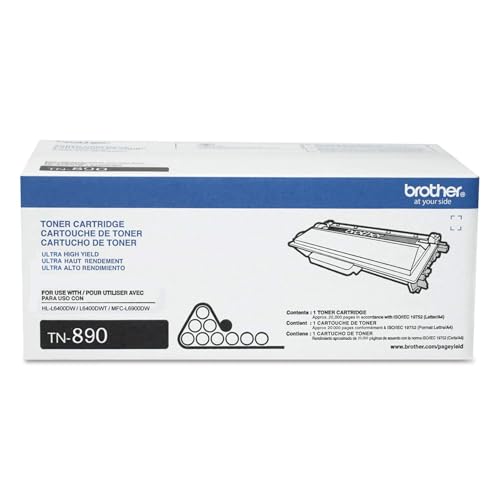
If you are printing records that you intend to pass down to future generations, you need a toner that provides deep, consistent blacks. The Brother TN-890 is a favorite among home archivists because it produces crisp, dark text that resists fading on standard copy paper.
This cartridge is particularly well-suited for renters or homeowners with limited space, as it fits into compact, high-performance printers that don’t dominate a room. Its reliability is its greatest strength, ensuring that you won’t have to deal with streaks or patchy lines on important historical documents.
Keep in mind that this is a professional-grade toner, so it is best paired with a printer you plan to keep for several years. It is a solid investment for those who prioritize the longevity of their printed files.
Canon 057 H: Best for Sharp Text and Fine Lines

Genealogy research often involves scanning and printing old, faded documents where the fine print is difficult to read. The Canon 057 H is engineered to handle these intricate details with precision, ensuring that even the smallest handwritten notes on a scanned record remain legible.
This toner excels at rendering fine lines, making it the perfect choice for printing detailed family tree diagrams or complex pedigree charts. If your research involves lots of visual data, you will appreciate how this toner maintains sharpness across the entire page.
It is a great choice for those who value quality over raw speed. While it is not the cheapest option on the market, the clarity it provides makes it worth the premium for serious researchers.
Dell B2360dn High-Yield: Reliable Page Clarity

For the homeowner who needs a printer that just works every time they sit down at the desk, the Dell B2360dn toner is a reliable staple. It is known for its consistent performance, providing a uniform print density that prevents the "graying" effect often seen with cheaper, third-party cartridges.
This is an excellent option for those who print sporadically but need high quality whenever they do. Whether you are printing a quick reference sheet or a 50-page summary, the output remains professional and clean.
Because it is a high-yield cartridge, you can store a spare in a small closet or drawer without taking up significant space. It is a practical, no-nonsense solution for the everyday researcher.
Lexmark 56F1H00: Best for Fast Batch Printing

If you have finally organized your digital files and are ready to print a massive stack of records, the Lexmark 56F1H00 is designed for speed. It handles high-intensity print jobs without overheating or slowing down, which is a lifesaver when you are trying to finish a project before the weekend ends.
This toner is particularly effective for those who use duplex printing to save paper. The toner adheres cleanly, preventing the smudging that can sometimes occur when printing on both sides of the sheet.
It is a robust choice for a busy household where the printer might be shared by family members for schoolwork or business. You get durability and speed in one reliable package.
Xerox Phaser 6510: Consistent Quality for Charts

When you are printing color-coded family charts or maps, you need a toner that manages color saturation without bleeding. The Xerox Phaser 6510 series toner is excellent at keeping colors vibrant and distinct, which is essential for visual genealogy projects.
This toner is designed for users who want their printed materials to look like they came from a professional print shop. It handles subtle gradients well, ensuring that your ancestral maps are easy to interpret at a glance.
If your genealogy research involves a lot of visual storytelling, this is the toner that will make your work look polished. It is a great way to elevate your research into a presentation-ready format.
Epson WorkForce 800XL: Efficient Ink Management
While technically an ink-based system for the WorkForce line, the 800XL high-capacity cartridges act as the equivalent of a high-yield toner for those who prefer inkjet versatility. These cartridges are designed for maximum efficiency, allowing you to print high-resolution images of historical photographs alongside your text.
This is an ideal setup for researchers who need to print both documents and photo-heavy records in one go. You get the convenience of a single machine that handles everything from text-heavy census records to preserved family snapshots.
It is a smart, space-saving choice for apartment dwellers who don’t have room for a separate photo printer. The high-capacity nature means fewer trips to the store for replacements.
How to Evaluate Toner Yield for Research Records
When purchasing toner, always look for the "ISO/IEC 19752" standard, which provides a standardized way to measure how many pages a cartridge will print. Keep in mind that this number is usually based on 5% page coverage, which is roughly equivalent to a standard business letter.
If your genealogy research involves printing full-page photos or dense, dark charts, your actual yield will be significantly lower than the box suggests. Always keep a spare cartridge on hand before you start a large printing session to avoid mid-project frustration.
- Check the yield: Look for "High-Yield" or "Extra High-Yield" labels to get the best value per page.
- Consider your content: If you print mostly text, you will hit the stated yield; if you print graphics, expect 20–30% less.
- Avoid "bargain" brands: Cheap, unbranded toners often leak and can damage your printer’s internal components.
Tips for Storing Printed Ancestry Documents
Once you have printed your hard-earned research, protecting it is just as important as choosing the right toner. Moisture and light are the enemies of long-term preservation, so store your documents in acid-free folders or binders.
If you are storing these in a basement or attic, ensure the containers are airtight to prevent humidity from causing the paper to warp or the ink to degrade. Always keep your genealogy binders off the floor to protect against potential water leaks or pests.
- Use archival-safe sleeves: Protect your most important charts from dust and fingerprints.
- Keep it cool and dry: Aim for a stable environment with minimal temperature fluctuations.
- Label clearly: Use pencil or archival-safe ink for labels on the outside of your storage boxes.
Maintaining Printer Health for Long-Term Use
A printer is a mechanical device that requires occasional maintenance to keep producing high-quality genealogy records. Every few months, run a printer cleaning cycle to clear out any residual toner dust that might be sitting on the rollers or the drum unit.
If you live in a dusty area, keep your printer covered with a light cloth when it is not in use to prevent debris from entering the paper path. Regularly updating your printer’s firmware can also help it communicate better with your computer and manage toner usage more efficiently.
- Clean the exterior: Wipe down the paper trays to prevent dust from getting pulled into the machine.
- Use the printer regularly: Even if you don’t have a big project, print a test page once every two weeks to keep the components moving.
- Listen for changes: If the printer starts making unusual grinding noises, stop immediately and check for paper jams or stuck labels.
Investing in the right high-capacity toner transforms your genealogy research from a digital file into a tangible, lasting family treasure. By choosing reliable, high-yield options and storing your documents with care, you ensure that your hard work survives for generations to come. Take your time selecting your supplies, and your home office will remain a productive hub for your ancestral discoveries.

