

7 Best Standard-yield Cartridges for Light Home Use
Finding the right ink is key for occasional printing. We review 7 top standard-yield cartridges that offer reliability and cost-efficiency for home users.
Finding the right printer ink shouldn’t feel like a chore, yet many homeowners overspend on high-capacity cartridges they will never fully use. By selecting the right standard-yield option, you can keep your home office functional without wasting money or dealing with expired ink. This guide helps you navigate the best standard-yield choices to keep your household documents crisp and your budget intact.
HP 67 Black: Best for Occasional Home Printing
If you only print a few shipping labels or school permission slips a month, you don’t need a massive ink supply sitting in your machine. The HP 67 Black is designed for exactly this kind of light-duty cycle, offering a modest page yield that prevents ink from sitting idle for months on end.
Because it is a standard-yield cartridge, it is significantly more affordable upfront than its "XL" counterpart. This makes it a perfect fit for renters or students living in smaller apartments where every dollar and square inch of storage counts.
The bottom line is that this cartridge prioritizes freshness over volume. If your printer spends most of its time turned off, this is your most reliable, cost-effective choice.
Canon PG-275: Reliable Choice for Simple Tasks


Many households rely on their printer for purely utilitarian tasks, like printing tax forms or occasional black-and-white documents. The Canon PG-275 is a workhorse for these basic needs, providing consistent, smudge-resistant text that looks professional without any fuss.
Its design is straightforward, making it easy to install even if you aren’t particularly tech-savvy. Since it’s a standard-yield unit, it’s also physically compact, which is helpful if you store your spare supplies in a cramped desk drawer or a shared household closet.
While it isn’t meant for heavy photo printing, it excels at keeping your day-to-day paperwork legible and sharp. It is the definition of a "set it and forget it" component for the casual home user.
Brother LC401: Compact Ink for Small Households

Brother is well-known for printers that actually work when you need them to, and the LC401 series follows that tradition. These cartridges are physically small and efficient, perfect for families who need a printer on hand but rarely have a high volume of work to churn out.
One of the benefits of this system is that it uses individual color cartridges rather than a single tri-color block. This means if you only run out of cyan, you only replace the cyan—a huge benefit for thrifty households trying to minimize waste.
If your household printing is limited to occasional homework or coupons, this system keeps your maintenance costs low. It is a smart, modular approach to home printing that avoids the "all-or-nothing" replacement trap.
Epson 222 Ink: Ideal for Basic Photo Projects
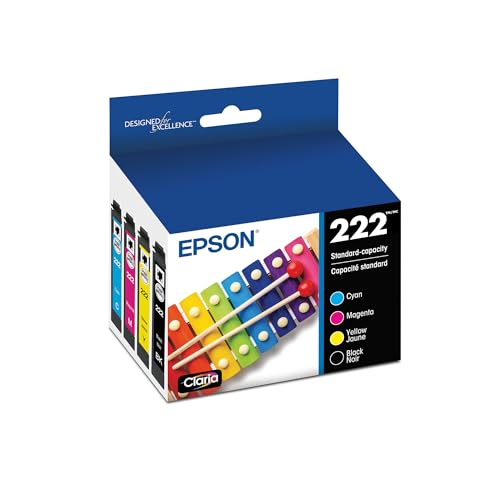
Sometimes you want to print a physical photo for a frame or a craft project without committing to a professional-grade printing setup. The Epson 222 series is tailored for these light-duty creative moments, balancing decent color vibrancy with a standard-yield capacity.
Because these are standard-yield, you aren’t paying for a massive reservoir of ink that might dry out before you finish your next scrapbooking project. It’s a great middle-ground for homeowners who want quality results for the occasional memory-keeping session.
Just remember that standard-yield photo ink is best suited for small batches. If you find yourself printing dozens of photos a month, you may eventually want to look at bulk tank systems, but for the hobbyist, these are perfect.
HP 63 Standard: Trusted for Older Home Printers

Many homeowners are still holding onto reliable, older HP printers that serve them perfectly well for basic tasks. The HP 63 remains a staple for these legacy machines, proving that you don’t need the newest hardware to get a clean, professional print.
Since these printers are often used for light household chores, the standard-yield HP 63 is usually the most economical path. It provides enough ink for those monthly utility bills or grocery lists without the higher price tag of the high-capacity versions.
If your printer is a few years old, don’t feel pressured to upgrade just because of ink availability. The HP 63 is still widely available and remains a dependable choice for keeping older, functional hardware running.
Canon PG-260: Consistent Quality for Documents
For the home office that focuses primarily on text, the Canon PG-260 offers a reliable, no-nonsense experience. It produces deep, dark blacks that make reading documents easy on the eyes, which is essential for things like resumes or important legal paperwork.
This cartridge is designed with a simple internal architecture that rarely clogs, provided you print at least once or twice a month. It’s an excellent choice for a household that values consistency and doesn’t want to deal with streaky or faded text.
Because it is a standard-yield cartridge, it is also very budget-friendly for those who don’t want to tie up their money in expensive, high-capacity ink. It effectively balances quality with the practical reality of low-volume printing.
Epson 212 Series: Efficient Ink for Light Usage

The Epson 212 series is a fantastic example of a standard-yield ink set designed for the modern, space-conscious home. These cartridges are small, easy to store, and provide enough ink to handle the typical "I need this printed now" household emergency.
These cartridges are particularly good for small households or home offices where counter space is limited. Their compact size means you can keep a full set of backups in a small box without cluttering your workspace.
The beauty of the 212 series is its predictability. You know exactly what you are getting, and you aren’t paying for extra capacity that you don’t need, making it a very honest, value-driven choice for the average user.
Standard vs High Yield: Which One Do You Need?
The choice between standard and high-yield ink often comes down to your printing frequency rather than just the price tag. If you print every single day, high-yield cartridges save you trips to the store and often cost less per page.
However, if you print sporadically, high-yield cartridges can actually be a liability. Ink has a shelf life, and if you leave a high-capacity cartridge in a printer for six months, the print head may clog, potentially damaging your machine.
- Standard Yield: Best for those who print less than 50 pages a month.
- High Yield: Best for home offices or students printing 150+ pages a month.
- The Bottom Line: If you aren’t sure, start with standard. It’s cheaper to replace and keeps your printer’s internal components fresh.
How to Prevent Ink Drying During Long Inactivity
The biggest enemy of any printer is a long, dry spell, which causes the ink in the print head to solidify. To prevent this, make it a habit to print a "test page" or a small document at least once every three weeks.
Keep your printer in a stable environment, away from direct sunlight or extreme temperature swings, like those found in an uninsulated garage. Heat can cause the ink to evaporate or expand, leading to messy leaks inside your machine.
Finally, always turn your printer off using the power button rather than unplugging it from the wall. This allows the printer to park the print head in a sealed position, which is specifically designed to prevent the ink from drying out.
Tips for Extending the Life of Printer Cartridges
To get the most out of your ink, adjust your printer’s settings to "Draft" or "Eco" mode for everyday documents. You will barely notice a difference in quality, but you will save a significant amount of ink on every page.
Avoid the temptation to run "deep cleaning" cycles too often, as these consume a surprising amount of ink. Only use these cycles if you actually see streaks or gaps on your printed pages.
- Store upright: Keep your spare cartridges in their original packaging in a cool, dark place.
- Check the date: Use older cartridges first to ensure you aren’t letting them expire in your drawer.
- Consistency is key: A printer that runs a little bit often will last much longer than one that sits for months.
By choosing the right standard-yield cartridge for your specific habits, you can maintain a functional home office without overspending. Remember that consistent, light use is the best way to keep your printer healthy and your ink flowing smoothly. With these practical steps, you’ll spend less time worrying about supplies and more time getting things done.
