

7 Best Resettable Thermal Circuit Breakers for Portable Generators
Protect your generator with our top 7 resettable thermal circuit breakers. Discover reliable, durable picks to prevent overloads and ensure safe power usage.
Protecting your portable generator from electrical surges is the single most important step in maintaining your home’s emergency power backup. A high-quality resettable thermal circuit breaker acts as a silent guardian, preventing expensive motor damage during unexpected power spikes. Choosing the right one ensures your household appliances stay powered safely without the constant frustration of blown fuses.


Kuoyuh 98 Series: Best for Heavy-Duty Generators

When you are running a larger generator to power a refrigerator, a sump pump, and a few lights during a storm, you need a breaker that won’t buckle under the load. The Kuoyuh 98 series is a workhorse designed for high-vibration environments, making it ideal for generators that sit on uneven ground or in busy garages.
These breakers are built with a robust internal mechanism that handles the heat generated by sustained power draws exceptionally well. Because they are often used in industrial settings, they offer a level of durability that far exceeds standard consumer-grade components.
If you have a medium-to-large household and rely on your generator for more than just a few lamps, this is your primary choice. While they are slightly bulkier than other options, the peace of mind provided by their heavy-duty construction is worth the extra space.
Eaton W28 Series: Top Choice for Quick Resetting
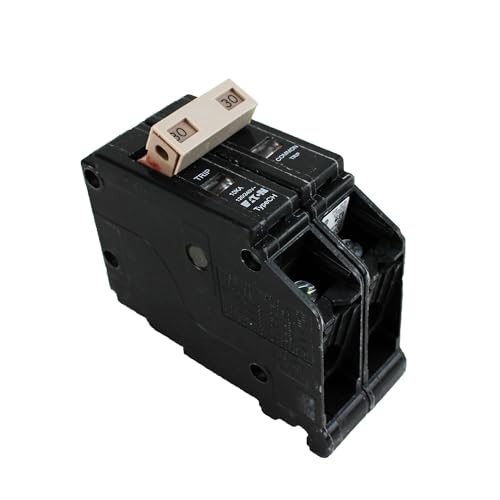
There is nothing more frustrating than standing in the rain or dark trying to fiddle with a tiny, stuck reset button. The Eaton W28 series is famous for its smooth, tactile operation, allowing you to restore power in a split second even if you are wearing work gloves.
These breakers are a favorite among homeowners who value efficiency and ease of use above all else. Their design is straightforward and compact, fitting into most standard generator control panels without requiring any custom modifications or messy wiring adjustments.
The tradeoff here is that they are designed for standard household loads rather than extreme industrial use. If your generator is primarily for occasional home backup, this is the most user-friendly option on the market.
Potter & Brumfield W58: Best for Panel Mounting
If you are a DIY enthusiast looking to upgrade your generator’s control panel for a cleaner, more professional look, the Potter & Brumfield W58 is the gold standard. These breakers are specifically engineered for flush-mounting, meaning they sit neatly within the chassis rather than protruding awkwardly.
This design is perfect for homeowners who store their generators in tight spaces where every inch counts. By keeping the profile low, you reduce the risk of accidentally knocking the breaker or snagging it on a storage cover.
While installation requires a bit more mechanical skill than a simple snap-in replacement, the result is incredibly secure. It is the best choice for those who take pride in maintaining their equipment with precision and care.
Bussmann CB185: Best Automatic Reset Protection

For many homeowners, the biggest headache with thermal breakers is the need to manually reset them when a surge occurs. The Bussmann CB185 features an automatic reset function, which means the breaker will cycle back on once the circuit cools down, saving you from having to monitor the unit constantly.
This is particularly useful for remote power setups, such as running a generator to power a well pump or an outdoor shed. You don’t want to hike across the yard in bad weather just to flip a switch that tripped due to a momentary voltage dip.
However, be aware that automatic resetting can be dangerous if there is a permanent short in your appliance. Always ensure your cords and connected devices are in perfect condition before relying on an automatic breaker.
Tektrum Thermal Breaker: Reliable Budget Option
If you are a renter or a budget-conscious homeowner who only uses a portable generator once or twice a year, you don’t necessarily need the most expensive industrial-grade parts. The Tektrum thermal breaker offers a reliable, no-frills solution that gets the job done without breaking the bank.
These units are incredibly common and widely available, making them easy to source if you need a quick replacement on short notice. They provide adequate protection for standard household electronics like fans, TVs, and small kitchen appliances.
While they may not last as long as the heavy-duty series under constant, daily use, they are perfectly sufficient for occasional emergency backup. They represent the best balance of cost and performance for the average household.
NTE Electronics 54 Series: Best for Versatility
The NTE 54 series is a fantastic "problem solver" breaker that comes in a wide range of amperage ratings, making it highly adaptable to different generator sizes. Whether you have a small 2,000-watt inverter or a larger 8,000-watt beast, there is likely an NTE model that fits your specific output.
This versatility makes it a great choice for homeowners who have multiple generators or who like to keep a variety of parts on hand for maintenance. They are compact, lightweight, and feature a very standard footprint that works with most existing mounting hardware.
The quality is consistent, and the pricing is competitive, making this a safe bet if you aren’t sure exactly which specification you need. Just double-check your generator’s manual to ensure you select the exact amperage rating required for your specific model.
Camco 12V Breaker: Best for Portable Power Units

If you are using a portable power station or a generator that utilizes a 12V DC output, standard AC circuit breakers won’t provide the protection you need. The Camco 12V breaker is specifically designed for these low-voltage applications, often found in RVs, solar setups, or car-camping power units.
These are exceptionally sturdy and resistant to the elements, which is vital if you are using your power unit for tailgating or outdoor projects. They are built to withstand the humidity and temperature fluctuations that often ruin lesser components.
If your household routine involves camping or off-grid power, this is an essential component for your kit. It is small, inexpensive, and incredibly easy to install inline with your existing power leads.
How to Match Amperage to Your Generator Output
Matching the breaker to your generator is not about choosing the largest number you can find; it is about matching the rated continuous output of your generator. If you install a breaker with an amperage that is too high, it will fail to trip during a surge, potentially leading to a fire or permanent damage to your generator’s alternator.
- Check the Manual: Your generator’s user manual will list the specific amperage rating for the circuit.
- Look at the Old Breaker: Most breakers have the amperage stamped directly on the reset button or the side of the housing.
- Account for Startup Loads: Remember that motors (like those in refrigerators) require a higher "surge" current to start, but the breaker should be sized for the running current.
When in doubt, always choose a breaker that matches the original manufacturer’s specification exactly. It is better to have a breaker that trips a little early than one that allows too much current to flow through your delicate home electronics.
Safely Installing Your New Thermal Breaker Unit
Before you even touch a screwdriver, the first rule of electrical safety is to ensure your generator is turned off and disconnected from all power sources. Even if the generator is off, residual energy in capacitors can cause a shock, so wait at least ten minutes after shutting it down before opening the control panel.
Use an insulated screwdriver to remove the old breaker and take a photo of the wiring configuration before you disconnect anything. This simple step ensures you don’t have to guess where the wires go when you are installing the new unit.
Once the new breaker is snapped into place, ensure all connections are tight and free of corrosion. A loose connection creates resistance, which generates heat—the exact enemy you are trying to fight with a thermal breaker.
Troubleshooting Common Generator Breaker Issues
If your breaker keeps tripping immediately after you turn the generator on, it is likely that you have a short circuit in your extension cord or the appliance you are powering. Try unplugging everything and running the generator empty; if the breaker stays on, the issue is with your connected devices, not the generator itself.
If the breaker trips after a few minutes of use, you are likely overloading the generator by trying to power too many high-wattage items at once. Keep a list of your appliances’ wattage requirements and try to stagger their use to keep the total draw under the generator’s limit.
Finally, if the breaker feels "mushy" or won’t stay in the "on" position even with nothing plugged in, the internal springs have likely worn out. In this case, there is no repair—it is time to replace the unit with a fresh, reliable breaker to keep your home safe.
Investing in a quality resettable thermal circuit breaker is a small price to pay for the security of your household appliances and the longevity of your generator. By choosing the right model for your specific power needs and installing it with care, you can ensure your home stays powered through any emergency. Don’t wait for a surge to find out your protection is failing; take the time to inspect your setup today.
