

7 Best Self-Leveling Laser Levels for DIY Projects
Find the perfect tool for your home projects. Our guide reviews the 7 best self-leveling laser levels, focusing on precision, range, and ease of use for DIYers.
Whether you are hanging a gallery wall in a cramped apartment or squaring up a new deck in your backyard, a laser level takes the guesswork out of home improvement. These tools transform frustrating, error-prone manual leveling into a quick, precise task that anyone can master. Investing in the right model saves you time, prevents unnecessary holes in your walls, and ensures your DIY results look professional.
Bosch GLL 30: Best for Simple Indoor Alignment
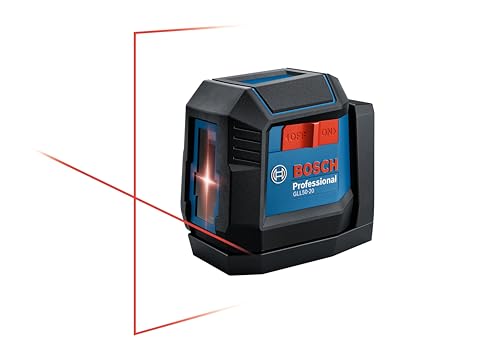

If you are tired of struggling with a traditional bubble level while trying to hang a row of picture frames, the Bosch GLL 30 is your new best friend. It projects both horizontal and vertical lines simultaneously, making it perfect for small-scale interior decorating or installing floating shelves.
Because it is designed for indoor use, it is compact and fits easily into a kitchen junk drawer or a small toolbox. Its pendulum system locks when switched off, protecting the internal components during storage or transit.
The main trade-off here is range and brightness; it isn’t meant for outdoor construction or large rooms flooded with sunlight. However, for the average renter or homeowner focusing on wall decor, its simplicity and reliability are unmatched.
Huepar 9021G: Top Pick for Bright Green Visibility
Green lasers are significantly easier for the human eye to see than traditional red ones, especially in bright, sunlit rooms. If you have ever squinted at a faint red line while trying to install cabinet hardware, the Huepar 9021G will be a revelation.
This model is remarkably versatile, offering a 360-degree horizontal line that covers an entire room at once. This is a game-changer for tasks like installing wainscoting or tiling a bathroom floor where you need a consistent reference point across multiple walls.
While the green diode consumes more battery power than red alternatives, the visibility gains are worth the trade-off. It is a robust, mid-range choice that bridges the gap between basic home tools and professional-grade equipment.
DeWalt DW088K: Best Durability for Tough Job Sites

If your DIY projects often involve sawdust, heavy vibrations, or working in unfinished basements, you need something that can take a beating. The DeWalt DW088K is the "work truck" of laser levels, featuring a rugged, over-molded housing that survives accidental drops.
This unit is a staple for those who take their home renovations seriously, from framing interior walls to installing drop ceilings. Its magnetic bracket allows you to attach it directly to metal studs or door frames, keeping your hands free for the actual work.
It is admittedly bulkier and more expensive than entry-level options, which might be overkill for someone who only hangs a picture once a year. But if you value longevity and are building a long-term toolkit, this is a buy-it-once investment.
Tacklife SC-L01: Best Value for Occasional DIYers

Not every project requires a top-tier professional tool, and the Tacklife SC-L01 is proof that you don’t need to break the bank to get decent results. It provides a reliable cross-line function that is more than sufficient for standard household tasks like hanging mirrors or aligning curtain rods.
This model is ideal for the occasional DIYer who wants to avoid the frustration of manual levels but doesn’t have a large budget. It’s lightweight, easy to operate, and comes with a basic mounting kit to get you started immediately.
Because it lacks the heavy-duty shielding of premium models, you should handle it with a bit more care. Keep it in its protective case when not in use to ensure the internal pendulum remains calibrated for years to come.
Klein Tools 93LCLS: Best for Professional Accuracy

When precision is the absolute priority—such as when you are installing complex tile patterns or custom built-in cabinetry—the Klein Tools 93LCLS stands out. It offers a high degree of accuracy that helps prevent the "drift" that can occur with cheaper, less stable lasers.
This is a professional-grade tool that features a pendulum lock and a durable design meant for daily use. The laser lines are sharp and crisp, allowing for tight tolerances that make your finished project look like it was done by a master carpenter.
While the price point is higher, the peace of mind you gain from knowing your lines are perfectly level is substantial. It is the best choice for the homeowner who is tackling advanced projects and refuses to compromise on quality.
Johnson Level 40-6601: Best Self-Leveling Starter

For those who are intimidated by complex gadgets, the Johnson Level 40-6601 is a refreshing change of pace. It is a "point-and-shoot" style tool that is incredibly straightforward, allowing you to get to work without reading a thick manual.
It features a simple pendulum system that self-levels quickly, meaning you spend less time waiting for the tool to settle. It is an excellent choice for a first-time homeowner who is just starting to build their collection of essential tools.
The trade-off is that it is a bit more basic than other models, lacking some of the advanced mounting options found on more expensive units. However, for simple tasks like leveling a shelf or a television mount, it is perfectly capable and very reliable.
SKIL LL9322G: Best for Beginners and Home Decor
The SKIL LL9322G is designed specifically with the home decorator in mind, featuring a user-friendly interface and a bright green laser. It is compact enough to store in a kitchen cabinet and intuitive enough for anyone in the house to pick up and use.
This model often comes with a flexible mounting accessory, which is incredibly helpful for tricky spots like corners or uneven wall surfaces. It eliminates the need for a bulky tripod in small rooms, making it a favorite for apartment dwellers.
While it might not have the ruggedized exterior for a construction site, its focus on ease of use makes it perfect for weekend projects. It is a practical, modern solution for keeping your home looking polished and perfectly aligned.
Key Features to Compare Before Your Laser Purchase
When shopping for a laser level, the most important distinction is between red and green diodes. Green lasers are significantly more visible, but they drain batteries faster and typically cost more.
Think about your workspace size and whether you need a 360-degree line or just a simple cross-hair. If you are working in small rooms, a simple cross-line model is usually sufficient, but for whole-room projects, 360-degree coverage is a massive time-saver.
- Self-leveling range: Check how many degrees the tool can tilt while still finding level automatically.
- Mounting options: Does it come with a magnetic base, a tripod thread, or a wall clamp?
- Power source: Decide if you prefer standard AA batteries for convenience or rechargeable lithium-ion packs for long-term savings.
How to Properly Calibrate Your Self-Leveling Laser
Even the best laser levels can lose their precision if they are dropped or stored improperly. You should check your laser’s calibration at least once a year, or whenever you suspect a drop might have impacted the internal pendulum.
To test it, place the laser on a flat surface and mark the line on a wall about 15 feet away. Rotate the unit 180 degrees and check if the new line aligns with your original mark; if the gap is more than 1/8th of an inch, your laser is out of alignment.
Most consumer-grade lasers are not designed for user calibration. If you find your unit is significantly off, consult the manufacturer’s manual to see if it can be adjusted or if it requires professional service.
Essential Safety Tips for Using Laser Level Tools
While laser levels are generally safe, they are still powerful light sources that should be treated with respect. Never stare directly into the laser aperture, and ensure that no one else is looking into the beam when you turn it on.
Be mindful of where the laser is pointing, especially if you are working in a room with mirrors or highly reflective surfaces. These can bounce the beam into your eyes unexpectedly, creating a potential distraction or hazard.
Always turn the unit off when you are finished to preserve battery life and prevent accidental activation. If you are working on a ladder, ensure the laser is securely mounted so that it doesn’t fall and cause injury or damage to the tool.
Choosing the right laser level is about balancing your specific DIY ambitions with the reality of your storage space and budget. Whether you opt for a simple, affordable model or a rugged professional tool, you are making a smart decision to upgrade your home improvement process. Once you start using a laser for your projects, you will wonder how you ever managed to keep things level without one.
